
You can make small wood flaws disappear from normal viewing distance when you pick the right product and take your time. Expect to reduce the look of scratches, not recreate a factory finish.
Begin by prepping the surface and practicing off the piece. Test color match and apply thin coats in stable conditions — low humidity and no direct sun — and let each coat dry for the recommended time.
Different formats exist: pen, brush-in-cap bottle, or spray. Small nicks suit a pen; larger areas often need spray for even coverage. Match stain vs paint vs clearcoat for best results.
Price matters, but it isn’t everything. Good flow, the right finish, and helpful customer service or great customer service from the retailer will save you more time and frustration than the cheapest option.
Follow this guide and you’ll know when markers work, how to apply paint cleanly, and how to troubleshoot common problems without making the spot worse.
When wood touch-up markers work well and when they don’t
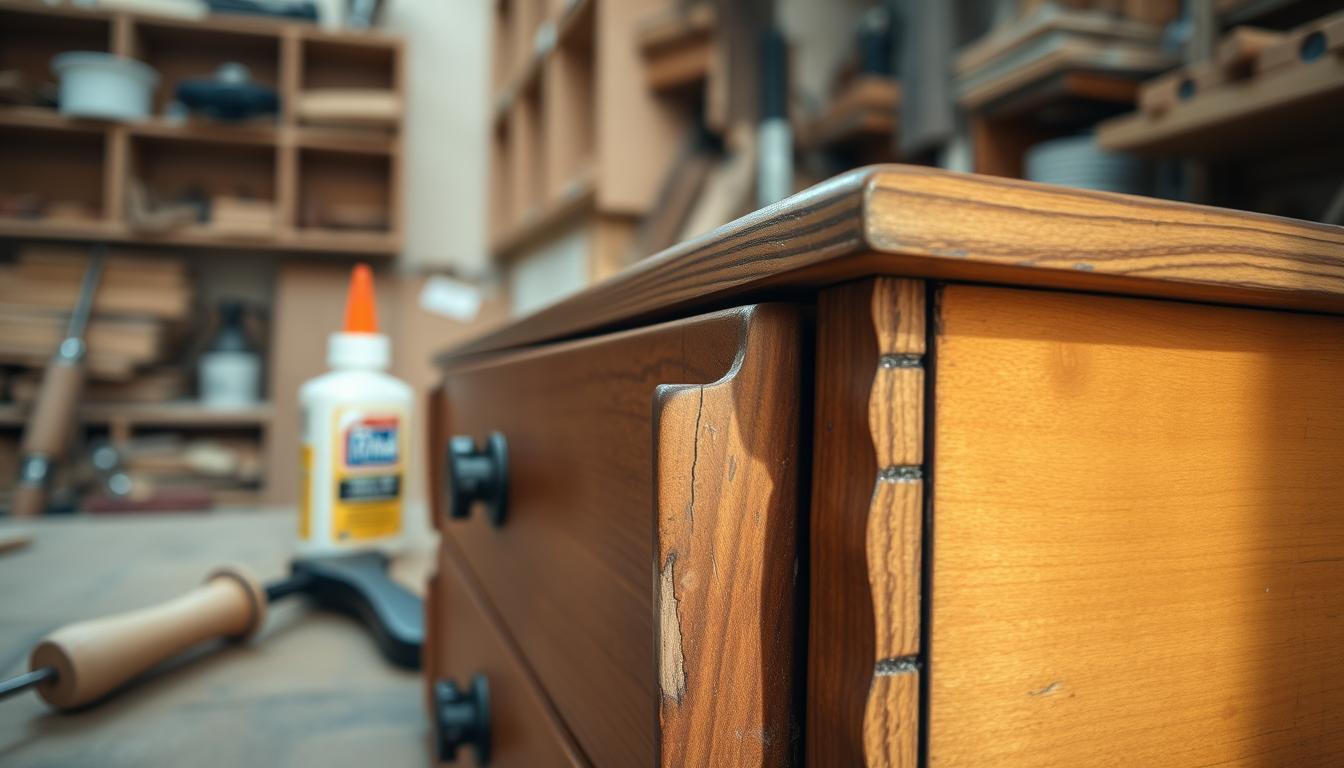
Deciding whether a pen will solve the problem starts with sizing the damage. A pen excels on a small, shallow scratch that is clean-edged and limited to a narrow area. Thin coats let you blend the repair into a uniform finish without building a ridge of paint.
The method works best when surrounding sheen and grain are consistent. If the finish is even, you can mask and apply touch paint in light passes to hide the flaw. Paint pens also do well for tiny chips and edge nicks where precision beats coverage.
If damaged areas get wide or the scratch exposes raw wood, a pen will often leave lap marks and uneven film thickness. Wide repairs can flash differently because flat, satin, and gloss reflect light in other ways.
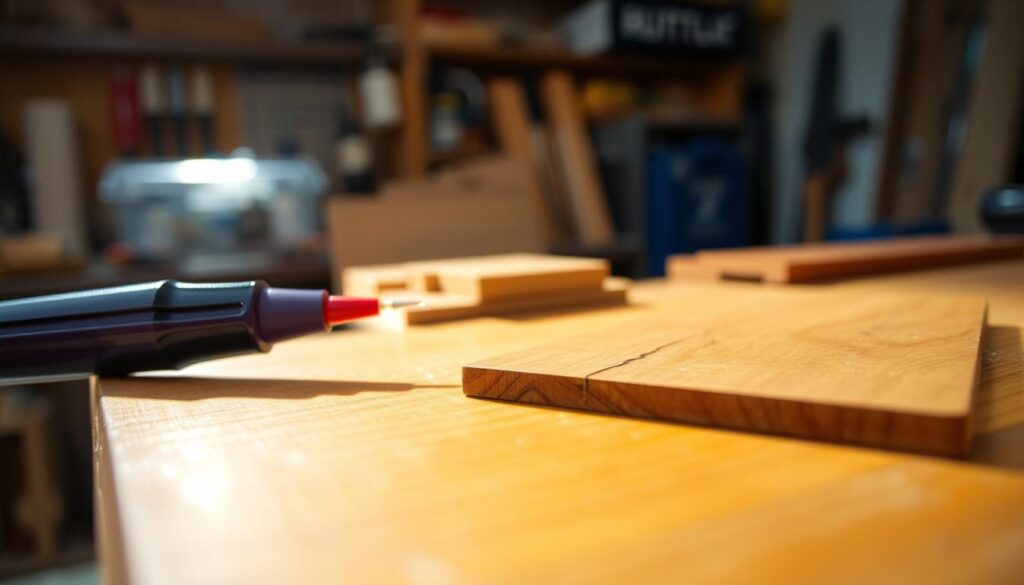
Wood grain and open pores can wick liquid, darkening end grain and creating a halo effect. If you keep thinking “I’ll just cover a bigger area,” switch methods instead of forcing the pen. Low-price pens sometimes fail to match sheen or flow, which costs time to fix.
- Sweet spot: small scratch, shallow, narrow.
- Blend best when finish is uniform.
- Switch to broader methods for large spots or raw wood.
Choose the right touch-up product for your surface and scratch size
Deciding between a pen, bottle, or spray starts with measuring the damaged area. Match format to size rather than chasing a color name alone. That step saves time and reduces rework when you order the part or product.
Touch-up marker vs paint pen for precision work
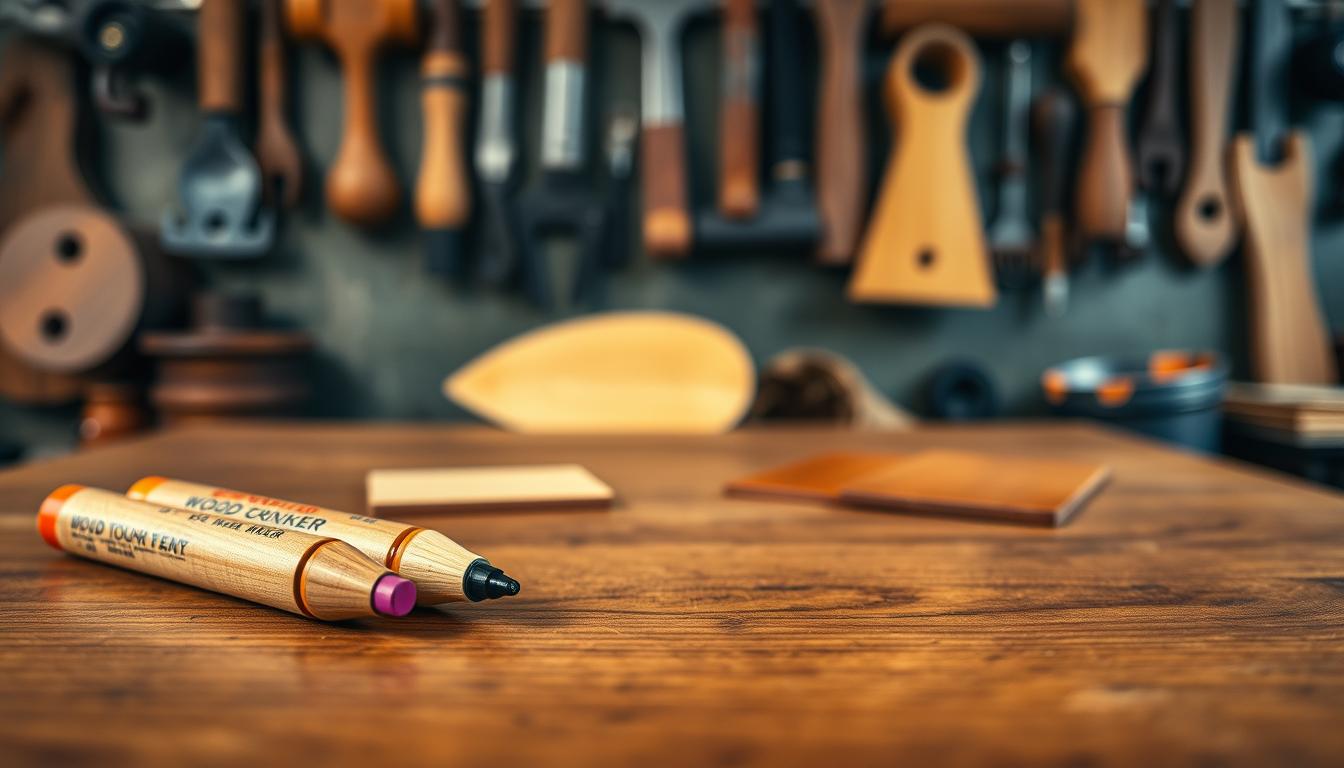
A paint pen gives the best control for fine lines. Use a pen on defects no larger than a pencil-eraser to avoid flooding the surrounding finish.
Brush-in-cap bottles paint vs pens for slightly wider areas
Cap bottles and bottles paint pens with a brush work well for small chips and corners. A brush bottle lets you feather edges up to a dime-sized area without hard ridges.
When spray is the better choice for recessed areas and broader coverage
Spray creates a uniform film for larger or recessed areas. For broad blemishes or texture that must level out, aerosol spray beats a pen or brush.
- Quick sizing rule: pen = pencil-eraser; brush = dime; spray = larger areas.
- Measure the damaged part before you order and pick the correct tool.
- Price matters, but the right format usually saves more time and avoids rework.
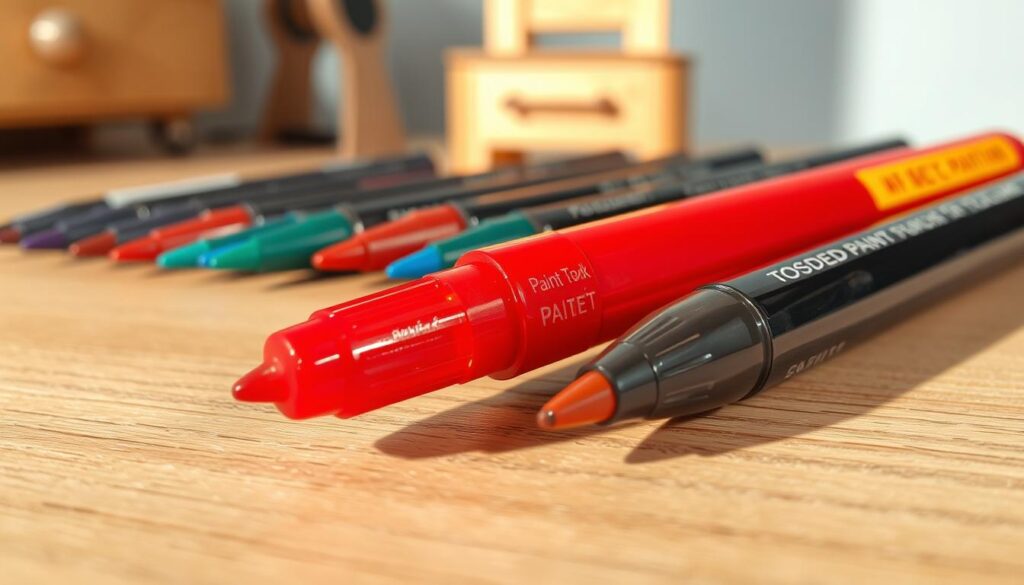
Get set up before you apply paint
Set yourself up for success by gathering supplies and rehearsing the repair away from the visible area. A quick dry run shows the product’s flow and helps you avoid mistakes on the actual surface.
Make a simple kit so you aren’t scrambling mid-repair:
- the touch-up product, lint-free cloths, mild cleaner/degreaser
- medium-to-fine sandpaper, masking tape/paper, recommended thinner/cleaner
- good lighting and a scrap board or underside panel for practice
Practice on a scrap or hidden spot to learn how the paint lays down. This saves time and prevents over-application when you work on the visible area.
Check what extra parts you might need—tips, caps, or masking supplies—and place an order before you start if the schedule is tight. Price matters, but the right prep items stop common failures like fisheyes or poor adhesion.
Store pens and bottles in a cool, dry place; heat can ruin product performance. If you’re unsure which solvent is safe, contact customer service so you don’t damage the surrounding finish.
Test color match before you touch the actual area
Always test the product on a spare surface before you apply paint to the finished piece. Pick a substrate that behaves like the original — metal can, glossy paper, or a scrap of the same wood.
Apply a small swatch and let it sit until the paint dry stage. Compare the swatch under the same lighting you use in the room where the piece lives.
How to test and compare after paint dry
Shake the product per directions so pigment is uniform before you test. Put a tiny patch on the scrap, allow paint dry fully, and view it in daylight and indoor light.
Why primer or clearcoat won’t fix a bad match
Don’t rely on primer or clearcoat to hide a wrong base color. Top coats usually magnify differences rather than hide them. If the base shade is off, extra coats will not fix the mismatch.
What to do if the color is close but not perfect
If the match is near but not exact, work with very light coats and limit the repair to the scratch line. Avoid widening the area to compensate.
- Make sure the product is well mixed before you judge shade.
- If the swatch still misses, document the sample in both lights and reorder a better match rather than forcing the repair.
- Testing first saves time and price: it’s cheaper to test and re-order than to repaint a larger area later.
Pick the right conditions for best results
Control the room and surface conditions before you touch paint to the wood. Stable air, steady heat, and even light matter more than a quick fix. Good conditions give you the best results.
Avoid direct sunlight and surface heat
Do not apply or spray in direct sunlight. Sunlight heats the surface unevenly and makes solvents flash too fast. That prevents proper leveling and can leave rough texture when the paint applied skins over.
Humidity guidance
Work when humid conditions are low. In humid conditions you risk a whitish haze or streaks, especially with spray. Aim for indoor air below about 50% when you plan a spray repair.
Temperature targets and dry time
Temperature affects how fast the paint dry and how it levels. Keep pens and brush bottles above 50°F. For spray, treat ~70°F as a safer baseline for consistent atomization and leveling.
- Check surface temperature, not just room air.
- Keep conditions steady for all coats and allow paint to dry between passes.
- Remember airflow and humidity still affect thin pen-applied film.
Prepare the wood surface so the touch paint bonds cleanly
Start by preparing the repair area so paint adheres and the result blends with the surrounding finish. Proper prep prevents common failures and gives you the best results with small repairs.
Clean, dry, and degrease the area
Remove wax, oil, and polish with a mild solvent and a lint-free cloth. Make sure the surface is fully dry before you apply any touch-up paint; trapped moisture can haze the finish and weaken adhesion.
Lightly dull glossy finishes
Scuff slick clearcoats with medium-to-fine grit to create a mechanical tooth. This step helps the paint grab rather than slide off on glossy cabinets or factory finishes.
Sand and remove loose material
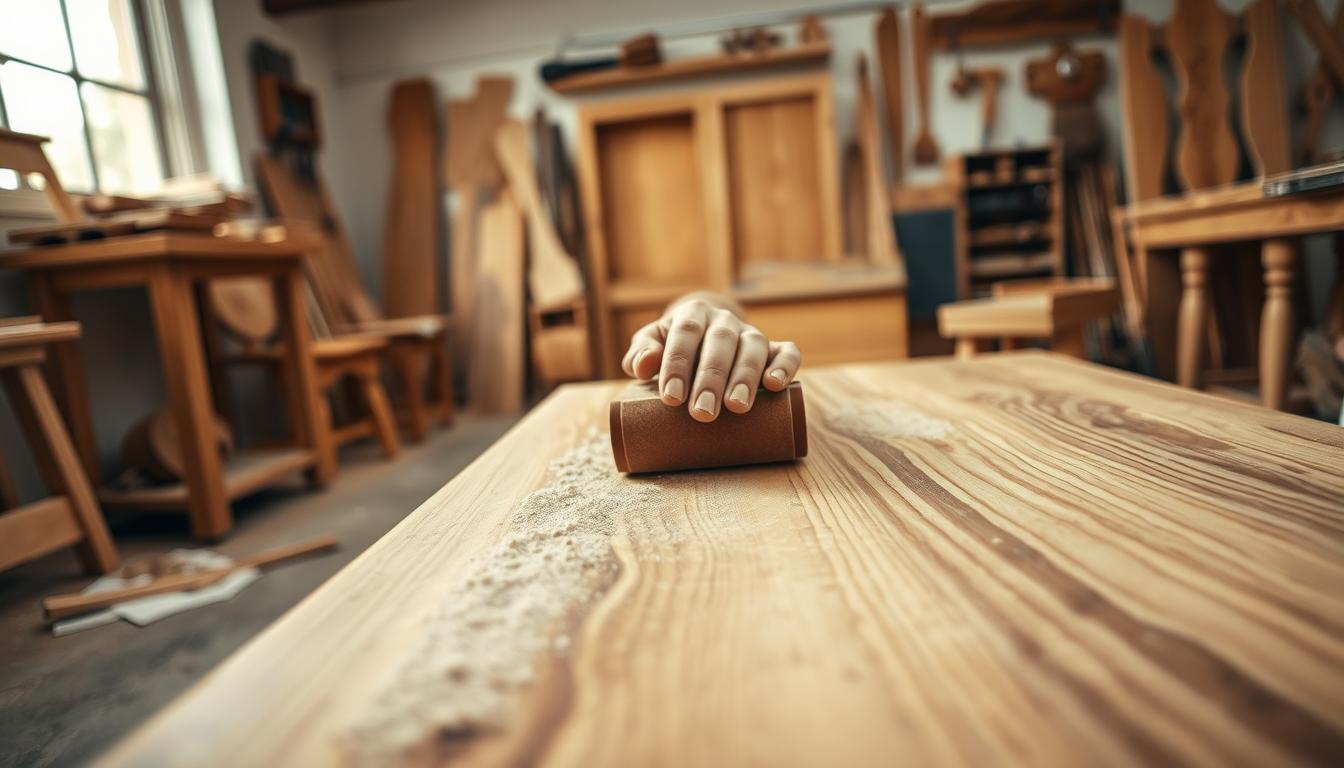
Sand only enough to feather edges and remove loose film so scratches don’t telegraph through new coats. Over-sanding widens the area and makes color matching harder.
Mask nearby areas
Mask adjacent panels, trim, or hardware before spray or pen work. Tight masking keeps the repair neat and protects surrounding areas.
- Clean thoroughly to avoid fisheyes.
- Dry fully so coatings bond at edges.
- Scuff gloss and sand loose bits only.
Using a touch-up marker or paint pen step by step
Get the pen ready before you touch the wood so your first pass is predictable. Proper prep of the reservoir and tip makes a cleaner result and saves repair time.
Shake, cap, and prime the tip so color and flow are consistent
Shake at least one minute after the mixing ball rattles and keep the cap on while you shake. This helps pigment and gloss blend evenly and prevents dull spots.
Prime the tip by pressing gently a few times on a horizontal, hidden surface. Do not press continuously or you will flood the scratch.
Apply paint with smooth strokes and minimal pressure
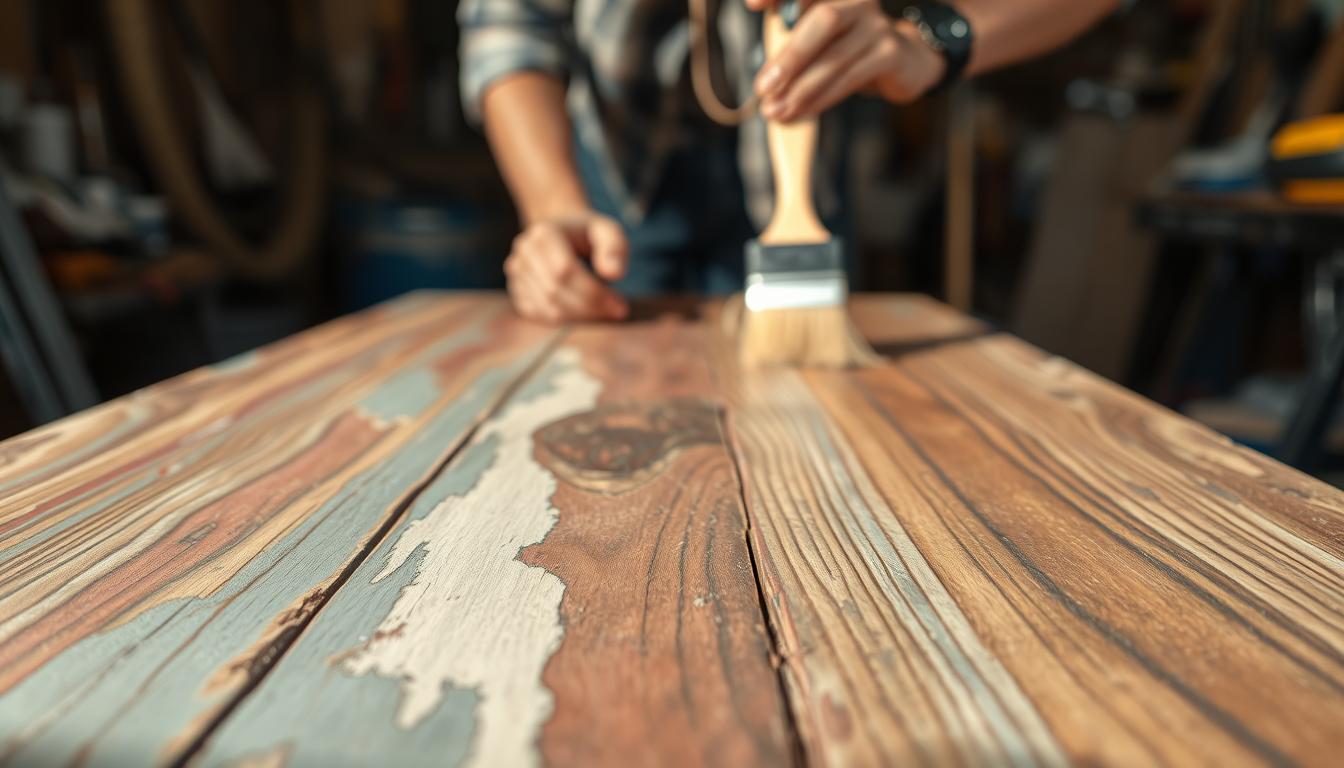
Guide the paint pen along the scratch with light, steady strokes. Use minimal pressure so the tip lays down a thin coat instead of a raised ridge.
Control flow to prevent leaks, blobs, and overfilling the scratch
Press the tip only when you see flow starting. Stop if blobs form and wait for the film to level. Recap between passes so the tip does not dry out.
Stop retouching quickly to avoid dragging semi-set paint
Once the film begins to set—roughly a couple minutes—avoid dragging the tip through it. Multiple thin passes usually look more natural than one heavy application.
- Make sure the pen is tightly capped while shaking.
- Prime on a flat, inconspicuous spot before the repair.
- Let each thin pass set before deciding to apply another coat.
Using brush bottle touch-up paint for small chips and edges
A brush-in-cap bottle works best when a chip or edge needs precise paint placement with a soft, feathered edge. Pick this format for narrow damage that a pen would outline too sharply but that doesn’t require spray coverage.
Shake the cap bottles paint well: at least one minute after the mixing balls rattle. This helps color and sheen stay consistent across coats.
Load the brush correctly and use light pressure for even coats
Dip the brush fully, then pull it out slowly to avoid drips. Hold the brush with a light touch and make smooth, controlled strokes so the film levels on its own.
Work in thin coats to build coverage. Thick loads leave ridges and visible brush marks that are hard to fix.
Why you should avoid going back over a wet film
Do not rework a wet film after about two minutes. Going back over semi-set paint drags and creates streaks or texture that show on flat panels.
Keep the repair confined to the smallest possible area so the touch paint blends at normal viewing distance. When finished, recap the bottle to prevent neck thickening and preserve future flow.
- Choose a brush bottle for chips and edges where a softer edge is needed.
- Shake cap bottles paint thoroughly and load the brush fully.
- Apply light, even strokes and let thin coats level before adding more.
- Avoid reworking wet film; recap bottle when done.
Layering, coats, and dry time that make the repair look natural
Build the repair slowly by layering thin films so the patch blends with the surrounding wood. Thin coats level better and prevent a raised ridge that draws the eye to the scratch.
Thin coats shrink less and let grain and sheen read more evenly. For most pen or brush work, wait at least 20 minutes between passes; in cool or damp rooms, allow paint dry longer—even overnight for full cure. For many aerosol spray systems, short flash times of about 5–10 minutes can be acceptable between mist coats.
How to tell when a coat is ready
Check readiness by a light fingertip test on an inconspicuous edge. The surface should feel stable, not tacky, and the sheen should look consistent across the spot. If the film still drags or wrinkles, give it more time before you apply additional paint.
Preventing runs, sags, and uneven film
Runs and sags happen when too much paint is applied at once or when temperature is too low. Keep your hand moving for spray and lay down less product per pass for pens and brushes. Resist the urge to fix coverage with one heavy coat.
- Build with thin coats to hide scratches without a bump.
- Allow paint dry until the film is non-tacky before another pass.
- Adjust spacing of coats for temperature and airflow to avoid sags.
Troubleshooting common problems after applying paint
When a repair looks off after drying, a short troubleshooting checklist will save you time and frustration.
Color doesn’t match
First, make sure you shook the product long enough and tested on a similar surface. A poor color match often comes from under-shaking, testing on the wrong base, or natural coating shift as the original finish ages.
Flat or hazy finish
Haze can come from humid conditions or a too-hot surface, often triggered by direct sunlight. Move the piece out of direct sunlight and repair under lower humidity for better leveling.
Streaks and patchiness
Streaks usually mean the paint applied unevenly. Apply lighter, more uniform coats and vary stroke direction. One-direction passes can show banding; a softer, cross-hatch approach helps.
Fixing mistakes
If the repair is clearly wrong while fresh, you may be able to remove it with the correct thinner for your finish and start over. Test any solvent in an inconspicuous spot first to avoid damage.
- Check process first: shake, test, and judge color after dry.
- Remember coating shift: older finishes can look different than factory color.
- Contact customer service or rely on great customer service for guidance before you keep layering.
Conclusion
Small repairs reward patience: plan each step before you start.
Match the method to the damage, prep the surface, and build thin coats for the best results. Practice on a scrap and test any touch-up paint on a hidden spot, then judge color only after it dries.
Keep pens for tiny nicks, brush bottles for chips and edges, and spray for larger or recessed areas. Clean, scuff, mask, control flow, and allow each coat to set before adding more.
If you lack supplies, order the correct format and extra parts like tips or caps so you do not stall mid-repair. Reach out to manufacturer or retailer service when you need color or compatibility help. In the end, price matters less than avoiding rework with the right product and patient application.