
You want an efficient way to bring color back to tired furniture without a full strip-and-refinish job. This short how-to will set clear expectations for what “restore color” means when sunlight and the elements have unevenly affected grain and tone.
Quick workflow: assess the surface, clean, sand lightly if needed, add color, then seal. Each step helps improve color and add protection while keeping mess and time low.
This approach works for indoor and outdoor pieces, though outside furniture often needs stronger UV protection. Results depend on the existing finish and damage level, so test in a small area first.
By following this practical restoration guide, you can extend a piece’s life, cut waste, and refresh how your items look now — a simple way to get useful results with common tools and products.
Why Furniture Fades in the Sun (and Why It Looks Uneven)
Direct sun and fluctuating humidity make finishes wear unevenly, so one panel can look much lighter than another. Over time, UV rays and heat break down surface oils and coatings. The color shifts even when the wood beneath stays solid.
UV, heat, and the slow breakdown
UV rays destroy pigments and soften a finish, which makes surfaces dull. Heat accelerates this loss, so exposed arms and tops show change faster than sheltered parts.
Moisture cycles and outdoor wear
Rain, humidity, and drying cycles stress the finish and cause micro-cracks. Those tiny failures speed up graying or bleaching and create patchy appearance on outdoor furniture.
Grain and wood type effects
Grain direction alters how stain and light are absorbed and reflected. Flat-sawn and quarter-sawn sections often look different on the same piece. Hardwoods, softwoods, teak, and redwood each shift color at a different rate.
- Match your plan to the failure: color loss only, finish breakdown, or deep water damage require different fixes.
- Better protection later—especially UV-rated options—will reduce repeat fading and extend maintenance intervals.
Assess the Surface Before You Start Any Restoration
Before you pick up a brush, take a few minutes to inspect the surface so you know what the job will really require. A quick check helps you choose the right cleaning, light sanding, or deeper repair steps for the piece.
Signs you can fix it without stripping
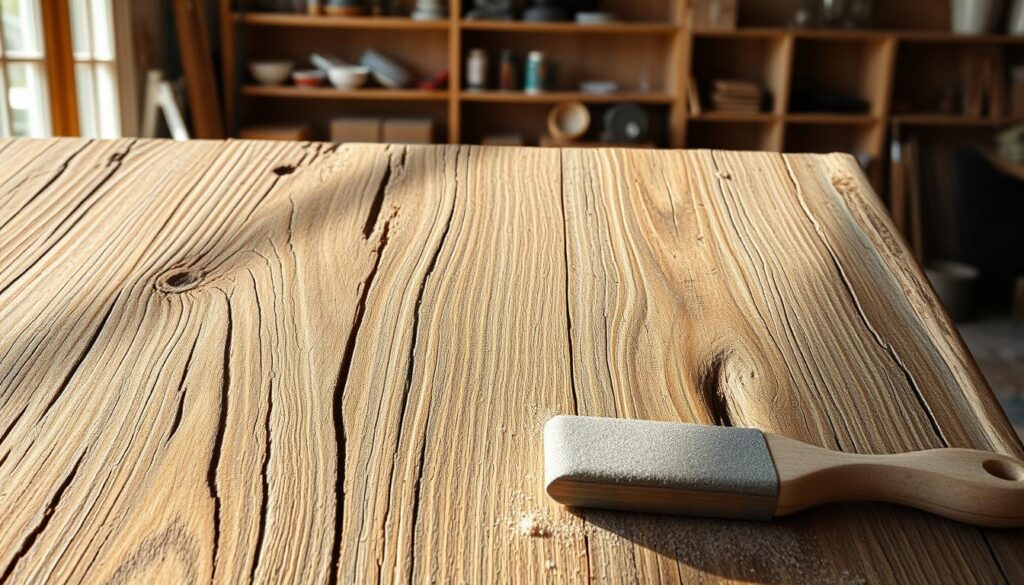
Green light signs include dryness, dull color, and light stains. These areas often respond well to cleaning, very light sanding, and a compatible color product.
Red flags that need extra prep
Look for a peeling old finish, brittle wood fibers, or deep water stains. These problems usually require more sanding, targeted stain removal, or localized repairs before you can expect good results.
How to test a small, hidden area
Choose an underside, back edge, or inside leg to run a full trial: cleaning → sand if needed → apply your chosen color/finish. Use the same process you plan for the main project so the test reflects real outcomes.
- Compare multiple test spots when the piece has mixed exposure so you can match areas with different sun or shade history.
- Set realistic expectations: aim for visibly improved and protected—not factory-new uniformity—especially with heavy sun damage.
Tools and Materials You’ll Want on Hand for Best Results
Gathering the right tools before you start saves time and avoids frustrating stops mid-project. Below is a compact checklist of what to have ready so your job runs smoothly and yields consistent results.
Sandpaper choices and why grit matters
Use a range of sandpaper: 180-grit for small area touch-ups, a medium grit to level sun-bleached patches, and a fine grit to blend and finish. Medium grit helps even out high spots; fine grit preserves the surface while prepping for finish.
Cleaning and prep supplies
Soft cloths and a small brush remove dust and grime from crevices. Choose a wood cleaner or the Rubio Monocoat Cleaner/WoodPrep system for interior pieces to reveal true condition before you work.
Application basics and protective gear
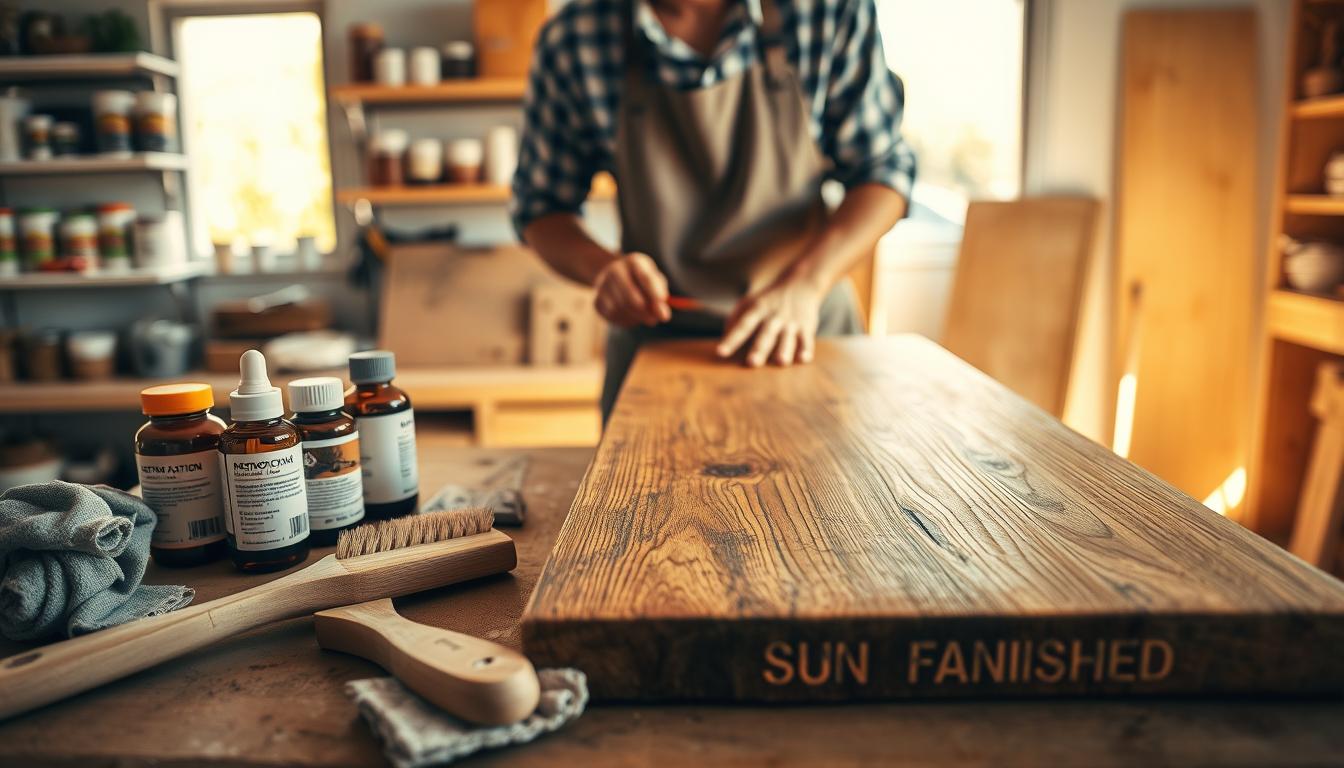
Keep wiping rags, a beige scrub pad for oil application, and a few scrub pads for working products into the grain. Drop cloths and gloves protect the area and your hands.
Color and finish options
- Stain or gel stain for visible color correction and control on vertical parts.
- Oil (for example, Rubio Monocoat Oil Plus 2C) applied with a scrub pad and wiped with rags for small interior jobs.
- Wax or clear topcoats for added protection; choose exterior-rated pigmented products outdoors for UV resistance.
Clean First to Reveal the True Condition of the Wood
Cleaning exposes what’s under dust and grime, so you can choose the right next step. This first step helps you avoid unnecessary sanding or mismatched color fixes. Treat the process as a diagnostic and preparation stage.
Remove loose debris with a soft cloth or a soft-bristled brush, always working with the grain to prevent cross-grain scratches. Start dry to see actual surface condition before applying liquids.
Interior cleaning approach
For indoor wood furniture, make the surface dust-free with a cloth and brush. Use a recommended prep product designed for interior finishes and follow manufacturer dry times.
Important: many interior prep systems do not require rinsing. Let the wood fully dry so the next coat bonds correctly and avoids swelling.
Exterior cleaning approach
Dampen the piece lightly, then apply an undiluted exterior wood cleaner. Scrub lengthwise with a nylon brush until foam lifts grime, rinse until the foam is gone, and let the wood fully dry.
When appropriate, a mild dish soap and warm water solution works for general outdoor grime. Choose cleaners suited to the species—teak and oily woods often need specific products.
- Why clean first: dust, oils, and outdoor grime can hide the true condition and mislead your repair plan.
- Dry before finishing: finishing over damp wood traps moisture and can cause hazing, poor bonding, or uneven color.
- Tools to have: soft cloth, nylon brush, and a suitable cleaner for the type of wood furniture you’re working on.
Light Sanding That Restores Color Without a Full Refinish
A gentle sanding step often gives you the color consistency you want with minimal prep.
Decide if sanding is needed
If the piece shows only dullness, cleaning may be enough. Sanding is warranted when sun-bleached layers, uneven patches, or stubborn discoloration remain after cleaning.
Sand with the grain and pick the right grit
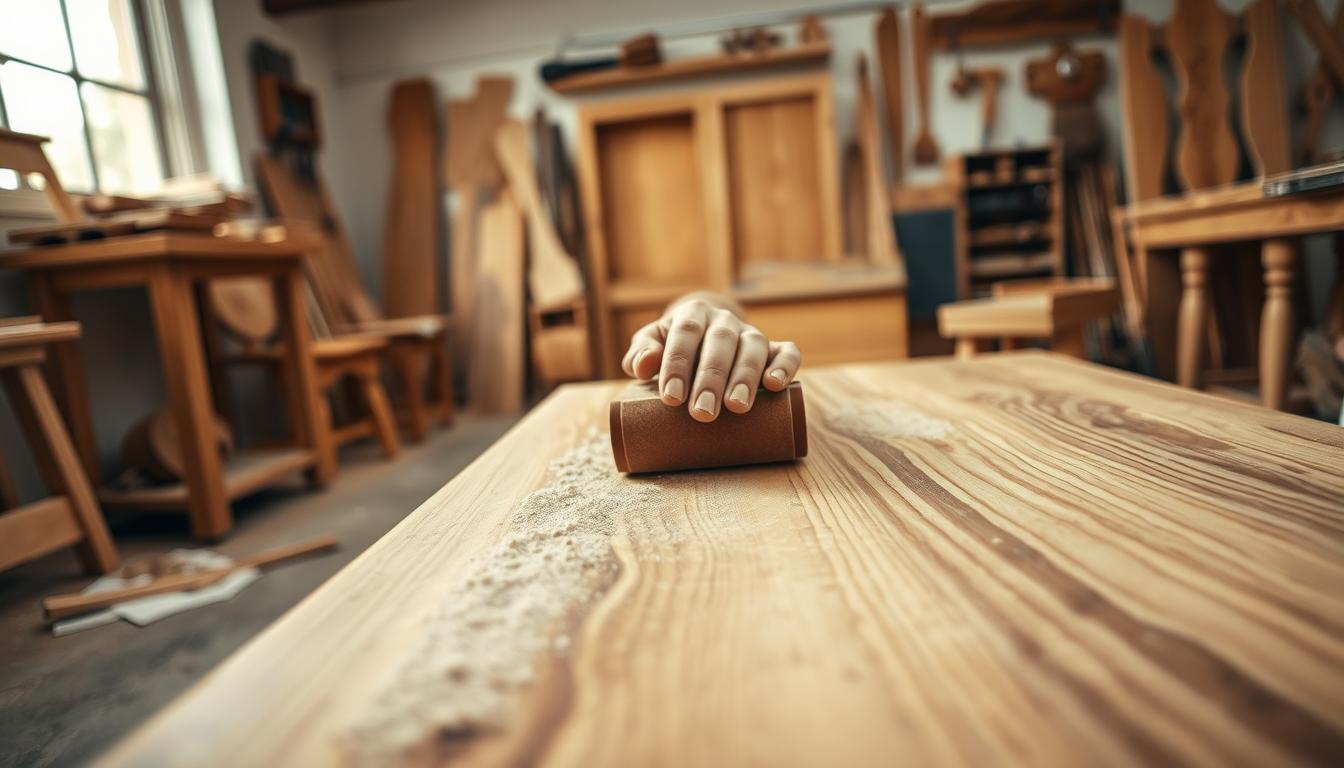
Always sand in the direction of the grain to avoid visible scratches and swirl marks. For small touch ups, use fine sandpaper around 180 to limit material removal.
For slightly heavier leveling, start with about 150 grit then finish with 180. This helps remove old finish or surface dirt without stripping the whole area.
Feather edges and control dust
Feather by easing pressure toward the edges so repaired areas blend into surrounding finish. This prevents a halo and gives better color acceptance.
- Tools: hand block, 150–180 sandpaper, small sanding pad.
- Dust control: vacuum, tack cloth, and a microfiber wipe to clear the surface before you apply color.
- Goal: even color across areas so the final results look intentional and consistent for your project.
Restoring faded wood With Color: Stain, Gel, or Natural Options
If uneven sun exposure has left parts of your piece furniture looking washed out, targeted color can even the tone without full stripping. Use a low-VOC or water-based product when possible to keep the job eco-friendly and easy to reapply later.
How a stain evens tone
Stain recolors lighter zones so they match less-exposed areas and give a more uniform look. It works best on a clean, evenly prepped surface; uneven sanding or mixed finishes can make it blotchy.
Gel for control on vertical parts
Use a gel when you need control on chair legs, spindles, or other vertical parts. The thicker gel stays put, so it reduces runs and absorbs more predictably on uneven areas.
Natural tea or coffee option
For a subtle, low-cost approach, apply cooled strong black tea or coffee. Let it soak, then build color with multiple coats and test first to avoid surprises.
- Work in steps: test, apply, wipe, reassess to build the shade you want.
- Seal afterward: always finish with a compatible sealer to lock the result and slow future sun loss.
Choose the Right Finish for Protection and the Look You Want
Penetrating oils for a natural, easy-to-maintain surface
Penetrating oils like tung, Danish, or antique oil soak into the grain and give a soft, natural look. Apply, let it soak, then wipe and buff; build color with multiple coats.
Easy renewal: small scratches are fixed by local sanding and re-oiling rather than stripping. Add paste wax for extra protection if you like a bit more surface resistance.
Polyurethane when durability matters
Choose polyurethane for strong water and alcohol resistance and heavy use. Brush with the grain in long, overlapping strokes and apply several thin coats.
Sand between coats with 220 grit. Avoid thick layers to prevent runs, wrinkling, or sagging.
Water-based poly for clear tone and speed
Water-based products dry fast and do not amber. Raise the grain with a damp cloth, let dry, then sand smooth before the first coat.
Lacquer for a high-end, skilled finish
Lacquer gives a premium look but usually needs spraying and careful prep. It can soften under other topcoats, so use it only when surface compatibility and your skill level match the task.
- Decision rule: pick oil for easy maintenance and a soft look, poly for high protection, water-based poly for a clear finish and speed, and lacquer if you have the setup and experience.
- Final note: the best finish is the one you can apply correctly and maintain, not just the hardest option on the label.
Application Tips That Prevent Runs, Bubbles, and Blotchy Color
Small technique changes at the brush can prevent common failures that spoil a good color fix.
Brush motion and wet edge control
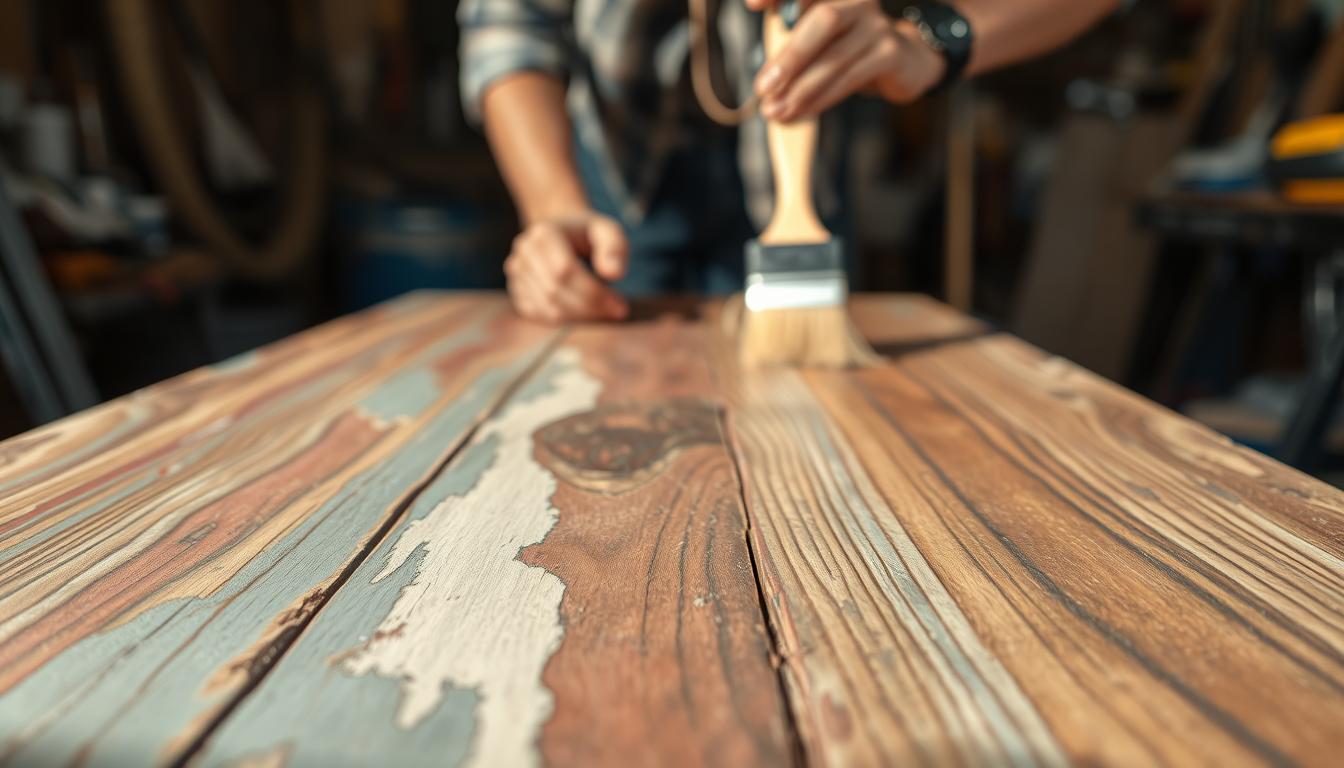
Brush with the grain using long, overlapping strokes so the wet edge stays consistent. This laying-off method reduces lap marks and improves the final finish.
Why thin coats win
Apply several thin coats rather than one thick layer. Thick coats cause runs, wrinkling, and sagging on vertical parts, while thin layers level more predictably and dry evenly.
Sanding and product handling
Lightly sand between coats with 220 grit to smooth the film and boost adhesion. Keep sanding brief and clean the dust before the next coat.
Mixing and bubble prevention
Stir satin and semi-gloss gently to keep flattening agents suspended. Avoid whipping air into the can; tap excess on the can side instead of dragging the brush on the lip.
- Practical benefit: correct application improves the look and helps stain or gel color read uniform.
- Small habit: these tips make the whole job and process deliver better results.
Spot Repairs for Scratches, Stains, and Small Damaged Areas
Minor damage doesn’t mean a full redo — targeted spot repairs save time and keep most of the original finish intact.
Fix small scratches with light sanding and oil
For small scratches, sand the defect gently with 180 grit. Remove dust, then rub in a matching oil finish. Wipe excess and buff the area so the repair blends into the surrounding surface.
Lift stubborn stains without refinishing the whole piece
Isolate the stains and try a localized clean or a light sanding to lift discoloration. Reapply a tint or thin stain only where needed, then seal to lock the color.
When to use putty and how to blend it
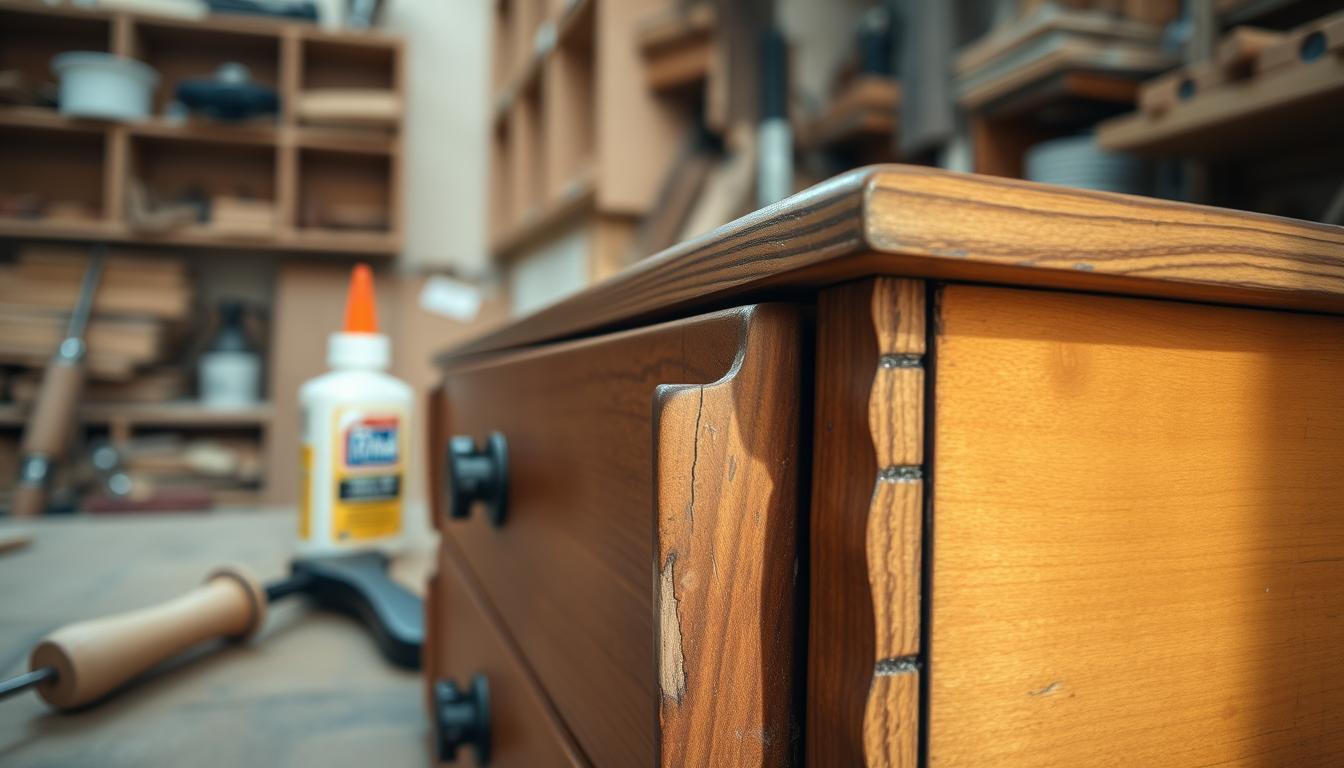
Use wood putty for chips, gouges, or missing fibers. Avoid putty on high-wear edges where it may pop out. Tint the filler to match, feather the topcoat edges, and polish to hide sheen changes.
- Practical tip: add a thin coat of paste wax over oiled repairs for extra protection.
- Keep in mind: small, careful fixes protect the rest of the furniture and speed overall restoration.
Maintenance That Helps You Keep the Color Longer (Indoors and Outdoors)
Simple, regular care keeps restored furniture looking its best far longer than a one-time fix. Focus on UV control, the right finish, and easy routines so your pieces age more gracefully.
Why pigmented finishes outperform clear options outside
Pigments block UV rays and do most of the work against sun damage. Even semi-transparent stains slow graying better than a purely clear coat.
Easy cleaning schedule and safe products
Dust weekly with a soft cloth. Do a gentle wipe-down with a wood-safe cleaner every few months.
- Tools: soft cloth, mild wood cleaner — avoid harsh detergents.
- Routine: light dusting, periodic wipe, let dry before recoating.
Placement, shade, and cover strategies
Limit direct sun by moving items to shade, using umbrellas, covers, or a pergola. Covers reduce UV and water exposure between uses.
Wax as a top layer for oiled pieces
On oil-finished furniture, a thin paste wax adds a sacrificial layer that refreshes easily. Reapply wax as part of seasonal care to keep the color and finish protected.
Conclusion
A few careful moves—assess, clean, sand, tint, seal—turn a tiring project into a good-looking result.
Follow the simple sequence: assess the surface, clean, sand lightly if needed, add color, then apply a protective finish. This process makes restoring faded wood furniture without full stripping realistic and workably quick.
Always test in a hidden spot so you pick the right product and avoid surprises. Do work with the grain, skip heavy sanding when a light touch will do, and build thin coats for an even finish.
Choose protection that matches use—pigmented topcoats outdoors extend color life. Careful prep and steady application usually matter more than costly tools. The end goal is a better-looking, better-protected piece you can enjoy for years.