
Removing dust from wood carvings is the first step to a clean, sharp finish. Fine sawdust and sanding particles can be almost invisible, but they will dull your work if you skip proper cleanup.
In woodworking, control matters when your project has deep texture, undercuts, or tiny grooves where particles hide. You’ll learn why dust control affects the final coat and how moving from prep to finishing quickly reduces new household dust.
Here the best way means a repeatable method that clears bulk, traps fine debris, and stops it from settling back on the surface. You will see tool categories—air, vacuum, cloth, tack, and solvent wipe—to build a simple kit without guesswork.
This approach adapts to small pieces and large furniture, but the core principles stay the same. By following the step-by-step process, you can remove dust in the crucial minutes before stain, oil, varnish, or paint and protect your final finish.
Why Dust Hides in Wood Carvings and Ruins Your Finish
Fine particles nest in carved recesses and can quietly sabotage your final coating. Invisible sanding grit often forms a thin separator layer that prevents paint, stain, varnish, or oil from bonding evenly. That trapped residue changes color and texture once the coat dries.
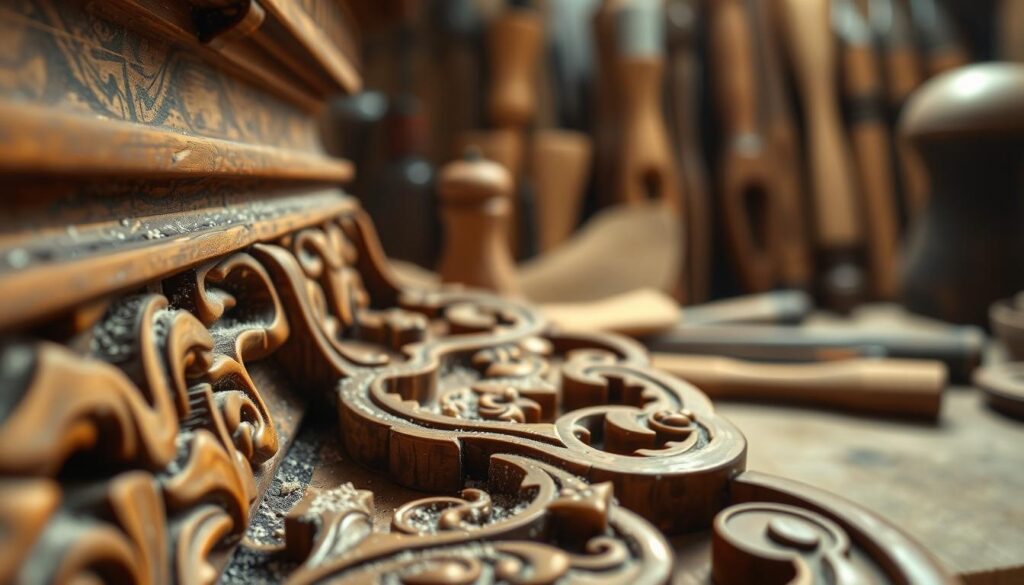
What looks like a smooth, sanded surface can still hold microscopic debris. When you apply a finish, those specks turn a clear finish muddy or cause a rough feel under your hand.
How sanding residue wrecks appearance and adhesion
The finest grit sits between the surface and finish, so the top coat does not adhere properly. You get blotches with stain and tiny bumps under varnish or oil that show after drying.
Where particles collect on detailed pieces
- Inside corners and shadowed cuts
- Molding profiles, carved leaves, and flutes
- Along crisp edges and latticework on furniture
Airborne particles also migrate and resettle. Check your work with raking light to spot invisible residue. First remove bulk debris, then chase finer grit, and finish with a final wipe so the surface is ready for coating.
Your Essential Tool Kit for Removing dust from wood
A practical combo of compressor, vac, and cloths gives you repeatable results on fine detail.
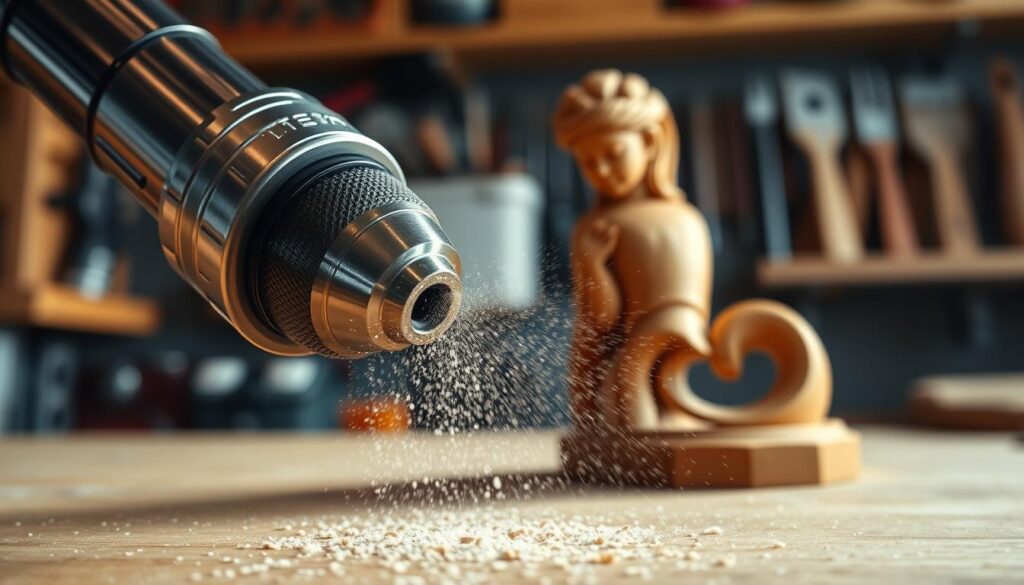
Air tools: compressed air and control
Use an air compressor fitted with a blower nozzle and a flexible hose to move bulk debris off carvings. Keep the nozzle a safe distance and sweep across the grain so you don’t drive particles deeper into hollows.
Vacuum: trap what air leaves behind
A shop vac with a quality filter is essential. A standard filter can exhaust fine grit back into your shop, so upgrade the filter or use a dedicated vac to trap microscopic material.
Cloths, tack cloths, and final wipes
Wipe surfaces with clean, white cloths so you can see what the cloth picks up. Keep cloths lint-free and rotate them as they load.
Tack cloth is a lightly waxed, loosely woven cloth that picks up the last traces. Use it lightly—excessive pressure or waxy tack cloths can leave residues that cause finishing problems.
Finish with a cloth dampened with denatured alcohol. Alcohol dries fast, won’t raise the grain like water, and lifts the finest particles before you apply oil or varnish.
- Air compressor + nozzle: blow dust away, controlled by hose movement.
- Shop vac + good filter: capture microscopic grit, don’t rely on standard filters.
- Clean cloths & tack cloth: inspect and remove residue; use tack sparingly.
- Denatured alcohol wipe: final, fast-drying clean that is finish-safe.
The Best Way to Remove Dust Before Finishing
A compact, proven process prevents grit from ruining your finish. Follow a four-step routine so you can repeat the same care every time you sand, stain, paint, or oil a carved piece or repair a floor area.
-
Blow off bulk with compressed air
Use compressed air and a controlled hose sweep to lift debris from grooves. Keep the nozzle at a safe distance and angle so the air pulls particles out of hollows rather than forcing them deeper.
-
Vacuum every surface and detail line
Vacuum after you blow so the shop vac captures what the air moved. Trace profiles slowly and use a quality filter so the vac traps fine material instead of exhausting it back into the shop.
-
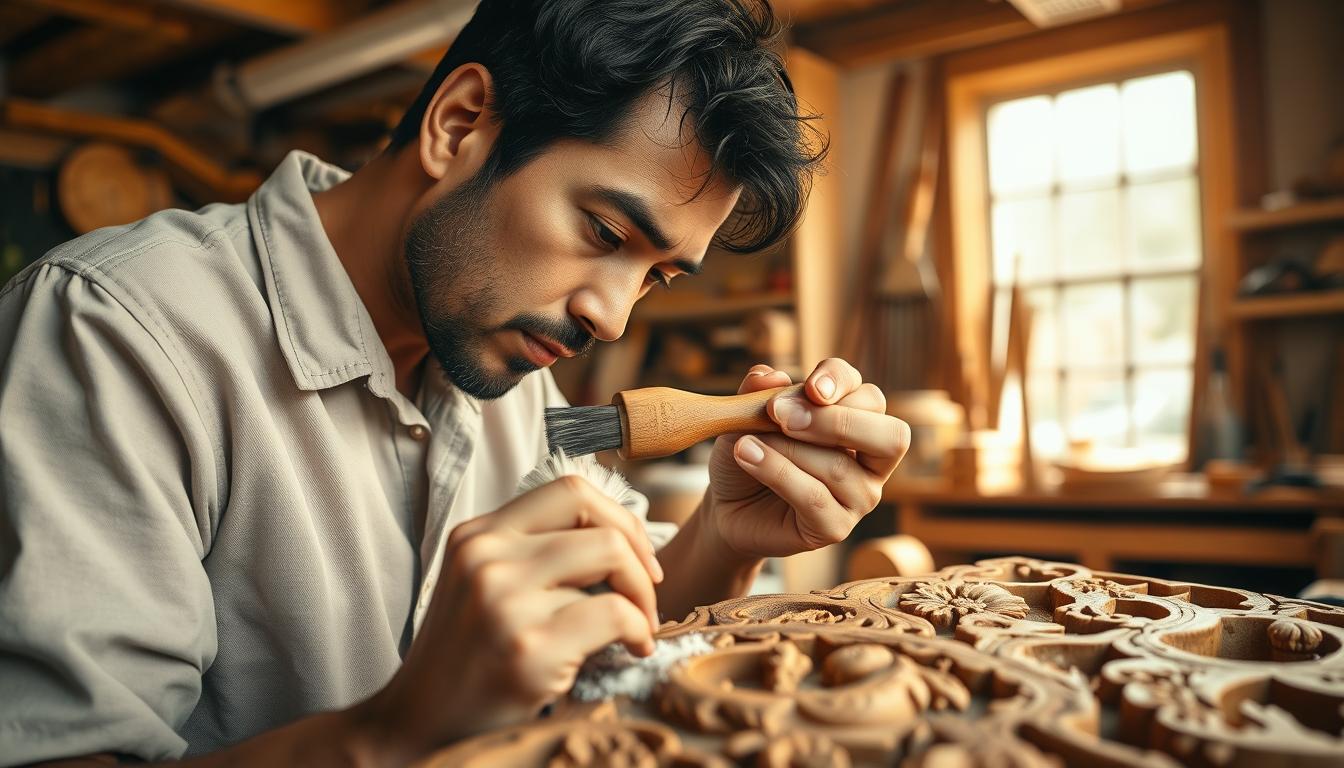
Wipe with a dry white cloth
Dry white cloths show remaining residue. Wipe lightly and refold frequently so you don’t redeposit particles into open grain or carved edges.
-
Use a tack cloth lightly, then finish with alcohol
Apply a tack cloth with minimal pressure to catch the finest bits. Use it as a sanding test—if it snags, sand again. Finish with a cloth moistened with denatured alcohol; it evaporates fast and won’t raise the grain before your coat.
Timing tip: Move to the finish coat soon after cleaning. Household airborne particles can resettle within hours, so quick transition helps protect your paint, varnish, or oil job.
Techniques for Intricate Details, Tight Holes, and Contrasting Woods
Delicate cuts and pin-sized holes need gentle tools and a steady hand to clear packed grit. After you use compressed air, inspect each recess under raking light. Tiny cavities often hold material that resists a simple blow-off.
Clearing stubborn holes without damage
Work with a fine pin or sewing needle held like a pencil. Use the point with the lightest hand to tease out compacted debris. Do not lever or pry; that pressure can bend thin spindles or nick crisp edges.
When leftover bits will blend — and when they will show
If sanding residue matches the wood, a trace can absorb oil and visually disappear after finishing. In low-contrast areas, this often causes no problem.
However, on highly contrasting grain or color shifts, lodged particles can show as a pale line or muddy patch once you apply oil or varnish. Spot-check these areas and clean them thoroughly.
- Support fragile elements from behind while you clean.
- Change your viewing angle and use raking light to spot residue.
- Work slowly with a pin point; re-blow with air after loosening.
- Final-check before the coat keeps details crisp instead of filled.
Conclusion
A quick, reliable cleanup sequence keeps your carved details sharp and finish-ready.
Follow the simple way: lift bulk with air, trap particles with a vacuum, inspect with a clean cloth, then do a fast final wipe. This repeatable process gives consistent results across woodworking projects and carved surfaces.
Leftover grit causes rough feel and visible flaws that look like a bad coat even when your finish technique is right. Trust tools that pull the weight—air to loosen, vacuum to capture, cloth or tack cloth to reveal, and a denatured alcohol wipe for the final pass.
Make this a standard pre-finish habit. Once you finish cleaning, move straight to the finish to avoid new dust settling and restarting the cycle.