
You want your furniture to arrive at the new home intact and ready to use. Wood is organic, scratches easily, and can warp with humidity or temperature shifts. That makes extra care worthwhile, especially for antiques and carved pieces.
This guide uses a layered packing method: a breathable first layer, padding next, and secure outer wraps that avoid trapping moisture. You will learn to clean and dry first, disassemble where possible, protect weak points, and secure items in the truck for a safe move.
Why this matters: a small amount of prep cuts repair and replacement costs. Follow steps in order and skip shortcuts like wrapping bare wood directly in plastic. With basic tools and simple packing materials, you can get pro-level results and true peace of mind.
Why Wood Furniture Needs Extra Protection During a Move
Minor knocks and tight corners can ruin a polished finish in seconds. You need to know how common contact, climate, and weak spots create the biggest risk to your pieces.
Scratches, dents, and quick surface harm
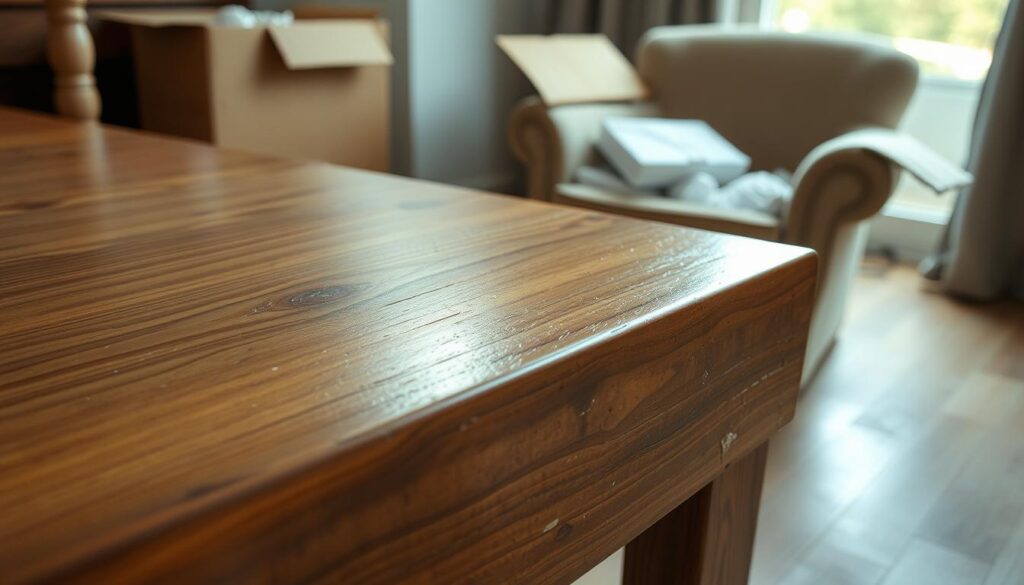
Everyday moving contact — door frames, hand trucks, and other items — can leave visible scratches and dents on varnished surfaces. Even a small grit particle under a blanket will abrade a finish when rubbed.
Warping, cracking, and moisture changes
Wood expands with humidity and shrinks when very dry. Sudden temperature swings can warp panels or crack joinery, which leads to costly damage during transport or storage.
Hidden weak points that fail first
Table legs, chair spindles, glued frames, veneers, and carved trim bear most strain. These parts can chip, peel, or snap if you twist or press pieces in tight halls or on stairs.
- High-risk scenarios: dragging across floors, tight turns, and bumping corners on ramps.
- Material mismatch: plastic alone can trap moisture, while dirty fabric or grit under blankets can abrade a surface.
- What to do next: use a breathable first layer, add padding where needed, and load items to limit movement.
Pre-Move Planning That Prevents Furniture Damage
Good planning saves time and lowers the risk that heavy pieces get scuffed or stuck. Before moving day, take measurements and make a simple map of how items will travel from your home to the truck and into your new home.

Measure and map your path
Measure doorways, stair landings, and narrow hallways so you avoid forced angles that chip corners or rack frames.
Plan placement in the new home
Create a room-by-room placement plan so helpers set items once instead of dragging them across floors multiple times.
Decide when to hire pros
For antiques, oversized cabinets, or heavy solid pieces, consider professional movers who bring the right equipment and tools like dollies, straps, and sliders.
- Truck space: confirm truck dimensions and plan load order to reduce reshuffling.
- Schedule time: allow extra minutes for careful handling to cut the chance of drops and wall strikes.
- Assign roles: use spotters and clear paths to lower overall risk during each carry.
Clean, Dry, and Disassemble Before You Wrap
Start this step by removing dust and grit so finishes stay intact. Tiny particles act like sandpaper when trapped under blankets or fabric. Treat cleaning as a required first action before any padding or wrap.
Remove surface grit and wipe down
Wipe furniture with a soft, dry cloth. For stubborn grime, use a slightly damp cloth and a mild cleaner. Never soak surfaces.
Let everything air-dry
Wait until each piece is fully dry. Trapped moisture can cause swelling, warping, or mold if you seal it under plastic.
Disassemble and secure moving parts
Take apart tables, bed frames, and cabinets when possible to reduce stress on frames and joints. Remove or secure drawers and doors so nothing swings open mid-carry.
- Bag hardware: place screws and bolts in labeled plastic bags, then tape them to the matching item or keep them in labeled boxes.
- Keep small parts safe: avoid pockets and truck floors so you don’t lose essential items at the last minute.
- Follow this step: cleaning and disassembly make wrapping and reassembly faster and safer.
Choose the Right Packing Materials for Wood Furniture
Pick materials that form a layered shield so your furniture resists shocks and scratches. Start with soft coverage and add targeted protection where impact is most likely.
Moving blankets and primary padding
Use heavy moving blankets as your first large‑area barrier. Blankets absorb shock and cut the risk of surface abrasions on tabletops, dressers, and bookcases.
Foam, bubble wrap, and corner protection
Add foam padding and bubble wrap around legs, carvings, and delicate trim. Apply rigid corner protectors on desk and cabinet edges to stop chips in tight doorways.
Cardboard sheets, stretch wrap, and fastening choices
Place corrugated sheets between pieces and under straps to prevent friction marks. Use stretch wrap to hold blankets and padding in place, but avoid sealing stretch wrap directly on bare wood to limit trapped moisture.
- Prefer straps over tape on finished surfaces to avoid residue and finish lift.
- Use the right tools: furniture sliders for in‑home moves and dollies or hand trucks for long carries to protect floors and cut drop risk.
- Build a materials checklist—blankets, foam, bubble wrap, sheets, stretch wrap, straps, sliders, dollies, and a few sturdy boxes for small parts.
Protecting wood during moves With the Right Wrapping Technique
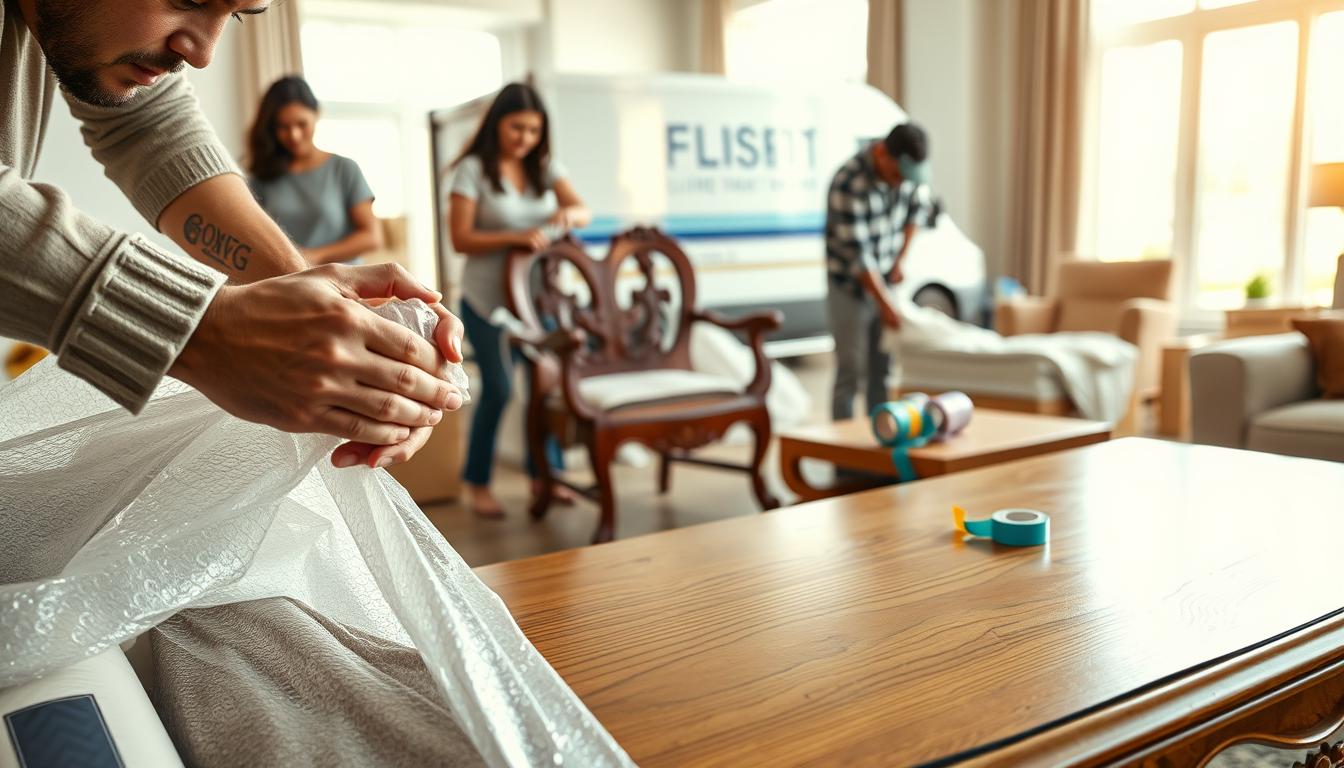
Begin each wrap by laying a breathable, non‑abrasive layer against the surface. This first step shields finishes while allowing air to pass so you don’t trap moisture. Use cotton blankets, soft felt, or clean moving pads as the contact layer.
Blankets and padding for shock absorption
Cover broad faces with thick blankets to absorb impact. Add foam or bubble padding around corners, legs, and handles where bumps most often occur.
Wrap snugly, not tightly, to protect joints
Secure layers so they do not shift, but avoid over‑tightening straps that compress joints or stress glue lines. Keep carvings and veneer free from crushing pressure.
Use stretch wrap as an outer binder — not as the contact layer
Place stretch wrap over blankets to hold everything in place. Do not let plastic touch bare wood; it can trap moisture and cause warping or finish damage.
- Follow the same layer order for every piece so helpers know the correct step.
- Check wraps by pressing corners and lifting slightly to confirm nothing moves.
- Make sure the outer binder stays intact through doorways and ramps to avoid exposure and scuffs.
Reinforce High-Risk Areas Like Corners, Edges, and Legs
Reinforce high-impact zones on each piece before you lift anything out of the house. Focus on corners, edges, and leg joints first so incidental contact with door frames and hallways won’t cause chips or dents.
Build up padding on corners
Make corners priority #1 by layering soft padding at every point that might hit a frame or wall. Use folded moving blankets or foam blocks and secure them with stretch wrap over the blanket—not against the surface.
Stabilize and cushion legs
Wrap each leg individually, adding extra padding where the leg meets the base to absorb shocks. This reduces the risk that a leg will snap when loading, on a ramp, or if pieces shift.
Shield veneer and decorative trim
Protect thin veneer and trim with a smooth buffer layer to prevent peeling from friction. Avoid hard straps or buckles that press directly on delicate surfaces.
- Identify impact zones: front corners, top edges, and leg tips, then reinforce them.
- Reduce surface scratches: keep hard plastic and exposed hardware away from finished faces.
- Reinforce raised details: add foam around carvings so they don’t dent when set down or moved in tight halls.
Move Wood Furniture Safely Through Your Home Without Scratches
Careful handling in tight spots cuts the risk of gouges to floors and chips to furniture. Take a moment to plan each carry so you and your helpers move deliberately.
Use sliders and lift techniques to protect floors and bases
Slide heavy pieces on furniture sliders rather than dragging them. Sliders spread weight and stop hardwood floors from getting gouged.
When lifting, bend your knees and keep the load close. This reduces drops and prevents corner damage or leg failure.
Pad tight halls and remove doors to avoid frame damage
Place temporary padding on walls and corners where items will rub. Blankets or foam strips stop scratches on finishes and door frames.
If clearance is tight, take off interior doors. Removing a door often prevents wrapped items from catching and tearing protective layers.
- You protect floors and item bases by using furniture sliders under heavy pieces instead of dragging them.
- You coordinate with a partner and use clear commands on every bulky carry to avoid last‑second twists.
- You move slowly and deliberately, padding tight routes and using dollies or a hand truck for long carries.
Load and Secure Wooden Pieces in the Truck to Prevent Shifting
How you stack and strap furniture in the truck determines damage risk on the road. Load heavy items low and centered so lighter items and fragile pieces stay on top. This prevents crushing and keeps the center of gravity stable.
Best placement and weight distribution
Place cabinets and bookcases upright to protect frames. Tables often travel on their sides to reduce pressure on legs and prevent warping.
Create padding barriers and secure the load
Use moving blankets, foam, or cardboard sheets between each piece so vibration can’t cause friction scratches. Fill gaps with rolled blankets or boxes of soft items.
- Secure with ratchet straps—tighten enough to stop movement but not so much that straps press into edges.
- Keep heavier pieces toward the front and lower deck of the truck for stability.
- Limit direct sun and use silica packets in drawers if moisture is a concern.
When you unload into your new home, let wood acclimate for 24–48 hours before placing heavy items on top or reassembling. This simple step reduces long‑term risk and gives you time to recheck fasteners and floors.
Conclusion
Finish strong by confirming layers, straps, and placement so items travel safely.
Start with a short checklist: clean, dry, and disassemble where possible. This single step prevents most damage and saves time later.
Next, follow the layered packing system: a breathable first layer, padding, and an outer binder. Use the right materials—moving blankets, cardboard, foam, and straps—to secure surfaces and corners.
Move with care: use sliders, dollies, and clear commands so legs and veneers stay intact. Place heavy furniture low and strap the load to limit shifting on the road.
After unloading, let pieces acclimate and inspect joins and finishes. These simple acts reduce repairs and give you long‑term protection and real peace mind as you settle in.