
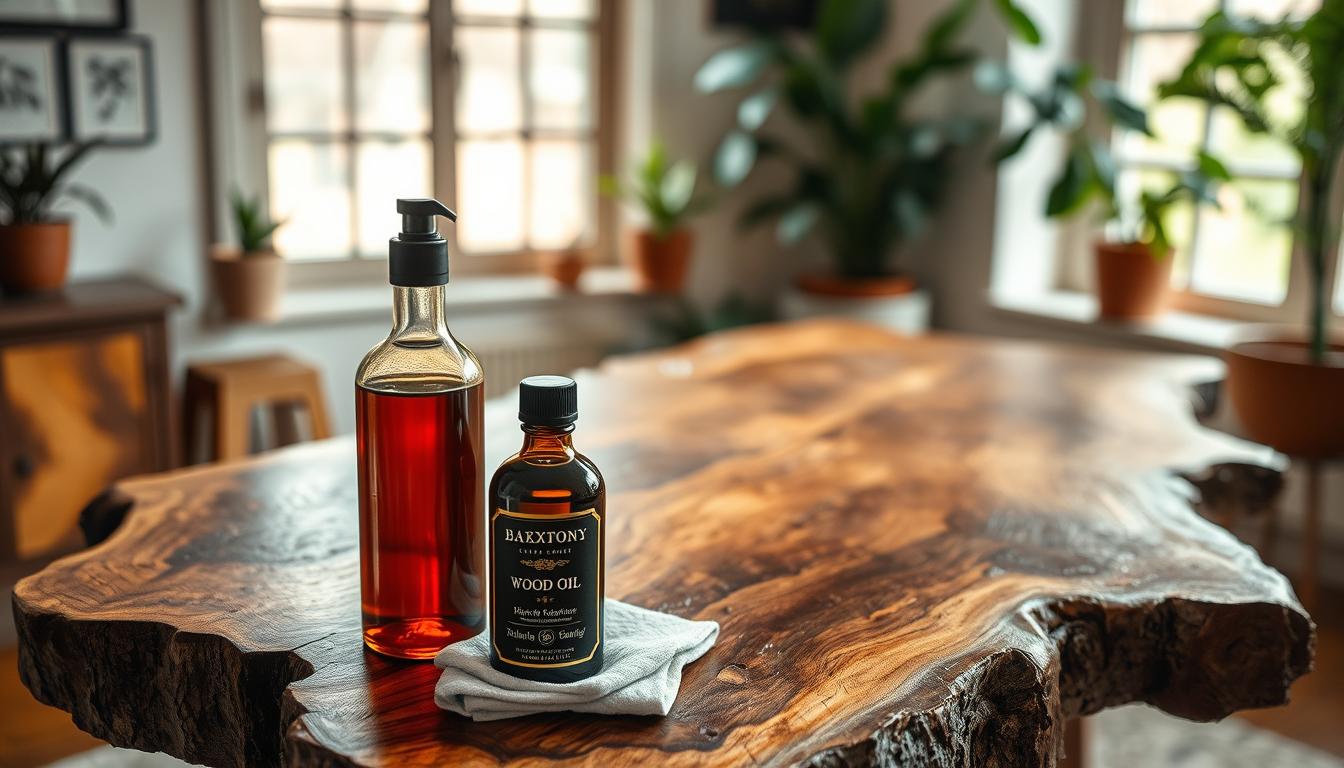
Maintaining live edge wood means protecting the surface, preserving the bark line, and keeping the finish performing over time. You’ll learn practical steps you can use today to shield your table from common threats like sunlight, heat, humidity swings, spills, and grit.
Your furniture keeps the tree’s natural shape, so the edge and grain can be more vulnerable than milled pieces. Small habits — coasters, quick wipe-ups, and steady indoor conditions — prevent most avoidable damage and keep the natural beauty intact.
This guide focuses on two main areas: bark preservation and regular oiling. Exact routines depend on finish type (hardwax oil, epoxy, polyurethane, or other sealers). You’ll get finish-safe cleaning steps, tips to avoid water and heat marks, and simple repair ideas for surface scratches.
Simple tools (microfiber cloths, warm water, optional diluted vinegar) and a modest maintenance schedule are all you need to protect your tables and enjoy lasting beauty.
Know Your Live Edge Table: Bark, Grain, and Finish Basics
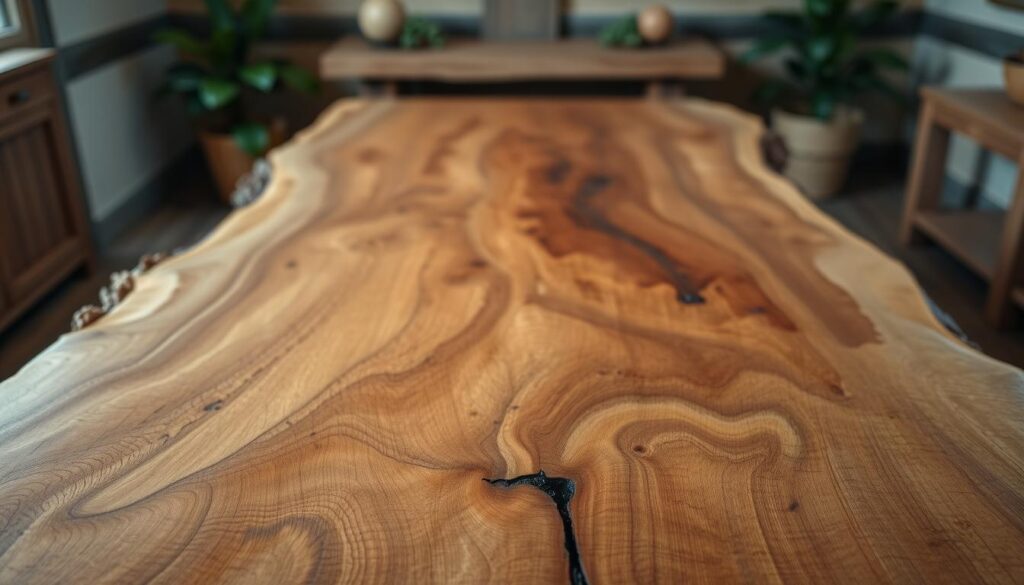
A slab with its natural outline reacts differently than a flat, milled tabletop. You should know the main parts so you can protect them.
Anatomy at a glance:
- The bark line or natural outer perimeter that frames the piece.
- The open grain and figure that show color and character.
- The sealed top surface and the finish that repels moisture and wear.
Why sunlight, heat, humidity, and spills matter
Direct sunlight and prolonged sunlight exposure will fade color and weaken a stained finish over time. Keep your table out of windows or use filtered light to slow fading.
Changes in temperature and humidity make the slab expand and contract. That movement can cause cracks or warping, especially on wide dining tops. Aim for steady indoor conditions and 35–55% humidity to reduce risk.
How finish type affects your routine
Different finishes change how you care for the surface. Hardwax oil allows spot touch-ups. Epoxy or polyurethane often needs sanding and a larger refinish if damaged.
Everyday Cleaning That Protects the Surface and Edge
Quick, regular attention prevents small dirt and spills from becoming lasting damage to your piece. Build a dry-to-damp-to-dry routine and you will protect the finish and the natural outline.
Dusting with a clean microfiber cloth
Dust weekly, or more often in busy rooms, using a plush microfiber cloth. The soft fibers capture grit from crevices without dragging it across the surface.
Press the cloth with your fingertips into bark nooks and grain texture instead of scrubbing, so you lift debris from cracks without abrasion.
Wiping after meals with warm water
For daily spills, use a soft rag dampened with warm water. Wring the cloth so it is damp, not dripping, and make 2–3 light passes.
Wipe in the direction of the grain to reduce streaking and avoid catching fibers on the raw edge.
Using diluted vinegar and drying well
For a natural cleaner, mix equal parts vinegar and warm water. Wring the cloth thoroughly, wipe the area 2–3 times, then immediately follow with a dry microfiber cloth to buff.
- Do this: Dust, then damp-wipe, then dry and buff each time.
- Avoid: letting sprays or conditioners pool in ridges — residue builds up and looks gunky.
Prevent Water Spots, Stains, Scratches, and Heat Damage
You can avoid many surface problems with consistent use of simple protective items.
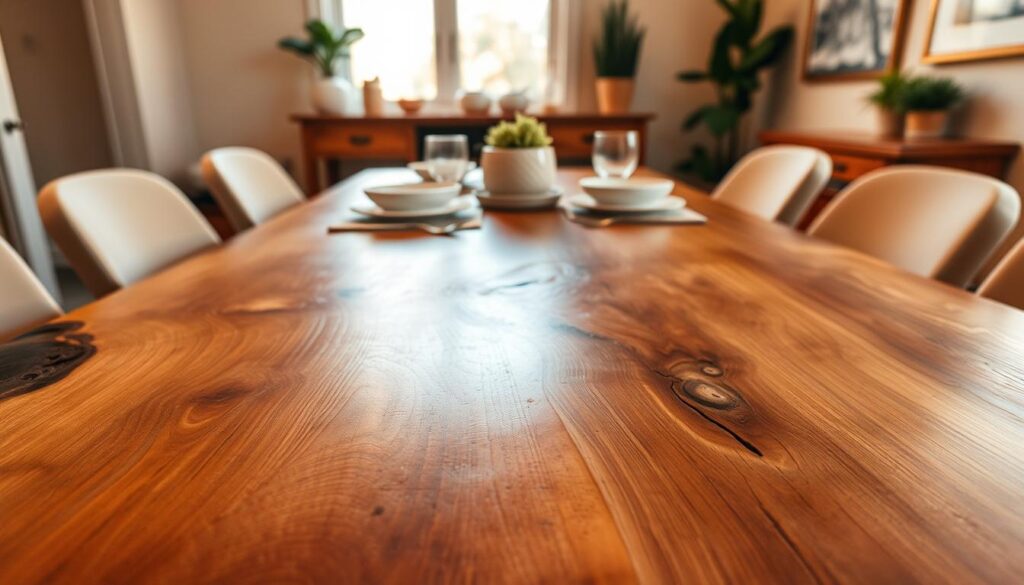
Use coasters, placemats, and hot pads for every drink and place setting. These small habits stop rings, heat marks, and micro-scratches before they start. Always use hot pads for pots and pans; even durable finishes can mark under high heat.
Fast spill response for coffee, wine, and oily foods
Blot spills immediately with a clean cloth. If needed, follow with a barely damp cloth, then dry and buff so pigments and oils do not settle into the grain.
Avoid abrasive objects and grit
Glasses, plates, and silverware are harder than wood and can scratch when slid. Clean crumbs and salt promptly and never use abrasive scrubbers.
- Make prevention your default: coasters and placemats for routine protection.
- Anti-grit habits: clear crumbs, avoid rough pottery, and keep the surface free of grit.
- Sun and heat control: keep the table out of direct sunlight or use window coverings to reduce fading and finish wear.
These small steps protect your table and reduce how often you’ll need re-oiling or refinishing.
Maintaining live edge wood with Bark Preservation and Oiling
Small changes to room climate and handling habits are the best defense against warping, cracks, and split lines over time. Keep humidity near 35–55% and avoid wide temperature swings. Steady indoor conditions reduce expansion and contraction that cause damage.
Store and use your table only in climate-controlled spaces. Avoid garages, seasonal cabins, or unheated rooms where repeated moisture and temperature cycles speed deterioration.
Protecting the bark and edge
Dust the bark with a soft brush or a microfiber cloth. Don’t bump the rim with chairs or vacuums, and never pick loose bark.
If bark loosens, stop home glues. Keep the area supported and contact a professional who matches repair methods to your finish and slab condition.
Oiling, wax, and scratch strategy
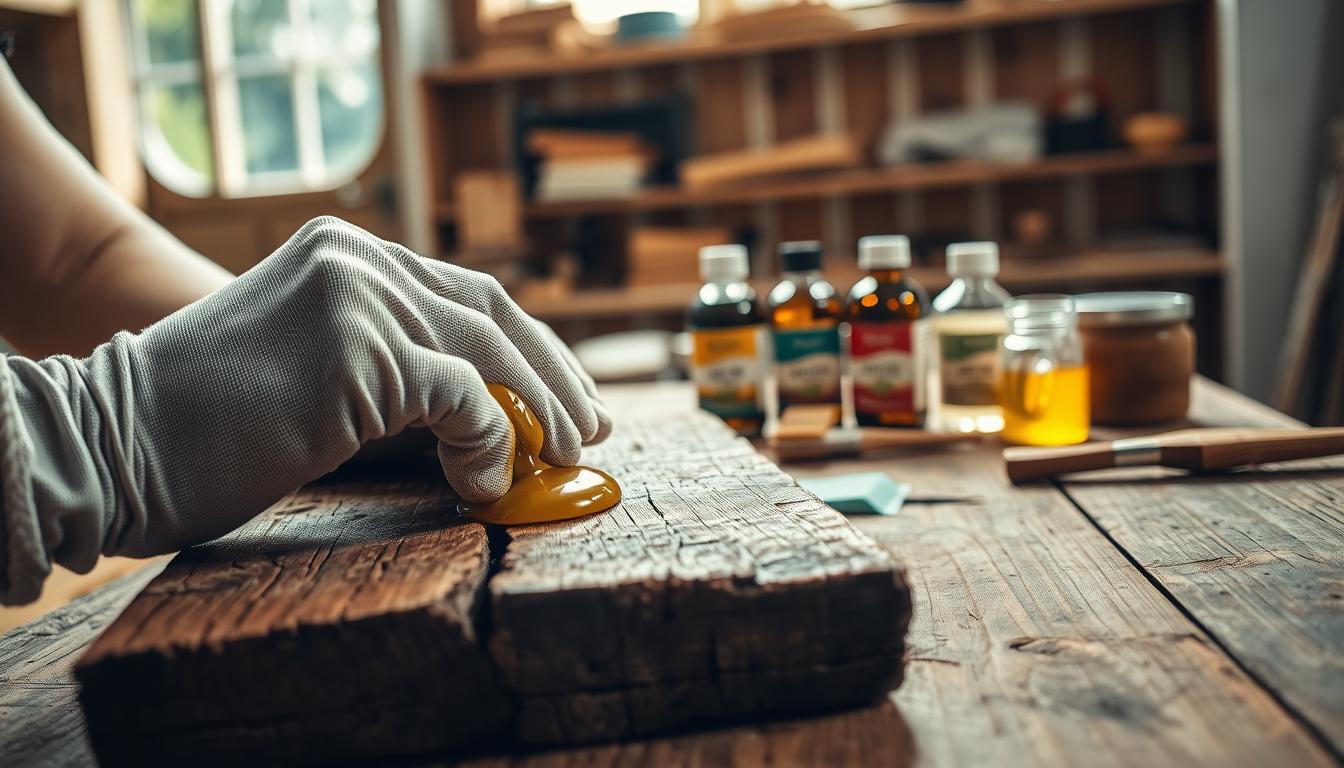
- Reapply oil every 6–12 months for oil finishes; let it soak briefly and wipe off excess.
- Use paste wax sparingly for wax finishes and buff until even.
- Maintenance oils (for hardwax systems like Vesting or Rubio Monocoat) repel moisture and reduce minor scratches without sanding.
- For epoxy or polyurethane, expect sanding and refinish for deep scratches; hardwax oil often allows local touch-ups.
What to avoid: no harsh chemicals, ammonia cleaners, soaking water, or abrasive scrubbers that strip finish and damage edge wood.
Conclusion
A simple routine lets your piece hold its character for years.
Make small habits your default: dust with a microfiber cloth, wipe spills with warm water, then dry. These quick steps protect the surface and cut long-term wear.
Use coasters, placemats, and hot pads at every meal to reduce stains, scratches, and other damage. Repair small dull spots early so fixes stay simple.
Two big levers matter most: steady indoor humidity and choosing finish-safe products — especially if you use a hardwax oil system. Keep conditions stable and match products to your table’s coating.
Quick checkpoint: guard against spills, protect the edge from impacts, refresh oil or wax when needed, and your dining tables will retain their natural beauty year after year.