
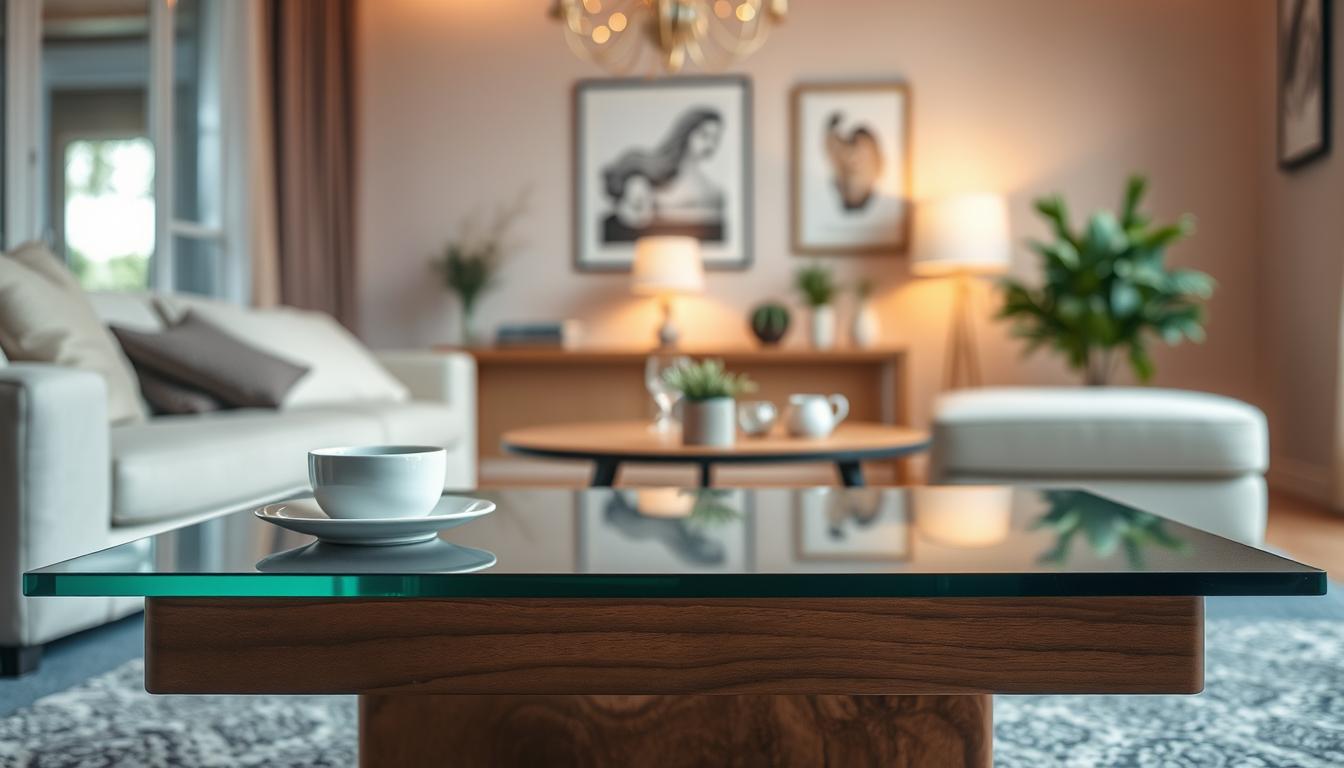
Choosing a practical surface protector means weighing looks, users, and use. You want a clear sheet placed over a wood table to stop scratches and spills, while keeping the grain visible instead of hiding it with cloth or vinyl.
Key choices you’ll face include safety (tempered vs annealed), thickness, fit and edge comfort, tint or finish, and the total price including delivery. Tempered material is at least three times stronger than standard annealed glass and breaks into small, less harmful pieces.
Expect commercial reality: standard sizes can miss a clean fit, so many buyers order custom cuts. Prices start around $9.99 for custom pieces. Max custom sizes can reach 120″ x 96″, and common turnarounds range from same-day to three–six days.
The trade-off is clear: a covered table resists marks and stains, but you may notice glare, fingerprints, and the added weight of larger sheets. In the next sections, you’ll get simple steps on what to measure and which thickness works for dining, coffee, and desk use.
Why you might add a glass table top to wood furniture
Adding a transparent shield lets your table survive everyday life without hiding its character.
What a protector does for your tabletop surface
A protective sheet acts as a sacrificial layer. It takes daily wear—cups, plates, laptops, keys—so your tabletop surface stays intact.
Common furniture pieces that benefit
- Coffee table that holds remotes and drinks.
- Side table that gets rings and scuffs.
- Dining table facing heat and spills.
- Desktops that see constant friction from work gear.
When a clear layer improves the look in your room
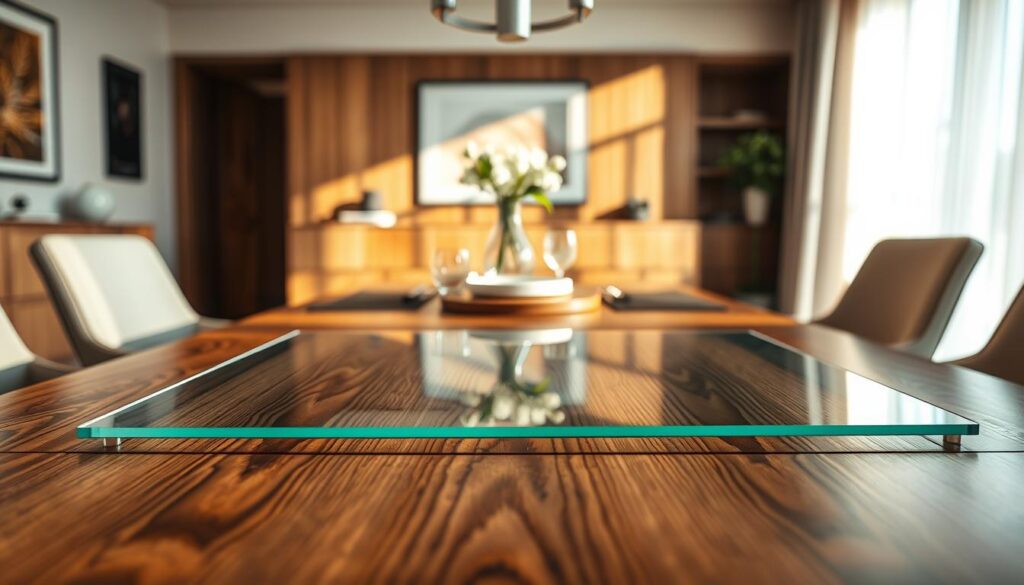
Protecting does not mean replacing the original finish. You still see grain and color, but you gain a wipeable, more resilient surface.
It can make heavy wood feel lighter and keep a minimalist design while showcasing special finishes like reclaimed slabs or inlays. A uniform sheen also helps unify mismatched pieces in brighter spaces.
Deciding to add protection ties to your home habits—kids, pets, frequent entertaining, crafting, or working from home all raise the risk of scratches and stains. Choosing the right type, thickness, edge, and fit will affect both protection and aesthetics in your furniture.
Pros of glass tops for protecting wood surfaces
A clear protective panel reduces everyday wear and keeps the finish you like visible. It stops common marks so you can use your table without constant worry.
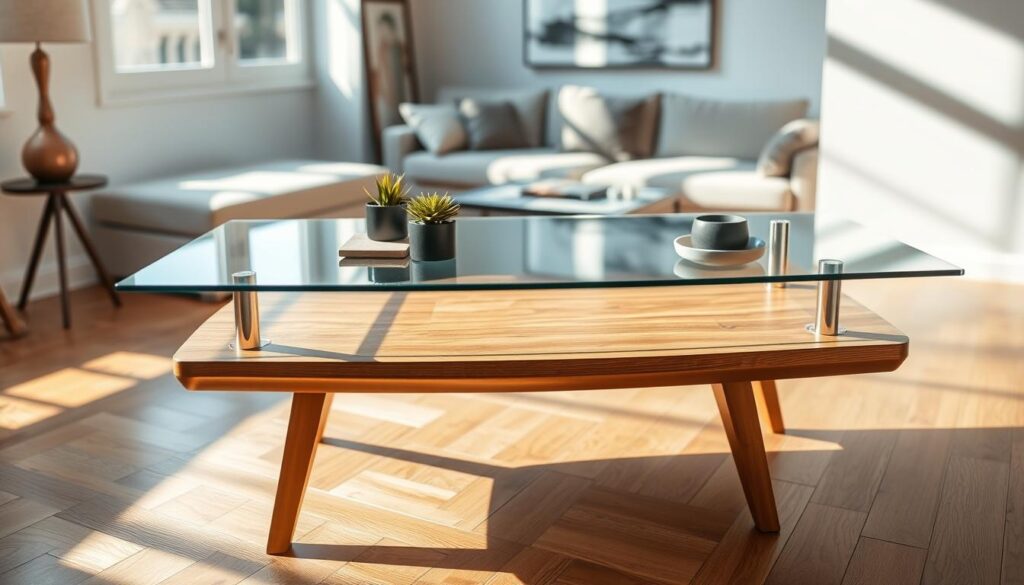
Helps prevent scratches, stains, and everyday damage
The cover takes abrasion from plates, grit, and sliding objects. That helps prevent scratches and finish wear on your tabletop.
Spills sit on the surface instead of soaking into porous finishes. You avoid water rings, oil marks, and long-term discoloration.
Boosts durability while keeping the grain visible
Durability improves because the sheet absorbs most impacts and scuffs. You keep the wood look without frequent refinishing.
Choose tempered panels when safety and strength matter. Tempered material resists breakage and, if it fails, shatters into small pieces rather than large shards.
Easier cleanup and simpler replacement
High-use dining, coffee, and desk tabletops are easier to maintain. Quick wipe-downs remove mess without touching the finish.
- Cleaner surfaces after meals and projects.
- Less frequent re-coating or full refinishing.
- Replacement is often easier than sanding and restoring the original tabletop.
Note on thickness: 1/8″ works as a protector on a solid table but is not recommended for standalone tabletops. Match thickness to use and table size to ensure lasting protection.
Cons and trade-offs to consider before choosing glass
Before you commit, weigh the everyday trade-offs that come with a clear panel on your table. The option protects finish and adds polish, but it also changes how the surface looks, feels, and performs in daily use.
Glare, fingerprints, and smudges
Clear panels reflect light and can mirror windows or overhead fixtures. That makes glare more noticeable than on bare wood and highlights fingerprints and smudges.
If you dislike constant wiping, factor this into your routine and budget for occasional cleaning supplies.
Potential movement and noise
If the fit isn’t exact or the surface isn’t flat, the panel can shift a little when bumped. You may hear soft clinks or feel slight movement without non-slip pads.
Choosing a flush fit or adding small pads reduces noise and improves stability.
Weight and handling
Thicker pieces, especially 1/4″ and up to 3/4″, are heavy at larger sizes. Placement often needs two people and careful handling to avoid chips or injury.
Cost drivers and planning tips
Price varies by thickness, edgework (Beveled, Flat, Pencil, Ogee), tint, shape complexity, and delivery timeline. A custom glass cut will also reflect cutting tolerance (+/- 1/16″ to +/- 3/16″).
- Confirm measurements and decide minimal overhang versus flush fit.
- Ask questions during quoting about lead time—same‑day or 3–6 day options may apply.
- Remember that thicker pieces and ornate edges raise the cost and delivery needs.
Glass tops for wood: choosing the right glass type for your table
Deciding which material to use means balancing strength, safety, and whether you may need later modifications. Pick a pane that suits where and how you use the surface.
Tempered glass vs annealed glass: safety and strength
Tempered glass is at least three times stronger than standard annealed material. It resists breakage in transit and daily use better, so it suits busy dining areas and high-traffic tables.
How tempered material breaks and why it’s safer
When tempered glass fails, it fragments into many small pieces rather than large, sharp shards. That break pattern reduces severe injury risk around kids and pets.
When annealed is chosen and what to watch for
People pick annealed panes if they need holes, cutouts, or on-site drilling after fabrication. It’s fine in low-risk, recessed, or protected applications, but it is weaker and can form large shards if broken.
Plan around one hard rule
Once tempered, the pane cannot be drilled, cut, or altered. Finalize exact measurements and hole locations before tempering. If you are ordering a custom glass table, glass type is one of the top factors that will affect long-term satisfaction.
How thick should your glass be for a wood tabletop protector
Pick the right thickness and you match protection to how the surface gets used each day. That choice affects feel, stability, and long‑term confidence when you use the table.
Available inch options
Common thickness pieces include:
- 1/8″, 5/32″, 3/16″
- 1/4″, 3/8″, 1/2″
- 3/4″
When 1/8″ works — and when it doesn’t
Use 1/8″ only as a thin protector on a fully supported surface like a nightstand, dresser, or small accent table.
Do not use 1/8″ as a standalone tabletop, to span open areas, or where the piece will see heavy daily dining or desk use.
Match thickness to use, size, and feel
Thicker options feel more intentional. They dampen vibration, reduce movement, and suit larger spans and heavier use.
Smaller sizes and low‑risk surfaces can stay slim. Big tables, high traffic, or frequent movement call for heavier panels.
- Fully supported tabletop = thinner choices may be fine.
- Open frames or long spans = choose thicker panels for stability.
- Plan handling: 1/2″ and 3/4″ get heavy and need two people to lift safely.
Getting the right size: measurements, fit, and cutting tolerance
Accurate measuring is the single best way to get a clean, secure fit and skip extra work later. Take your time and check each dimension more than once. That prevents a panel that rattles, overhangs too far, or needs re-cutting.
How to measure your surface so the panel fits cleanly
Measure length and width at three points. Older furniture can be out of square, so check diagonal corners to confirm squareness.
Decide if you want a flush fit or a slight overhang. Flush looks tidy but can pinch; a small overhang eases hand clearance and reduces bump risk.
Cutting tolerance: what to expect
Cutting tolerance is the small difference between your measurement and the final glass cut. It matters when you need a tight fit inside a lip or frame.
- 1/4″ thickness: +/- 1/16″
- 1/2″ thickness: +/- 1/8″
- 3/4″ thickness: +/- 3/16″
Size limits and customization tips
Max custom sizes reach up to 120″ x 96″, so long dining and conference pieces are feasible. For handmade or live-edge tops, use templates or CNC-based services to avoid surprises.
Accurate measurements speed delivery, reduce returns, and ensure the final custom glass table top sits quiet and secure.
Shape options that match your base and your design goals
Choosing the right shape for your table can change how the piece feels and functions in a room. Shape selection is not just about looks; wrong proportions can make a set feel off or awkward in use.
Rectangle layout for classic placement
A rectangle glass table suits dining rooms, desks, and long consoles. It aligns with walls and cabinetry and supports orderly seating.
Round choices that aid circulation
A round glass table works well with pedestal bases. You get smoother circulation and no sharp corners, which is kinder when kids are present.
Square, oval and racetrack options
Square tops give a compact, modern feel. Oval and racetrack shapes soften visual weight and improve aisle clearance in tight layouts.
When to pick custom contours and CNC precision
Choose a custom glass table when bases are odd, or you inherit an unusual piece. CNC cutting and CAD templates deliver precise radii and polished edges. Max custom sizes reach up to 120″ x 96″, so large formats are feasible.
- Tip: Match the shape to the base and room traffic to avoid visual imbalance.
- Patio: Pick shapes that minimize overhang and catch wind.
Edge finishes and corners: how to choose safe, comfortable edges
Edge finishing shapes how your table feels and how safe it is during daily use. You touch the perimeter when you pull in a chair, wipe spills, or lean on the surface. That contact makes edge selection a safety and comfort decision, not just an aesthetic one.
Flat polished edges give a sleek, modern look with a mirror-like finish. They read as refined on visible sides and pair well with wood or metal bases. Flat polishing also resists chipping and feels crisp under the hand.
Seamed edges are slightly rough and cost less. Use this type when the perimeter hides inside a frame or recessed lip so you don’t overpay for finish that won’t be seen.
Beveled, pencil, and ogee options change style and touch. Beveled edges add a decorative slope. Pencil edges round the contact point and reduce perceived sharpness. Ogee profiles feel softer and upscale.
- Pick smoother profiles for homes with kids, heavy traffic, or commercial use to prioritize safety.
- Expect consistent, smooth edgework as a mark of quality on each piece.
- Include edge and corner specs when you order so the final glass table tops feel like a custom upgrade.
Glass tint and finish options that change the look of your wood furniture
Tint and finish choices can make the protective panel vanish or become a deliberate design accent on your table. Your selection affects color, contrast, and how much the sheet draws attention. Think about whether you want the protector to disappear or to nudge the room’s palette.
Clear panels: bright, timeless clarity
Clear panes give the most faithful view of the wood below. They keep the original tone and let light pass with minimal color shift.
Low-iron: truer color and less green cast
Low-iron reduces the green tint you sometimes see in thicker panels. Choose this when accurate color is important and you want the wood’s hue to read true.
Tints and mirrors for style control
Bronze, grey, green, blue, and mirrored finishes let you shape mood and reduce visual clutter. Use warm tints to add depth or cool greys to modernize the surface.
- Match to lighting: bright daylight and strong fixtures increase glare; darker tints can cut reflections.
- Coordinate finishes: align the panel with floors, cabinets, and stone so the final look feels intentional.
- Choose by goal: disappear, complement, or make a contemporary statement.
Ordering custom glass cut to size in the United States: timeline, price, and service
When you order a custom panel in the United States, expect a straightforward path: pick material type, thickness, overall size, edgework, shape, and tint. Confirm exact measurements before fabrication so the job moves smoothly to production.
What impacts price: thickness, complex shapes, upgraded edges, and larger dimensions raise the price. Tempered pieces cost more but lower breakage risk; tint and specialty finishes also add labor.
Typical turnaround: some vendors offer same-day options, while many custom orders take roughly 3–6 days depending on specs and shop capacity.
- Shipping confidence: proper protective packaging and tempered material help panels arrive intact after cross-country delivery.
- Customers report fast service, secure packaging, and intact cross‑country arrivals—reviews note a 4.4-star average with 355 reviews.
- Value checks matter: buyers sometimes find big savings online versus local quotes (example: $211 local vs $70 online).
Bulk and commercial orders: request a quote with quantity, site access, and “Forklift/Dock” fields. Standardize specs across multiple pieces to keep price and delivery predictable for patios, offices, or restaurants.
Conclusion
Make your final choice by matching everyday use with safety and service needs.
Start by confirming how you use the table—dining, work, crafts, or display. Choose tempered glass when strength and safety matter, then pick thickness, edge, and tint that suit your habits.
The main gains are clear: a protected tabletop that stays easier to clean while keeping the wood visible and cutting long‑term damage risk. Watch for glare and fingerprints, ensure tight tolerances for a quiet fit, and plan handling for large panels.
Quick spec checklist: final measurements, desired overhang or flush, thickness to match use, chosen edge finish, and glass type. Once specs are set, request a quote or order a custom cut panel to finish your project.