
Repairing a wobbly seat is about safety and lasting stability, not a quick patch. Replacement chairs can cost hundreds, and a wobble can mean a joint is stressed and might fail under load.
You’ll learn two main tracks: tighten mechanical fasteners like screws and restore strength in glue joints with proper cleaning and clamping. First, diagnose the movement. Then try tightening hardware. If that fails, prep, reglue, and clamp for a solid bond.
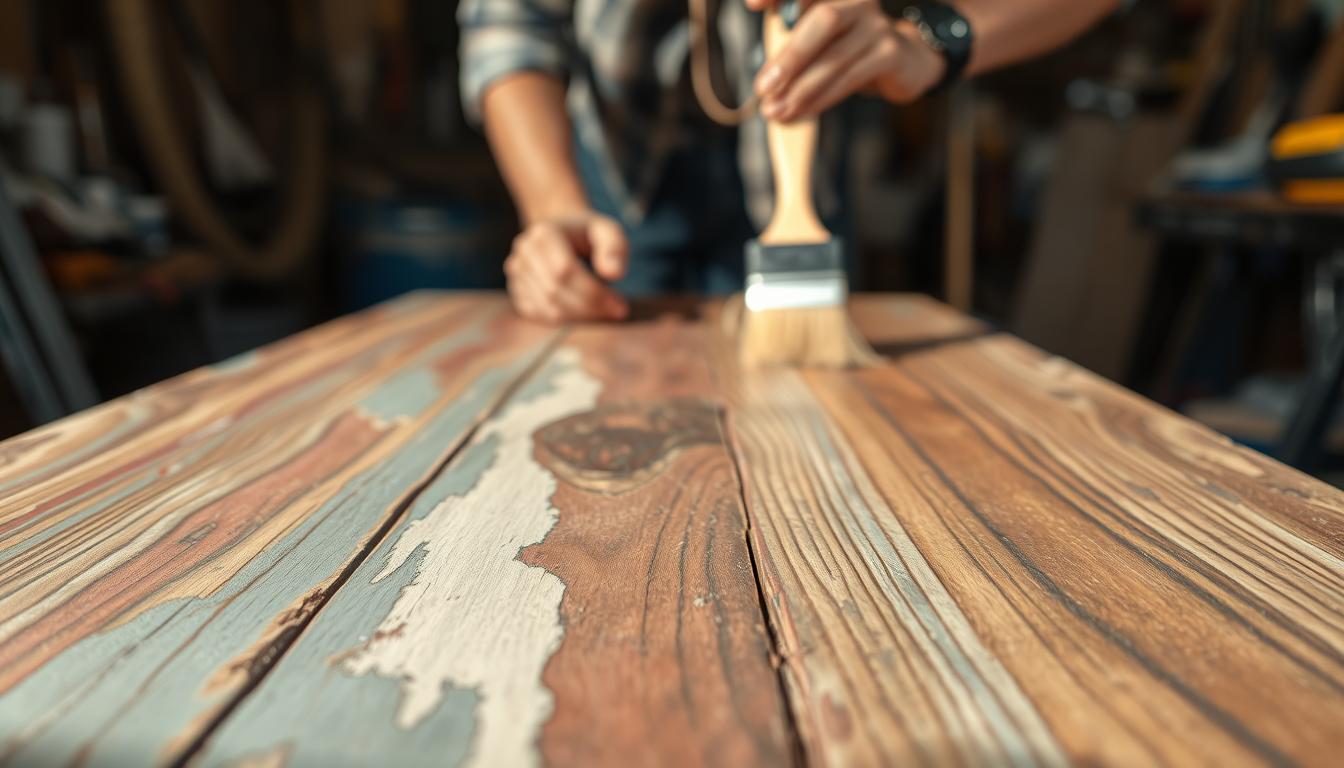
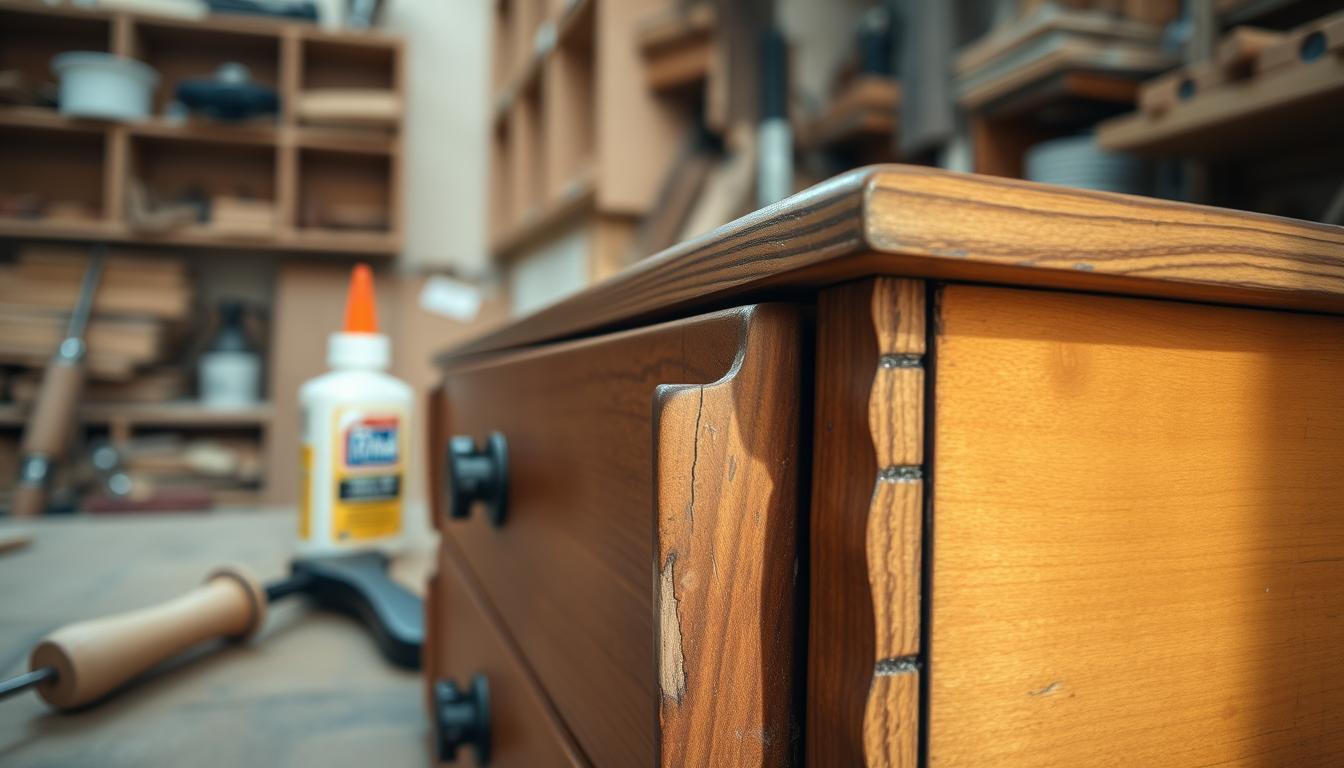
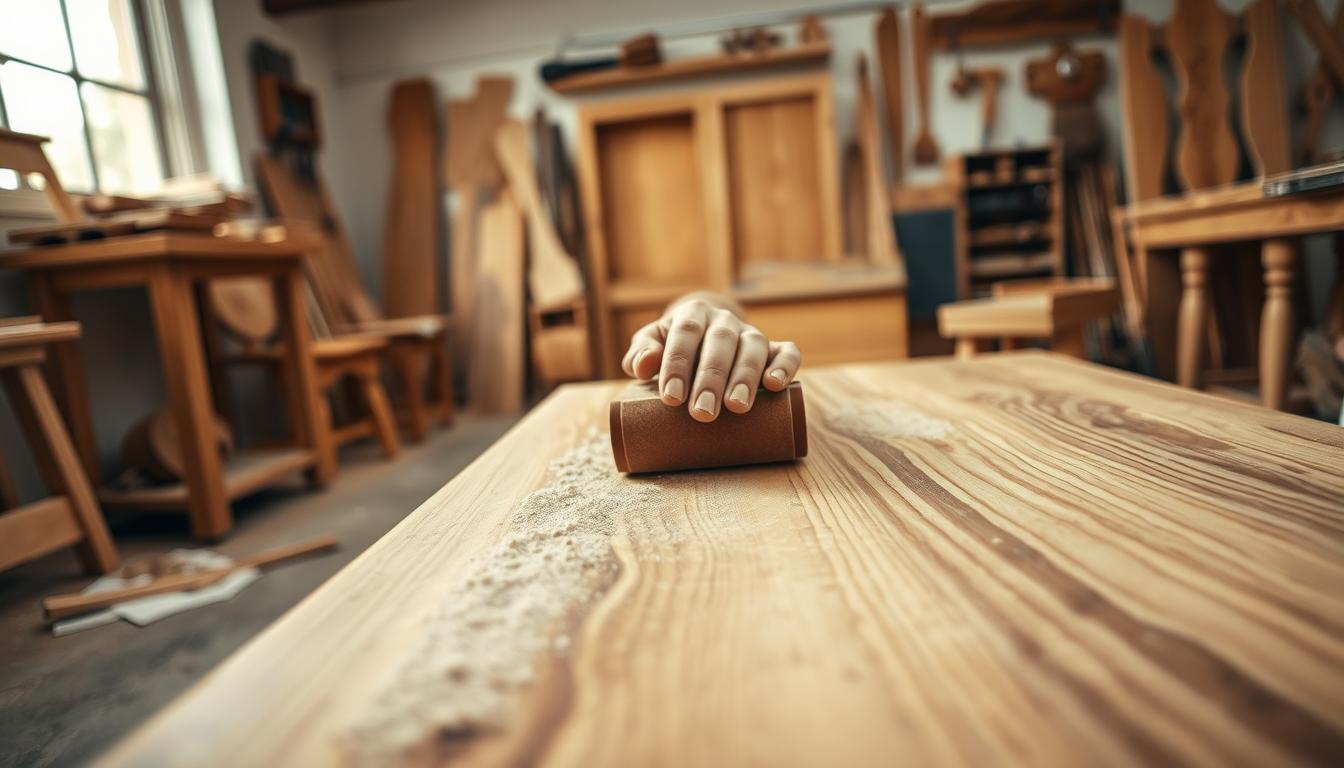
Gather basic tools before you start: wood glue, clamps, sandpaper, a driver, filler, and optional thread-locking product. Treat antiques and mass-produced furniture differently to protect finishes and avoid damaging any part or piece.
Follow safe handling: disassemble only as needed, protect finishes, and avoid over-tightening which can crush wood fibers. Give adhesive the recommended time to cure before you sit back down.
Diagnose Why Your Chair Wobbles Before You Repair It
Start by identifying whether the wobble comes from the floor or from movement inside the frame. That distinction tells you which repair path to take: an uneven foot or a joint problem.
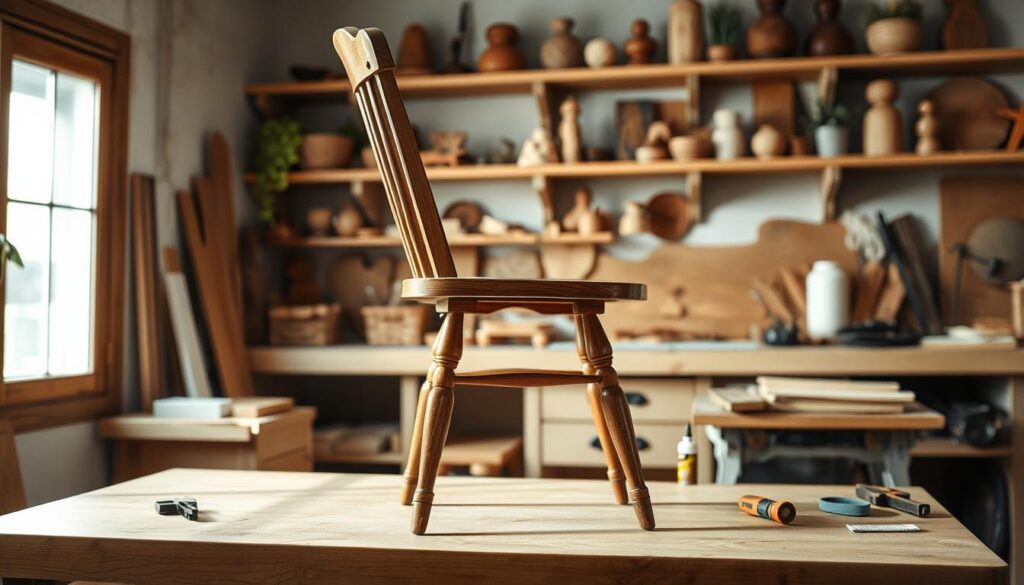
Quick tests to locate the problem
Press on opposite corners of the seat and watch which foot lifts. Lift the seat and gently rack the frame to feel any twist at a joint.
Inspect high-stress parts
Check rungs, spindles, seat frame corners, and the bottom/end of each leg for gaps, shiny rub marks, or a click when you shift weight. Those signs show movement between parts rather than just an uneven surface.
Hidden hardware and stripped holes
Feel for wood plugs or painted filler that may hide screws. Use the right driver bit to avoid damaging fasteners.
- Stripped hole checklist: screws spin without gripping, holes look enlarged, or wood fibers crumble.
- Uneven-foot decision: sand or trim a long foot; shim a short one and add nail-on sliders to protect the bottom.
- Document each part, hole, and screw you find so repairs stay organized.
Next: classify the issue as fastener-related, glue/joinery-related, or damage needing reinforcement to choose the right fix.
Fixing loose chair legs by Tightening Screws, Bolts, and Other Fasteners
Start by accessing the fasteners so you can see exactly what needs tightening or replacing. Remove any filler or small plugs carefully with a sharp chisel or utility blade. Select the correct driver bit and support the frame so you don’t rack the piece while turning screws.
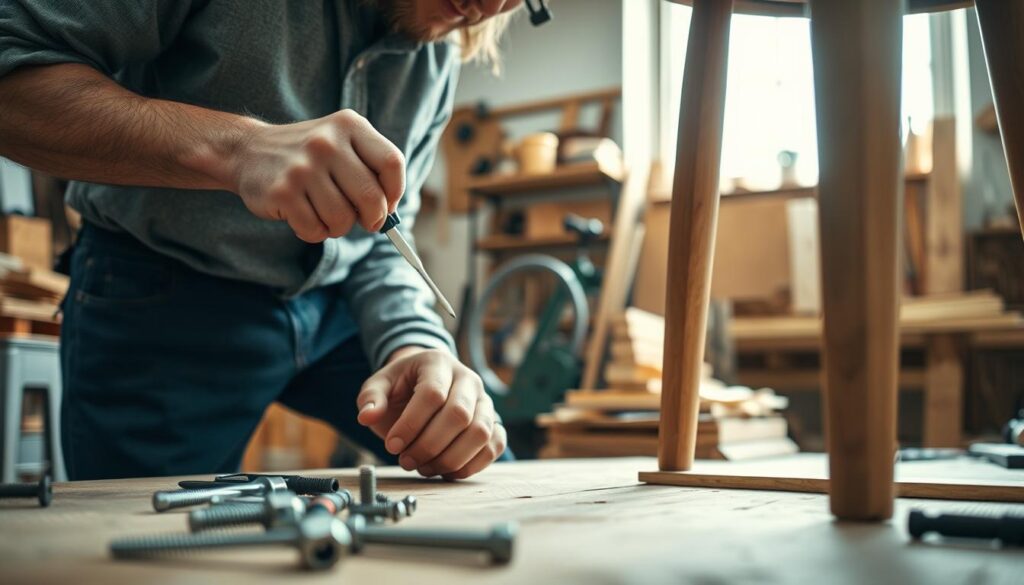
Snug screws and bolts gradually. Turn them a little at a time and stop when the joint closes. Over-tightening crushes wood fibers and can make the hole worse.
- If a screw simply spins, the hole is stripped. Step up to a slightly thicker screw (about 1/16 to 1/8 inch larger in diameter) so threads bite into solid wood.
- Before final tightening, align the leg or part so the fastener locks the pieces together without trapping a twist in the frame.
- For wood screws, add a tiny dab of wood glue to the threads to increase friction and reduce repeat loosening. Allow adequate cure time before heavy use.
Bolts, nuts, and persistent backing out
When a nut keeps working loose, use a thread-locking adhesive or fit a secondary lock nut. Both stop vibration from undoing your work and save time later.
If snugging fasteners stops movement at the joint line, you’re done. If not, the bond is likely failed and the next step is a reglue repair.
Quick re-test: place the piece on a flat surface and press side-to-side. Confirm the wobble is gone before you return the furniture to regular use.
Reglue Wobbly Wood Chair Joints for a Long-Lasting Repair
Begin by identifying the exact joint that failed so you only separate what’s necessary. Mark each part for orientation and pull apart the minimum number of joints to reach the failed glue joint.
Safe separation: apply steady pressure and gently twist the part to break old adhesive. Pad clamps or pliers with scrap wood to protect the surface while you pry.
Remove all old glue from both the socket and the tenon or dowel. New wood glue will not bond reliably to cured adhesive, so clean to bare wood with sandpaper or a chisel.
Dry-fit the mortise-and-tenon or dowel piece. Check alignment and seat; sand or pare rounded edges until parts fit snugly without forcing.
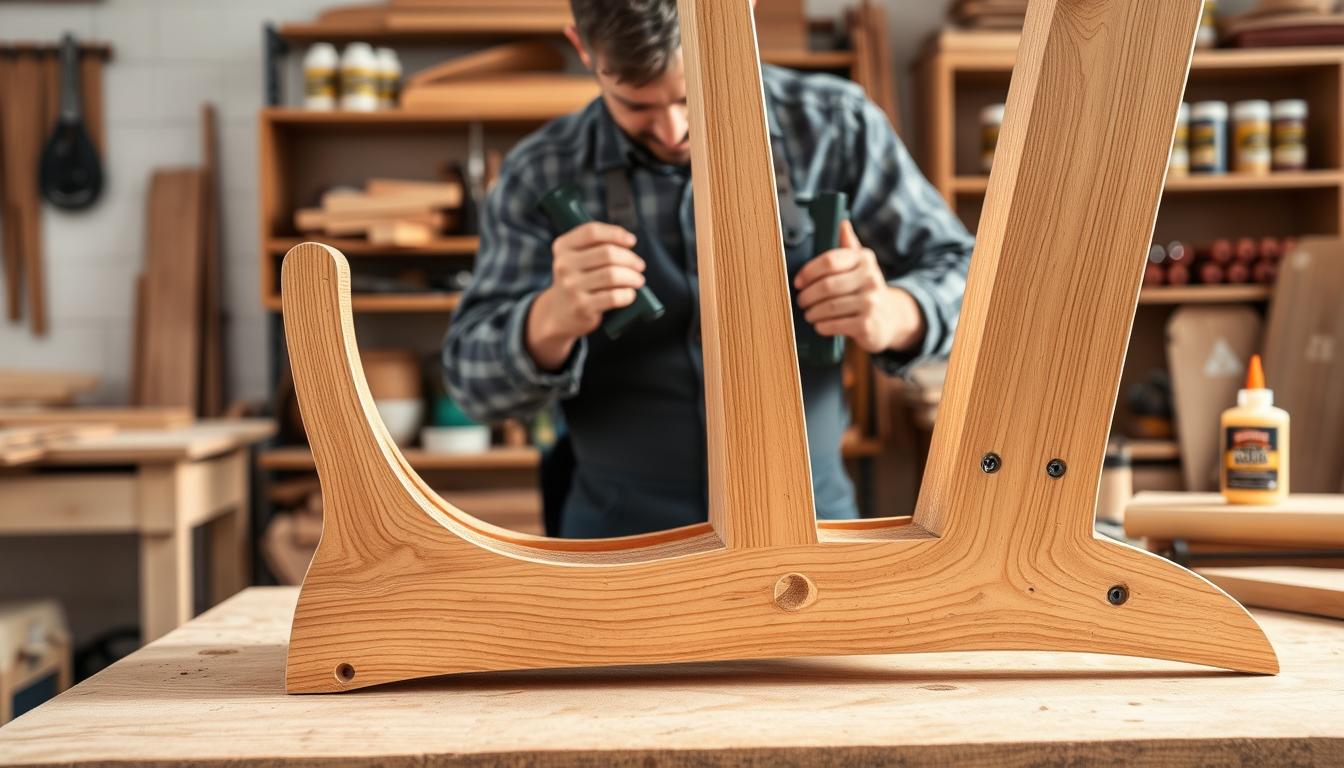
Gluing and clamping: apply glue to the socket and the tenon, assemble fully, wipe squeeze-out, and clamp until the adhesive is fully cured. Use strap clamps for frames or steady weights when clamps can’t span the piece.
- For stubborn parts, twist gently to break the bond and pad tools to avoid dents.
- Reattach rails or spindles by dripping adhesive into the hole and holding alignment until set.
- After cure time, test stability in multiple directions to confirm there’s no movement.
Reinforce Loose or Damaged Chair Parts When Glue Alone Isn’t Enough
When glue alone won’t hold, add discreet reinforcement to restore strength without changing the look.
Decide when to reinforce: if glue cures but the joint still shifts, or the wood is worn and the fit won’t hold under load, use mechanical help. Choose a method that suits the damaged part.
Angle brace installation
Predrill screw holes to prevent splitting. Use a brace or leg brace sized so screws bite into solid wood without reaching the seat. Place the brace where it won’t contact feet.
To tighten a gapped joint, slip a thin cardboard shim under one side of the brace while seating screws. Remove the shim and finish tightening so the brace pulls the joint snug.
Tenon wedge and pinning
For a very loose tenon, cut a centered slot to the socket depth and tap in a thin softwood wedge. Trim flush, reglue, and clamp.
When appearance matters, drill a small pin hole through the joint, add glue, drive a short nail pin, countersink, then fill and sand flush.
- Rebuild missing end sections in layers using filler, sanding (80-grit) between layers to match the width of an undamaged piece (for example, 1 1/2 inch).
- Countersink exposed screw heads, fill, sand smooth, and prime to hide prior repairs.
Final check: confirm braces are tight, filled areas are smooth, and the piece sits flat so your repairs hold up in daily use.
Conclusion
End by verifying fit, fastening, and curing so the repair holds under use.
Start with a clear diagnosis: confirm whether uneven legs, stripped screws, or failing joints cause the wobble. That tells you the safest way to proceed.
Tightening screws, repairing a stripped hole, or adding a dab of wood glue and thread-lock often fixes many chairs quickly.
For long-term strength, remove old glue, dry-fit the joint, apply fresh glue, and clamp until fully cured. Give the adhesive the recommended time before use.
Use braces, wedges, or pins when the wood is worn. Rebuild damaged ends with layered filler to help the set sit and look right.
Finally, place the piece on a flat surface, test for wobble, and re-check high-stress parts after a few days. With basic woodworking care, you extend the life of your furniture and keep it safe.