
You own a dresser, chair, or cabinet that mixes natural frames with woven panels. This guide shows you how to treat the two surfaces separately while working on the same piece. Expect gentle, low-moisture care and simple steps that protect shape and finish.
Start by dusting each surface weekly. Use a damp (not dripping) cloth for spot work. For deeper work, a mild dish-soap solution and quick drying keep problems away.
Follow this workflow: identify materials, gather tools, dust, do a safe deep clean, dry fully, then maintain by season. You will prevent soap residue, excess water that warps frames, and humidity that invites mildew.
This article covers indoor and outdoor scenarios. You’ll learn when a hose is okay for synthetic panels and when natural fibers need a gentler touch. By the end, your furniture will last longer and look better with minimal effort.
Why mixed wood-and-rattan furniture needs a gentler cleaning approach
Mixed-frame pieces trap more grime than you expect because woven panels act like tiny nets. The weave collects dust, dirt, and small debris in narrow gaps where a quick wipe can’t reach. Pros like Tribesigns and Southern Living recommend vacuuming with a brush attachment on a low setting to pull out that dry soil first.

Moisture is the main risk. Natural fibers are moisture-sensitive and can warp or rot if soaked, while finishes on solid frames may spot or swell. You’ll see what “too wet” looks like when drips pool in the weave or water runs into seams — long dry times follow, and odors can develop.
Keep it mild: remove loose soil, use minimal dampness only where needed, and dry immediately to avoid lasting damage. Avoid abrasive or harsh cleaners that can dull finishes and discolor fibers, creating uneven color that is hard to fix.
- Vacuum or brush first to lift trapped dust and debris.
- Work with a barely damp cloth and spot-treat only.
- Dry each area fully so the piece stays sound and lasts longer.
Identify your materials before you start: natural rattan, synthetic wicker, and wood finishes
Knowing whether your piece uses organic fibers or synthetic weave will determine how wet you can get it. That single decision controls every step of the care process and helps prevent long-term damage.
Natural versus synthetic: what to look for
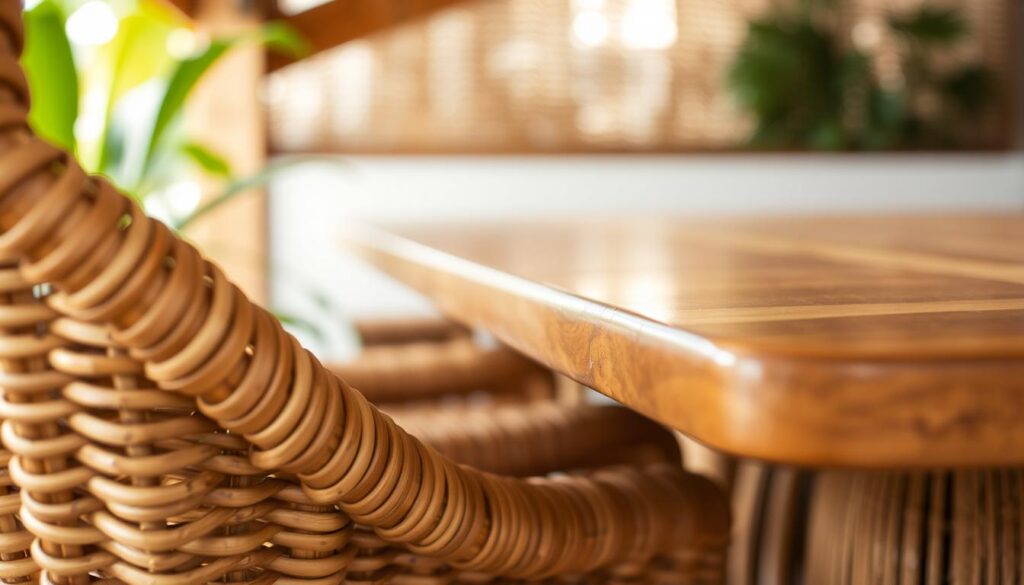
Natural rattan is porous and moisture-sensitive. It will darken, warp, or weaken if overexposed to water. Synthetic wicker, often resin, looks more uniform and tolerates rinsing and sun exposure better.
How to spot-test safely
Find a hidden area, apply a mild soap solution, wait a few minutes, then wipe. If you see color change, tackiness, or fiber lift, stop and use a much drier approach. Always check tags or the manufacturer site when in doubt.
Where grime hides at seams and joints
- Inspect seams where weave meets frame—dirt compacts there.
- Check drawer edges and tight joints for trapped debris.
- Plan to detail edges with a soft brush so moisture won’t sneak under finishes.
- Match your method to each material to avoid haze or lifting finish.
Gather your cleaning kit for rattan furniture and wood surfaces
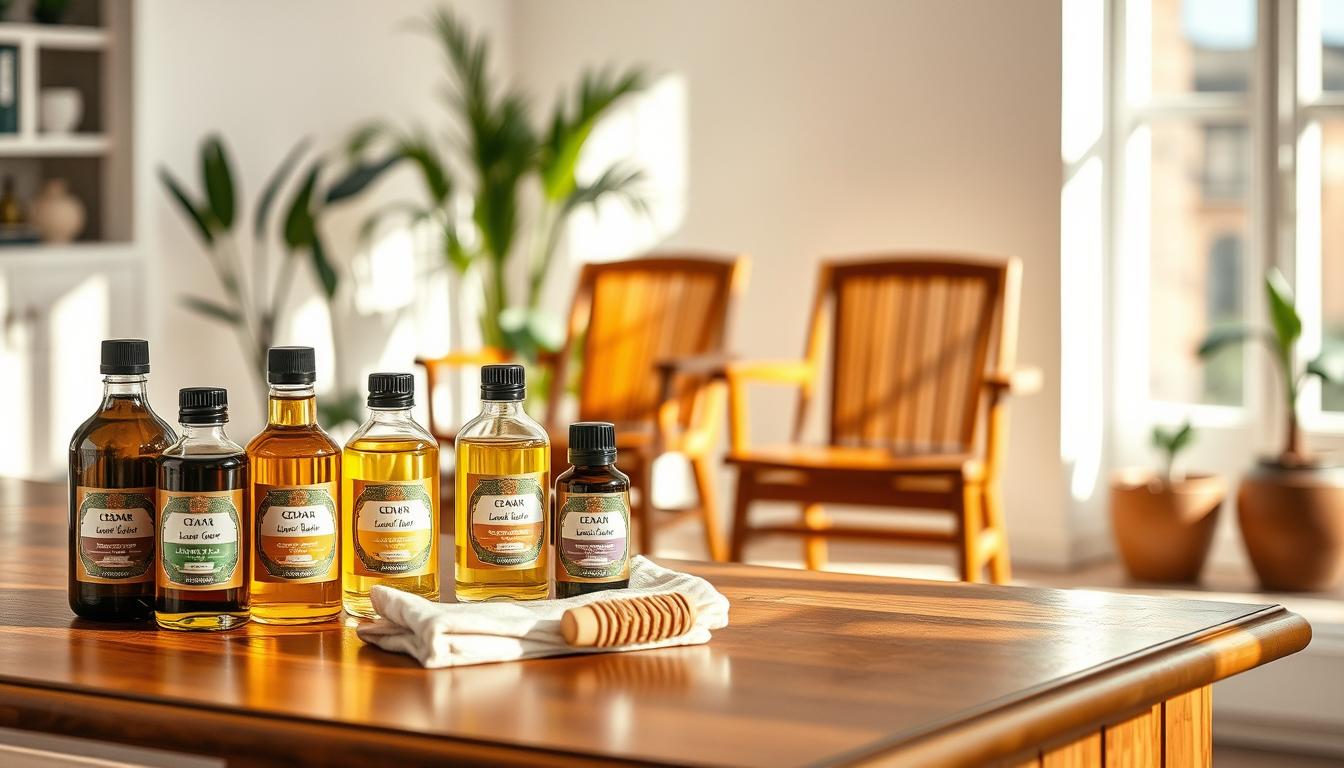
A small, targeted set of tools keeps your mixed pieces safe and easy to care for. Prepare this kit before you work so you control moisture and avoid surprise damage.
Microfiber cloths, a soft brush, and a vacuum with attachment
Pack two microfiber cloths: one slightly damp for wiping and one dry for immediate drying. Use a vacuum with a brush attachment on low suction to lift dust without snagging the weave.
Mild soap, warm water, and a controlled solution
Mix warm water with a few drops of mild dish soap in a bucket or spray bottle. This light solution cleans gently; pros sometimes use only soap bubbles to limit moisture in porous areas.
Optional supplies for maintenance and odor control
- Soft toothbrush for crevices and tight joints—soft bristles prevent fraying.
- White vinegar for mildew spots, baking soda for odors, and a small screwdriver for loose hardware.
- Consider linseed oil only after the piece is fully clean and dry for cautious conditioning.
Routine dusting that keeps furniture clean between deep cleans
Regular light upkeep saves you time and prevents tougher care sessions later on. A short weekly pass keeps grime from packing into woven panels and frame joints. Start with dry methods before you ever reach for moisture.
Vacuuming with a gentle brush attachment
Use a vacuum with a soft brush attachment on low suction to lift dust from crevices. Move with the weave so you don’t snag strands, and keep the nozzle a short distance when working fragile edges. This is the best way to remove fine dust without stressing the finish.
Quick weekly touch-ups with a soft cloth or duster
Wipe high-traffic living areas once a week with a dry microfiber cloth or feather duster. A fast pass on frames keeps the surface polished and stops loose particles from migrating into panels. Repeat in spots where pets or children spend more time.
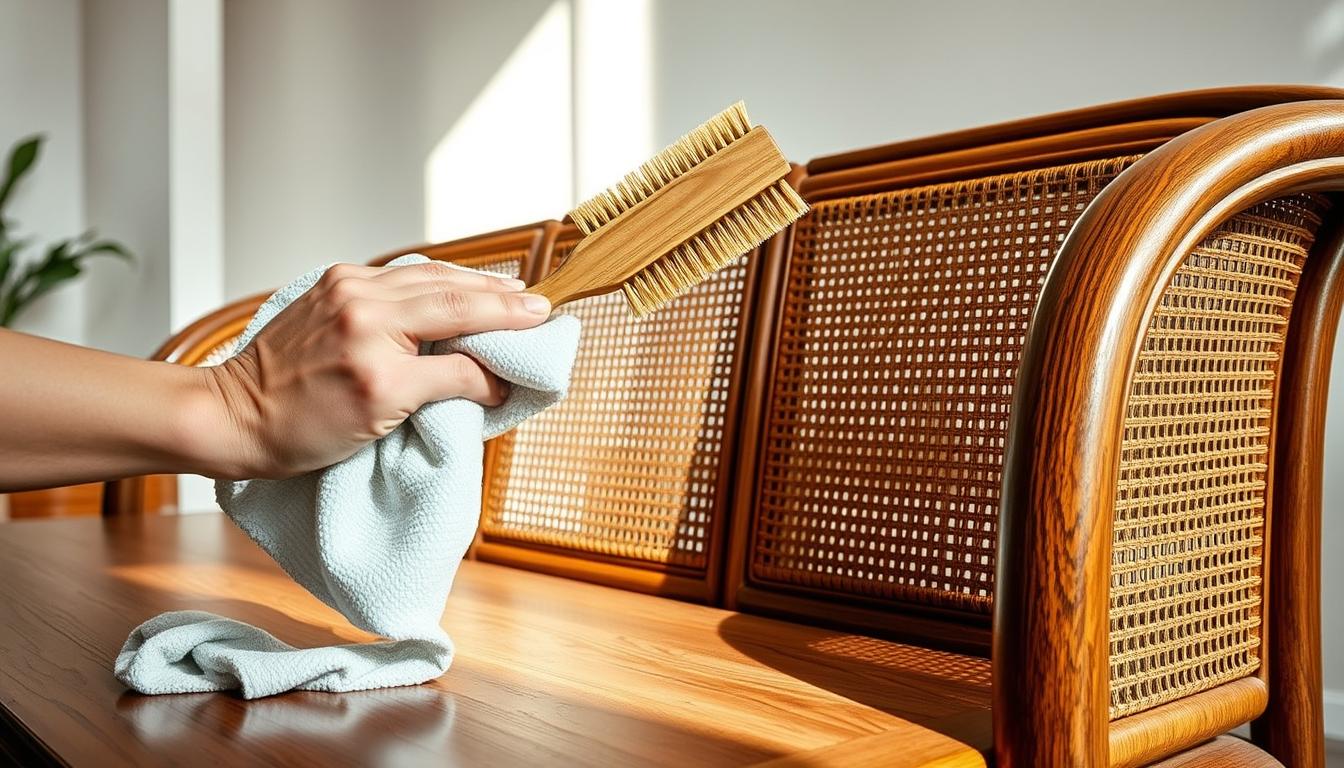
Dislodge trapped debris with a soft-bristled brush
Use a soft toothbrush or small brush to coax out lodged debris from tight weave. Make light, repeated passes instead of hard scrubbing to avoid fraying. Focus on seams and joints where buildup hides.
When compressed air or a blowdryer helps
For stubborn dust that vacuuming can’t reach, use compressed air or a blowdryer on a cool, low setting. Keep several inches of distance to protect fibers and finishes. Always finish with dry methods so particles don’t turn into mud inside crevices.
- Weekly routine: prevents heavy wet work later.
- Vacuum + attachment: low suction, brush head, follow the weave.
- Quick cloth wipe: maintains frames in busy areas.
- Soft brush or air: frees trapped debris without damage.
Cleaning rattan and wood with a safe, low-moisture method
Work slowly with a damp cloth and a soft brush so you control how much water touches each surface. A gentle routine keeps your furniture clean without risking warps or sticky residue.
Mix a mild solution
Use warm water with just a few drops of dish soap to make soapy water. Less soap is easier to rinse from woven fibers and limits residue on frames.
Work the weave gently
Lightly brush along the weave direction with a soft toothbrush to lift dirt. Keep pressure low to avoid fraying fibers and loosened strands.
Wipe frames separately
Use a different, well-wrung cloth for the frame areas. Wipe with minimal moisture so finishes won’t mark and joints won’t soak.
- Rinse and remove soap: Wipe away bubbles with a clean damp cloth so no film stays behind.
- Dry immediately: Pat with a dry cloth, then allow airflow until fully dry to prevent odors and weakening.
- Work section by section: Finish one small area before moving on so each part dries fully.
Deep cleaning heavily used pieces without warping the weave
Tackling months of buildup calls for small, controlled passes so fibers keep their shape. Deep work differs from a quick dust because skin oils and kitchen grime bond to surfaces and need a mild soap solution plus close detail work.
Work section by section
Clean one 6-inch area at a time. Wet only the spot, then rinse with a clean damp cloth. Let each area dry completely before you move on. This prevents warp and keeps woven panels tight.
Target high-touch buildup
Focus on armrests, drawer fronts, pulls, and cabinet edges. Use a soft toothbrush to lift oils and trapped dirt. Follow with a damp cloth to remove residue, then wipe again with a clean damp cloth.
Protect vulnerable points
Pay attention to corners, attachment points, and tight spaces where moisture gathers. Work slowly; small passes reduce the chance of structural damage. Patience in this process saves repair time later.
- Tools: soft brush, two cloths, mild soap solution
- Method: section, rinse, dry completely
- Goal: remove grime without loosening weave
Dry completely to prevent cracking, mildew, and damage
After you finish a wash pass, the last step is to remove all moisture so fibers and frames stay sound. Drying is not optional: trapped damp causes mildew, fiber weakening, and frame swell at seams.
Best drying setup: airflow, shade, and a clean dry cloth
Start by wiping the surface with a clean dry cloth to lift surface water. Then place the piece in a shaded spot with strong airflow—use a fan, open windows, or a breezy porch in your home.
Why you shouldn’t speed-dry with heaters or heat sources
Do not use heaters, hot hair dryers, or vents to rush drying. Rapid heat can crack rattan fibers and stress frame finishes, causing long-term damage.
- Wipe first, then air-dry until you can’t feel moisture.
- Avoid direct sun for long stretches; shade with good airflow is safer.
- Don’t sit on or load wet seats—damp panels will sag and set.
Dry completely each time to reduce mildew recurrence and extend the life of your furniture in every space.
Outdoor rattan furniture care for sun, rain, and humidity
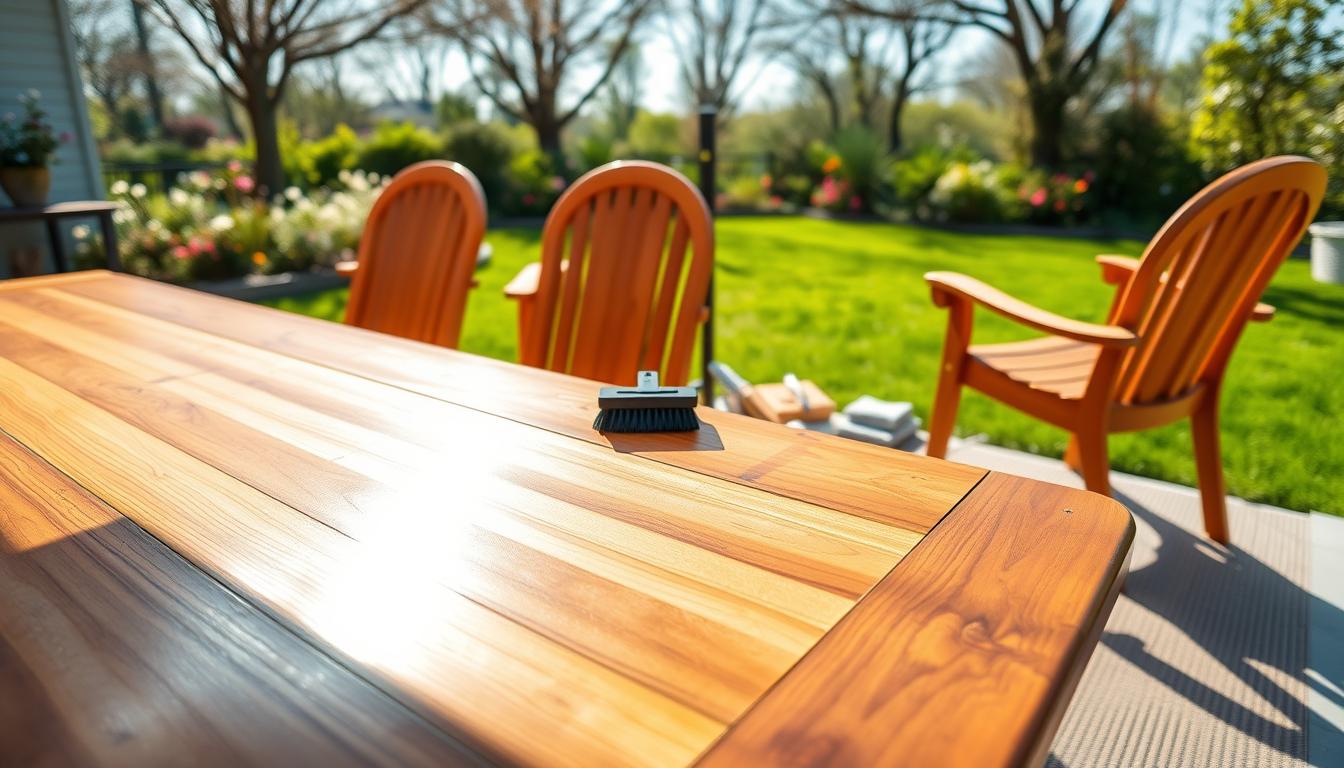
Outdoor pieces face faster buildup from pollen, bird droppings, and windblown grit than indoor items. This means your maintenance schedule must be more frequent to protect finishes and fibers.
Brush off loose debris before washing
Start with a soft brush to sweep away loose debris so grit won’t grind into the weave when you wipe. Do this before any damp work to reduce surface abrasion.
When hosing down is acceptable — and when it’s not
You can rinse synthetic wicker sets with a gentle hose and warm water. Avoid heavy spray on natural pieces; excess water will warp and weaken fibers over time.
Covers, quick drying, and placement to prevent mildew
Covers can help but may trap humidity. If you use one, provide ventilation and remove the cover after rain so the piece can dry fast.
- Keep furniture off damp grass and away from constant sprinkler spray.
- Choose spots with good airflow and shade when possible to speed drying.
- After rain, towel any pooled water and let items air until fully dry to cut mildew risk.
Remove mold and mildew safely from rattan, wicker, and nearby wood
If you find fuzzy spots or a musty smell, act quickly to limit long-term harm. Early action helps prevent spread into seams and finishes near the affected area.
Vinegar-and-water solution for natural fibers
For natural pieces and porous wicker, use a mild vinegar-to-water mix. Tribesigns suggests 1:1 while Southern Living notes 1:4; either ratio works if you apply it lightly.
Wipe the spot, follow with a clean damp cloth to remove residue, then pat dry. Do not soak the weave; moisture left behind invites more mildew.
When diluted bleach is appropriate
Use bleach only on synthetic wicker or resin panels. Mix about 1 cup bleach per 1 gallon water, wear gloves, and ventilate the area.
Rinse thoroughly and avoid using bleach on natural fibers or nearby finishes to prevent discoloration and fiber damage.
Drying and ventilation to stop regrowth
- Remove residue, air the piece well, and use a fan until it is dry completely.
- Address humidity sources like damp storage or poor placement to prevent recurrence.
- For odors after drying, sprinkle baking soda lightly, let sit, then vacuum—do not rub it into the weave.
Long-term care and maintenance for mixed-material furniture
A brief yearly inspection keeps mixed-material pieces sturdy and attractive. Make this a habit each season so small problems don’t become costly repairs.
Seasonal inspection for loose weave, fraying fibers, and structural weakness
Check panels where the weave meets the frame and at high-touch spots like armrests and pulls. Look for loose strands, soft spots, or any wobble that signals stress on the join.
Light sanding of rough spots and tightening screws at joints
Use fine sandpaper on tiny snags along frame edges to prevent snagging the weave. Then run a quick hardware pass: tighten screws, clips, and brackets so the structure stays true.
Conditioning considerations like linseed oil for natural fibers
Only condition after the piece is fully clean and dry. Apply a light coat of linseed oil or a specialist conditioner to natural fibers to restore moisture, but avoid heavy buildup that leaves tacky residue.
When to call a repair specialist for unraveling or broken pieces
If you find unraveling, broken strands, or damage that affects structure, hire a repair pro. Heirloom pieces and complex repairs need a trained hand for a neat, lasting fix.
- Seasonal checklist: inspect, tighten, sand, condition.
- Preventive goal: shift from cleaning to keeping it clean with small fixes.
- Call a pro: when strands break, weave unravels, or joints fail.
Conclusion
A few simple habits will keep your mixed furniture in good condition with little fuss. Remove dust first, use a mild soapy water mix sparingly, work gently with a soft cloth and brush, then dry each area fully. This sequence protects finish and shape.
When you clean rattan, treat woven panels and frames separately. Avoid soaking natural rattan; use light wiping only. For outdoor wicker, synthetic panels tolerate more rinse but still need quick drying and shade.
Stop mildew and mold by improving airflow and lowering humidity. Use vinegar for natural-fiber spots and save diluted bleach for synthetic areas only. Keep a short weekly pass on one high-use item to stay ahead of buildup.
Start now: pick a chair or drawer, dust and do a quick wipe, then add that task to your weekly calendar.