
Your countertops can stay beautiful with simple daily habits. Start with butcher block maintenance that pairs quick cleaning and occasional oiling. This keeps wood from drying, chalking, or staining and makes care easy in a busy kitchen.
For food prep surfaces you will oil more often than decorative pieces. Use food-grade mineral oil monthly on active surfaces, and once or twice a year on decorative tops. These steps protect your butcher block countertops and help them last.
Wood changes over the years with use. A steady routine prevents warping, cracking, and deep stains. Avoid soaking the wood, leaving water to sit, placing hot pans on it, or cutting directly on the surface to reduce scratches and bacteria.
This guide focuses on food-safe methods—soap and water, vinegar when needed, and mineral oil—so your counter stays safe for everyday handling. You’ll know it’s time to oil when the top looks dull, feels rough, or shows lighter color.
What you need for safe butcher block countertop care
Gather a few simple, food-safe tools and you’ll protect your wood surfaces with minimal effort. Keep supplies close so cleaning stays quick and consistent. A small kit saves time and reduces wear on the top.
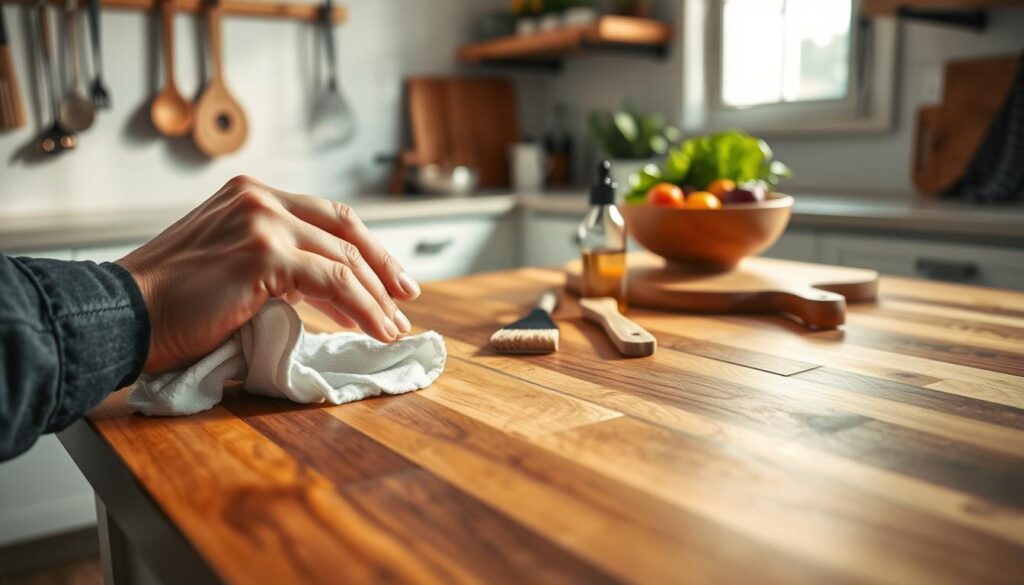
Cleaning and prep tools that won’t damage the wood
Keep these essentials on hand for everyday care:
- Microfiber or cotton cloth for wiping and drying.
- Non-abrasive sponge for gentle scrubs.
- Plastic scraper to lift stuck food without gouging the wood.
A plastic scraper beats a metal blade because it removes residue while protecting the countertop and preventing unnecessary wear.
Food-safe products to keep your surface sealed
Your minimalist daily kit is simple: warm water and a drop of gentle dish soap plus a clean cloth. For deeper cleaning, use a vinegar spray bottle, scraper, and extra cloths.
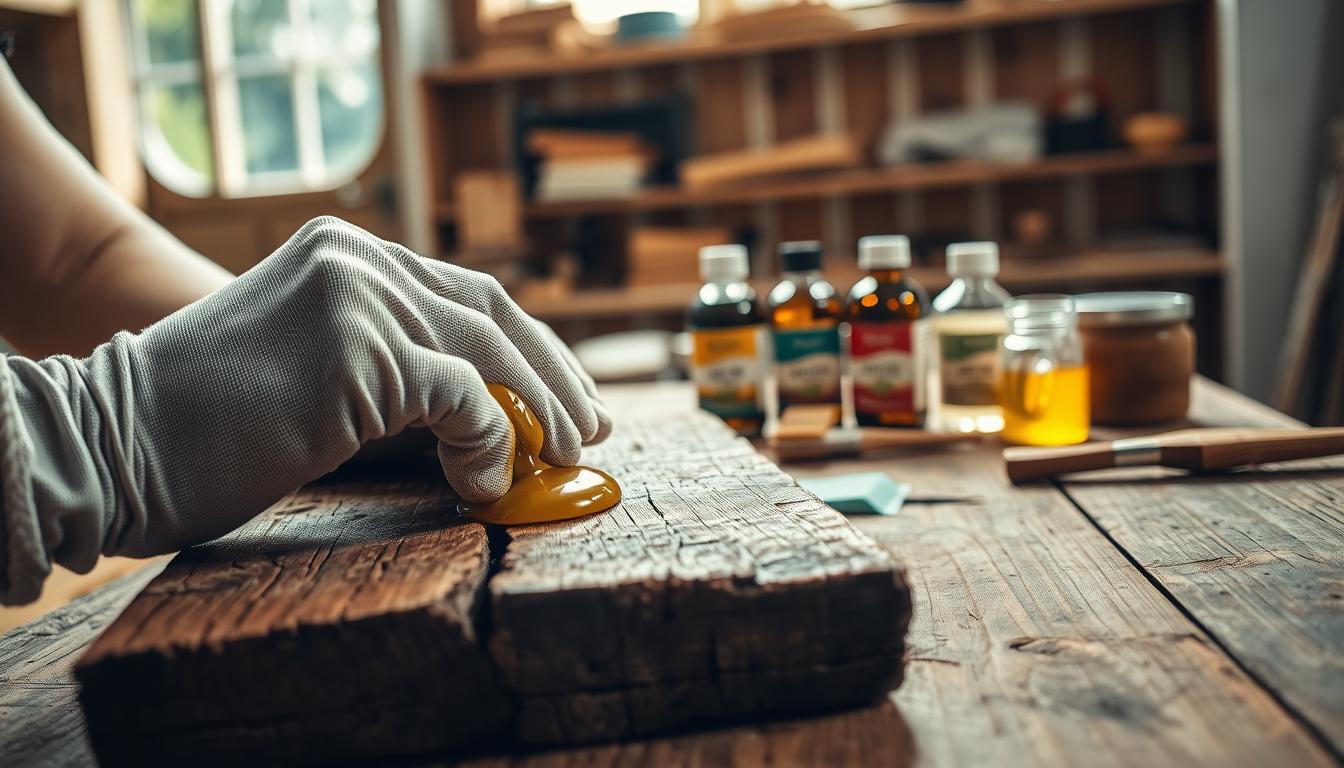
Food-grade mineral oil is the dependable sealer most pros recommend—it’s colorless, odorless, and safe for prep areas. You can also use conditioners that blend food-grade oils with beeswax to fill small nicks when the board feels rough.
Tip: keep dedicated cutting board(s) for raw meat and use trivets for hot pans. Avoid harsh abrasive pads—they strip moisture and make the wood look dry sooner.
Daily cleaning for butcher block countertops without drying out the wood
A quick, consistent wipe-down keeps your wood surface clean without stripping its natural oils.
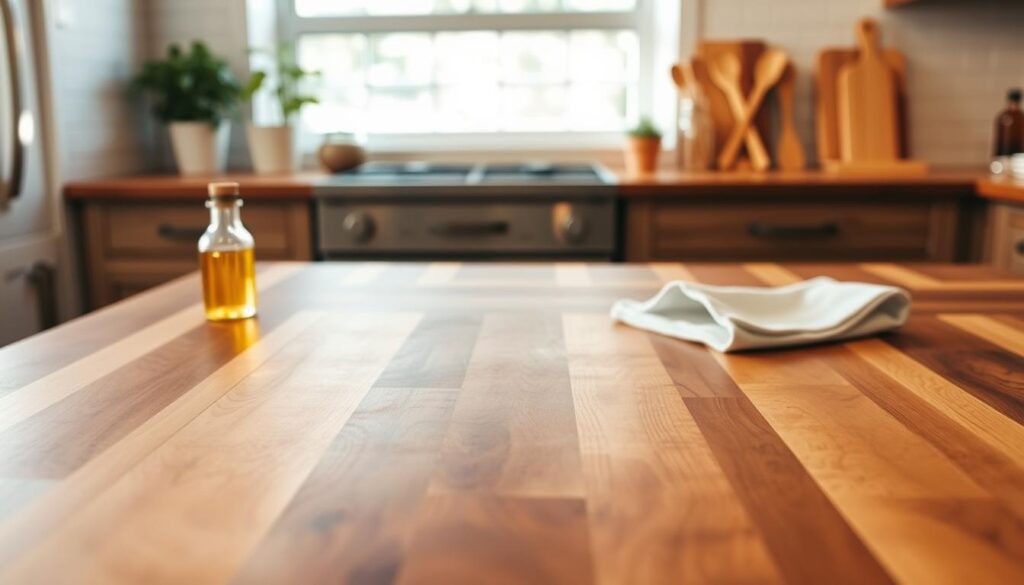
Wipe-down method: After prep, use a wrung-out sponge and warm water with a drop of gentle dish soap only when needed. Move the cloth along the grain to lift residue and reduce streaks.
Rinse and dry the right way
Use a separate damp cloth to remove soap so no film stays on the surface. Never saturate the top; keep water to a minimum.
Finish by drying with a soft dish towel. Pay attention to seams and the sink area where water likes to pool.
When scrubbing is okay — and what to expect
Reserve scrubbing for sticky spills or visible grime. Scouring can pull moisture from surface fibers and make the wood look chalky sooner.
- Quick daily process: wipe with warm water, add soap only when needed, rinse with a clean damp cloth, then dry.
- Don’t let water pool in any area or repeatedly soak the wood day after day.
Deep cleaning and sanitizing with vinegar for a food-prep surface
When your wood top needs more than soap and water, vinegar is an effective sanitizer. Deep clean after handling raw foods, after strong odors, or when the surface needs a reset beyond daily wiping.
When to deep clean:
- After raw meat, poultry, or fish prep.
- When odors linger from onions, garlic, or strong sauces.
- If the top shows sticky residue or visible grime.
- Scrape first: use a plastic scraper to lift stuck-on food gently so you avoid heavy scrubbing.
- Clean: wipe with a damp cloth and a drop of soap to remove loose debris.
- Sanitize: lightly apply undiluted distilled white vinegar across the surface and ensure coverage.
- Let it sit: allow contact time — 10 to 15 minutes — until the vinegar dries naturally.
- Rinse and dry: if desired, wipe with a damp cloth to remove residue, then dry thoroughly.
“Let it sit” means a light spray and patience, not flooding seams. This contact time lets vinegar work without soaking the wood. Dry the surface completely; trapped moisture can cause swelling or odor over time.
Butcher block maintenance that prevents stains, mold, and moisture damage
Quick action after spills keeps your wood top looking even and prevents set-in stains. Wood soaks up liquids, so a fast response limits discoloration and soft spots in high-use areas.
Spot-treating stains with a salt and lemon paste
Make a paste from table salt and fresh lemon juice. Apply it to the discolored area, cover with plastic wrap, and wait 10–15 minutes.
- Uncover and scrub gently with a damp cloth or soft scrubber.
- Rinse the area, dry, and repeat until the stain improves.
Handling mold and mildew safely
If you see mildew near damp zones, mix 1 tsp chlorine bleach per quart of water. Wear gloves, spritz the spot, let it sit five minutes, then wipe, rinse with hot water, and dry fully.
Sink-area precautions and drying
Pay extra attention near the sink where water collects. Wipe splashes quickly, remove wet sponges, and make seams a priority when you condition or reseal the countertop.
When light sanding helps before you condition
Light sanding evens raised grain and shallow stains. Smooth the surface, remove dust, then apply oil or wax so the conditioner soaks in evenly. Avoid cutting directly on the board to reduce grooves that trap grime.
How to oil butcher block countertops for long-lasting protection
Oiling your wood counters at the right time keeps them resilient and food-safe. Watch the surface: if it feels rough, looks dull or chalky, or shows lighter patches, it needs oil.
When and how often to condition
New or refinished tops: oil weekly for the first couple months to build a good seal.
Heavily used countertops: monthly is a common schedule.
Decorative surfaces: once or twice a year will usually suffice.
Why food-grade mineral oil works — and what to avoid
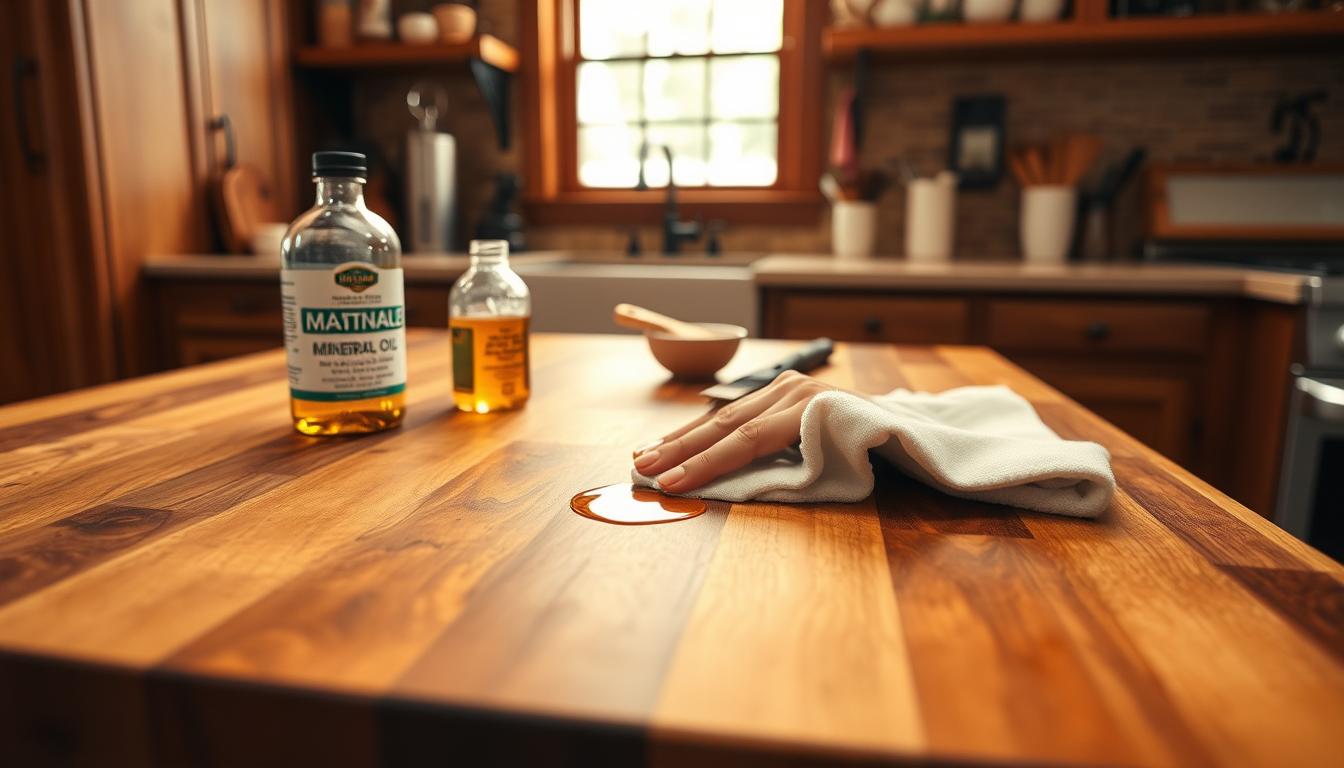
Food-grade mineral oil is stable and won’t go rancid. Avoid cooking oils like olive, canola, or corn; they can oxidize and smell bad over years.
Simple application steps
- Make sure the surface is clean and dry.
- Apply a thin coat with a cloth, rubbing with the grain.
- Let it soak a few minutes, then wipe off all excess so no pooling occurs.
Tip: thin layers penetrate faster and dry in about 30 minutes. Focus on edges and prep zones that dry out first for consistent protection.
Conclusion
Small, regular steps — wipe, rinse, dry, and oil — protect your wood surface for years.
Follow a simple rhythm: clean gently after use, deep-clean with vinegar when needed, treat stains quickly, and oil the top before it looks dry.
Keep the surface dry between cleanings. Standing water causes swelling, rough grain, and faster damage more than wear from daily use.
Oiling is the key to richer, protected countertops. Apply thin coats and wipe away any pooled oil for best results.
Final safety reminders: use a separate cutting board, blot spills fast, and avoid placing hot pans directly on the wood.
Next steps you can do today: stock gentle soap, vinegar, and food-safe oil, set a monthly reminder, and inspect high-use zones weekly.
Quick checklist: wipe, rinse, dry, sanitize when needed, oil when dry — simple tips to keep your surface durable and attractive year after year.