
You’re about to tackle a historic furniture piece that has five or more old paint layers. Expect hardened primer, topcoats, touch-ups, and residue that behave like separate skins. This short intro sets what safe work looks like and why patience matters.
The goal is clear: remove paint without harming crisp edges, veneers, or original character. You’ll learn a step-by-step process: assess the surface, set up PPE and ventilation, choose a remover or heat method, work section-by-section, clean residue, then do light sanding and refinishing.
Safety is not optional. Use PPE, ensure good airflow, test for lead, follow OSHA guidance, and plan for fire prevention. This is a time project more than a strength one—gentle technique preserves antique fibers.
Key takeaways: know what five layers mean, protect the piece, prioritize safety, and expect the process to take time.
Assess the piece before you start stripping
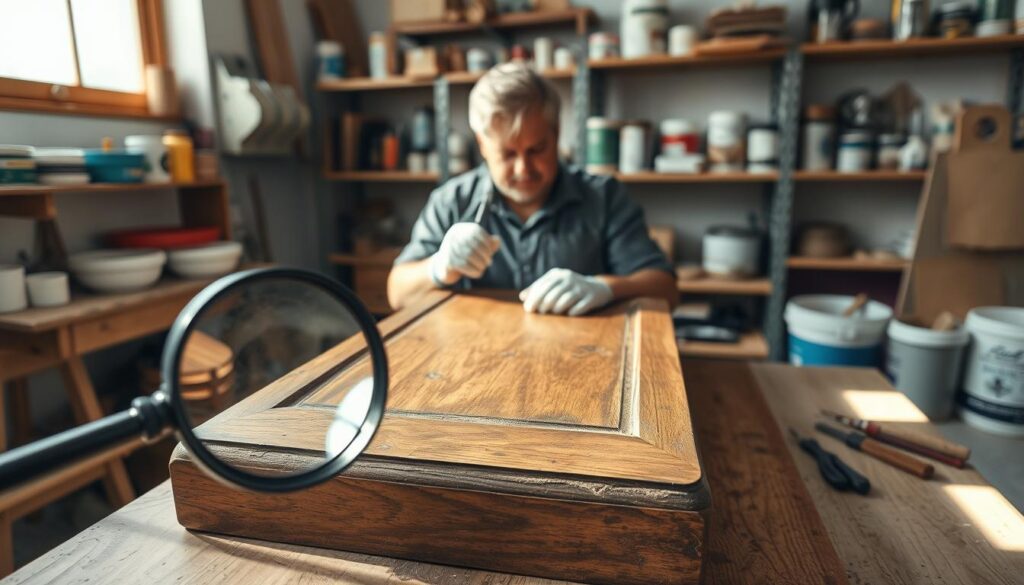
Begin with a clear inspection to choose the gentlest, most effective way forward. Look for signs that the surface is a true paint job versus a restorable finish. That single check can save the piece’s patina and value.
Confirm the finish type
Test for shellac with denatured alcohol on a cotton swab in an inconspicuous spot. If the swab turns brown and the sheen brightens, you likely have shellac that will re-amalgamate.
When that happens, cleaning and re-coating is often the better choice than full removal.
Choose the best approach
- Full removal for thick, multiple layers that obscure detail.
- Targeted removal plus light sanding for worn areas and edges.
- Spot repair when damage is limited and you want minimal intervention.
Check structure and detail
Inspect veneer, fragile grain, loose joints, and past repairs. Thin veneer hates aggressive sanding and can get “bald” in a bit.
Mark deep nooks crannies and carved trim; these areas drive the real hours and may need extra coats or dwell time.
Safety setup for stripping painted wood in a US home workshop
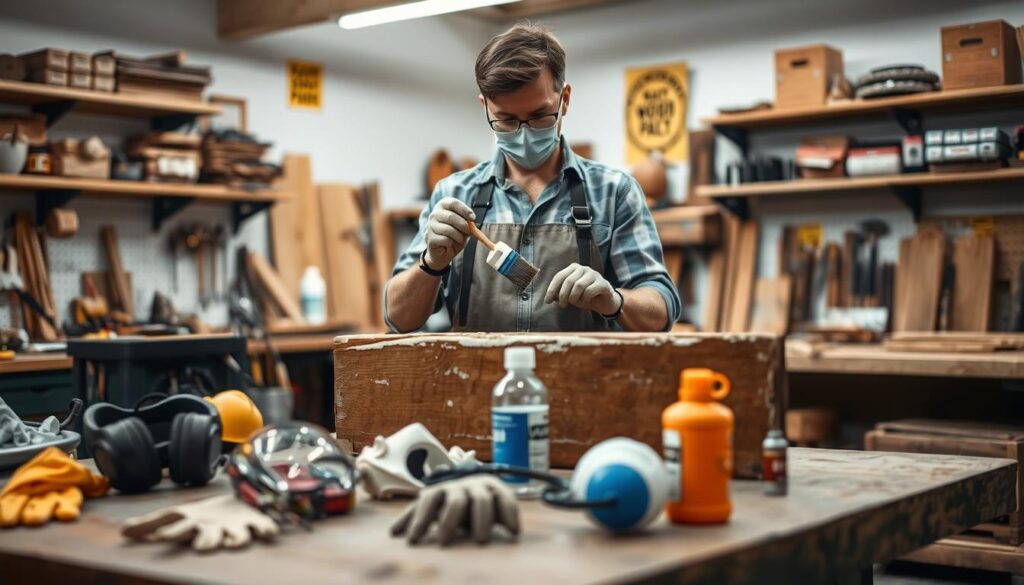
Start by planning air flow, PPE, and containment—these choices guide every next step. Set up your area so fumes and chips move away from you. Keep the piece elevated and in a space you can ventilate for minutes at a time.
Personal protective equipment
Wear chemical-resistant gloves and goggles. Add long sleeves and a properly rated respirator when you use strippers or sand. These items stop fumes and fine debris from reaching skin and eyes.
Ventilation and dust control
Work outdoors or with windows open and a box fan exhausting air. Use a mist sparingly to cut dust and avoid stirring chips into your HVAC.
Lead paint, heat risk, and containment
- Assume older pieces may have lead and follow EPA RRP guidance when you remove paint.
- Treat heat guns as fire tools; hot air can smolder debris in seams and vaporize hazardous layers.
- Use drop cloths and plastic sheeting, and put scrapings in a lidded metal can for transport to hazardous waste collection.
Cleanup is part of the process: stop often, clear chips, and never wad oily rags into a pile. Dispose of residue properly to protect your home and neighborhood.
Choose the right paint stripper and tools for thick, layered paint
Match your product and tools to the job: heavy build-up and carved panels need different gear. Read labels and avoid hazardous chemistries when working in a home shop.
What to avoid and why it matters
Avoid strippers containing methylene chloride or NMP. Both carry serious health risks and have consumer restrictions. Treat any older cans in a cabinet with extra caution—don’t assume modern safety standards apply.
Gel vs. spray: pick for gravity and geometry
Gel strippers cling to vertical faces and carved panels, so they work well on doors and moulding. Sprays can run and waste product on carved furniture or deep relief.
Use plastic wrap over a gel to slow evaporation and boost dwell time for thick layers.
Tool kit checklist
- Disposable brush for applying a stripper.
- Plastic scraper and a dulled putty knife to remove softened paint without gouging the surface.
- 5-in-1 tool, brass bristle brush, and dental pick for nooks crannies and routed details.
When a sander helps and when it hurts
An orbital sander is useful for final cleanup on flat surfaces, but it can gum discs and burn thin veneer if you tilt or press too hard. Keep the pad flat, work slowly, and progress grit by grit to avoid shiny low spots.
Strip paint layer by layer without gouging the wood surface
Begin by staging the piece: clear hardware, shield the floor, and map your section boundaries. Remove knobs, hinges, and escutcheons so you avoid trapped stripper and slow cleanups. Protect the area with drop cloths and tape off adjacent surfaces.
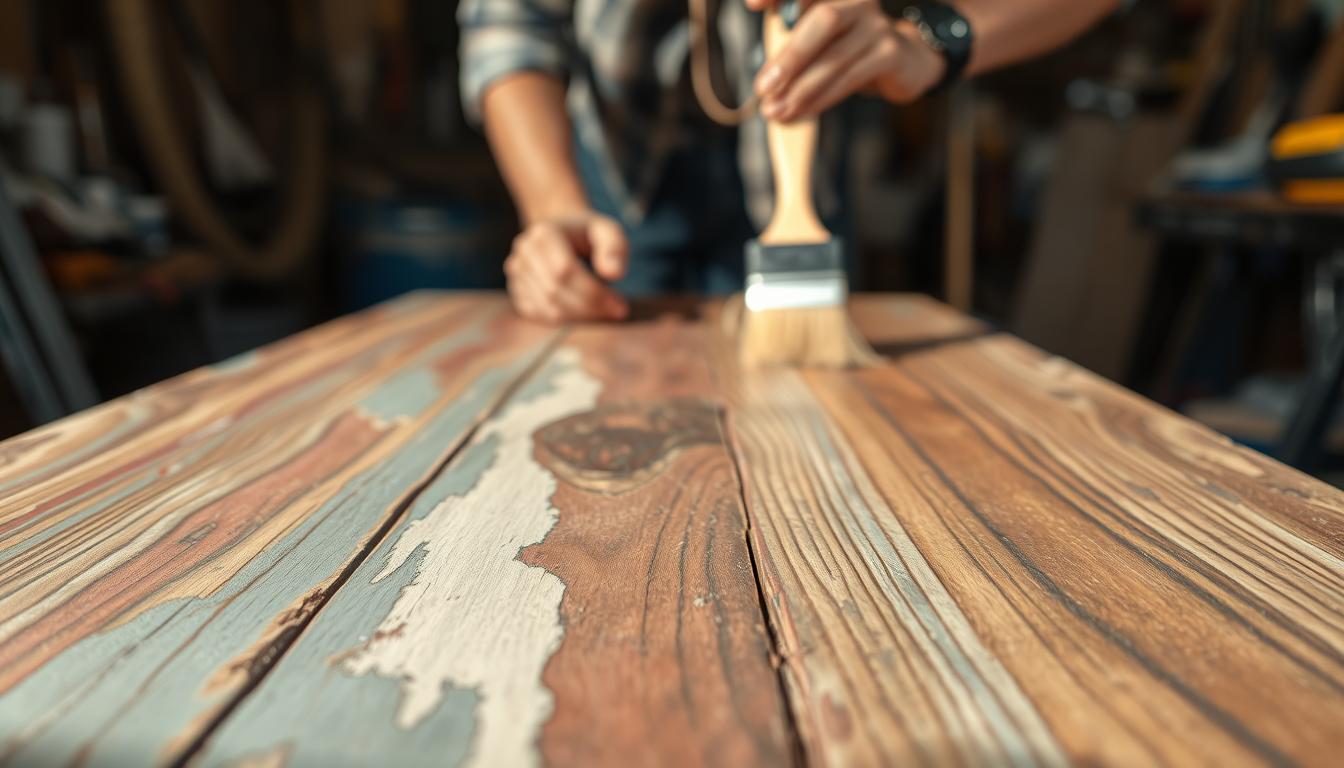
Work in sections so the stripper stays wet and effective. Apply a thick, even coat where build-up is heavy. For carved areas, cover the wet stripper with plastic to slow evaporation and extend dwell time.
Watch the finish for bubbling, wrinkling, and lifting—these signs tell you when to scrape. Short dwell times (minutes to a few hours) work on thin layers; overnight often wins for dense, multiple layers.
Scrape with the grain using the gentlest scraper or putty knife. Lift softened paint; don’t chisel. Repeat coats as needed: apply, wait, scrape, and wipe until you remove paint down to the original surface.
For nooks and crannies, use a brass brush, dental pick, or a soft bristle brush to coax softened residue free. Keep scrapings contained and wipe areas before residue re-hardens so your next step stays clean.
Remove residue and neutralize the surface after stripping
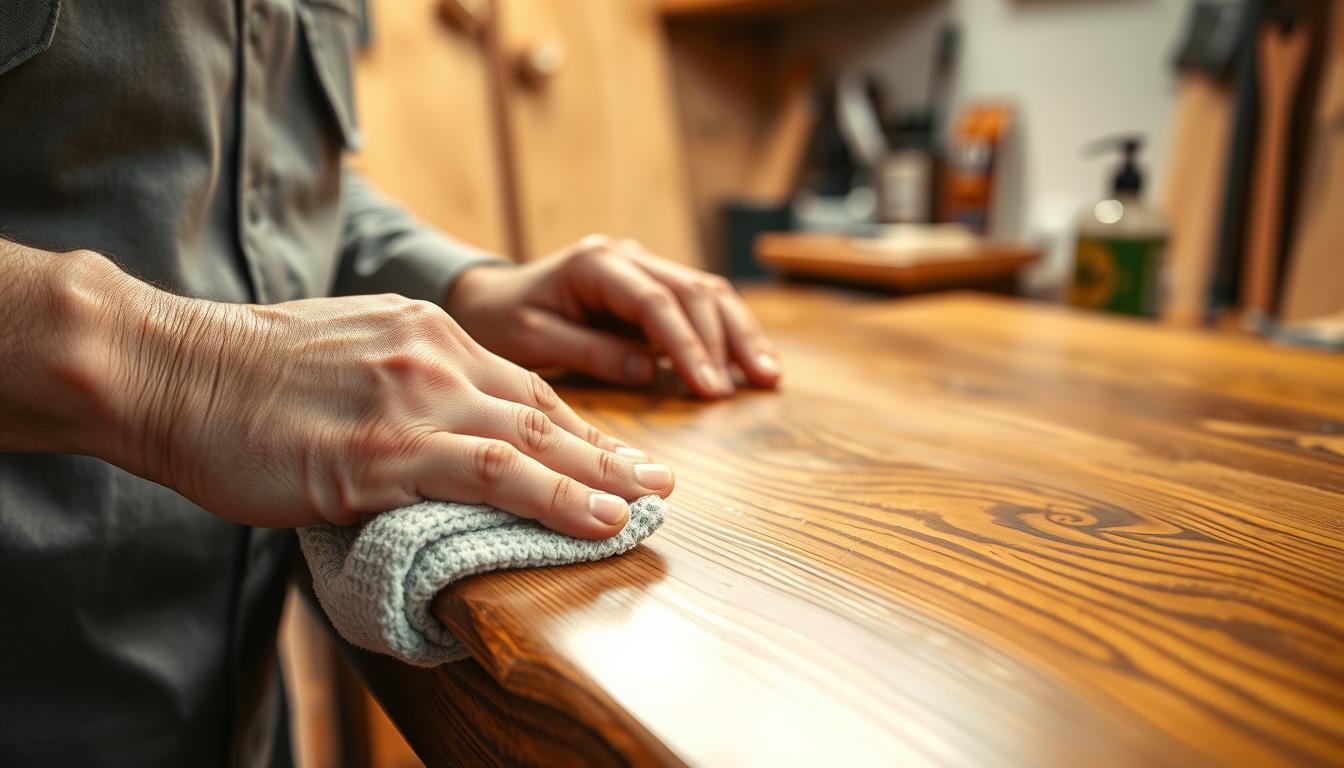
Clearing chemical film from the piece is the essential next step before any sanding or finishing. Start by washing the area with warm water mixed with a powdered high‑phosphate laundry detergent. That wash lifts remaining residue and soft bits instead of just smearing them across the surface.
Wipe and rinse
Use a clean sponge and the warm detergent solution to work along the grain. Rinse repeatedly so you remove the film and any loose particles.
Optional deep clean
If you see greasy spots or lingering tackiness, do a TSP wash, then rinse with cool water. Follow the TSP step with a vinegar‑and‑water rinse to neutralize alkalinity and remove chemical traces.
Drying time and raised grain
Expect the grain to raise after wet cleaning; this is normal. Let the piece dry fully — often 24 hours or more in low humidity — before you start sanding or applying stain or finish.
- Check for no slick areas or residual odor.
- Confirm the surface is dry to the touch throughout.
- Proceed to light sanding only when the grain has settled and the surface is clean.
Light sanding and refinishing to protect patina and bring out wood grain
Let your sanding be light and deliberate to keep the piece’s character intact. Work as if you’re dusting the surface: remove raised fiber and fuzz without reshaping profiles or wiping away patina.
Sand lightly like you’re dusting
Start with a hand approach on carvings and edges. Use 120 grit where you only need to refine the surface; it often is enough to smooth raised grain without taking off layers that give the item its history.
Grit strategy and tools
- Begin at ~120 grit on flat areas, then move to higher grit to reduce scratch visibility.
- Use a sander only on broad, table-like tops; move slowly to avoid swirl marks.
- Keep a sheet of fine sandpaper for tight parts and a soft brush for dust removal between passes.
Finish choices and between-coat care
For a penetrating, warm look, choose tung oil: brush on, let it penetrate ~15 minutes, wipe excess, and allow ~24 hours between coats. When you prefer a tougher surface, stain then seal with a durable topcoat such as ZAR Ultra‑Max.
Scuff between coats with very high grit or fine steel wool to improve adhesion and clarity. If tiny spots of white paint reappear after the first coat, blend them with a matched acrylic touch-up, then continue building coats for a uniform finish.
Conclusion
Close the job by confirming you managed hazards and that the surface is ready for a final coat.
Start with a quick review: you assessed the piece, controlled ventilation, and chose an appropriate paint stripper rather than a hazard-prone product. Avoid methylene chloride and NMP and keep dust containment and waste disposal planned.
Use the least aggressive way that works, scrape gently, and spend time on detailed profiles. This part determines whether edges stay crisp or look rounded after the finish.
Next-step checklist: final rinse and dry, light sand, strong-light inspection for missed areas, then apply your chosen finish. Small fixes now save hours later.