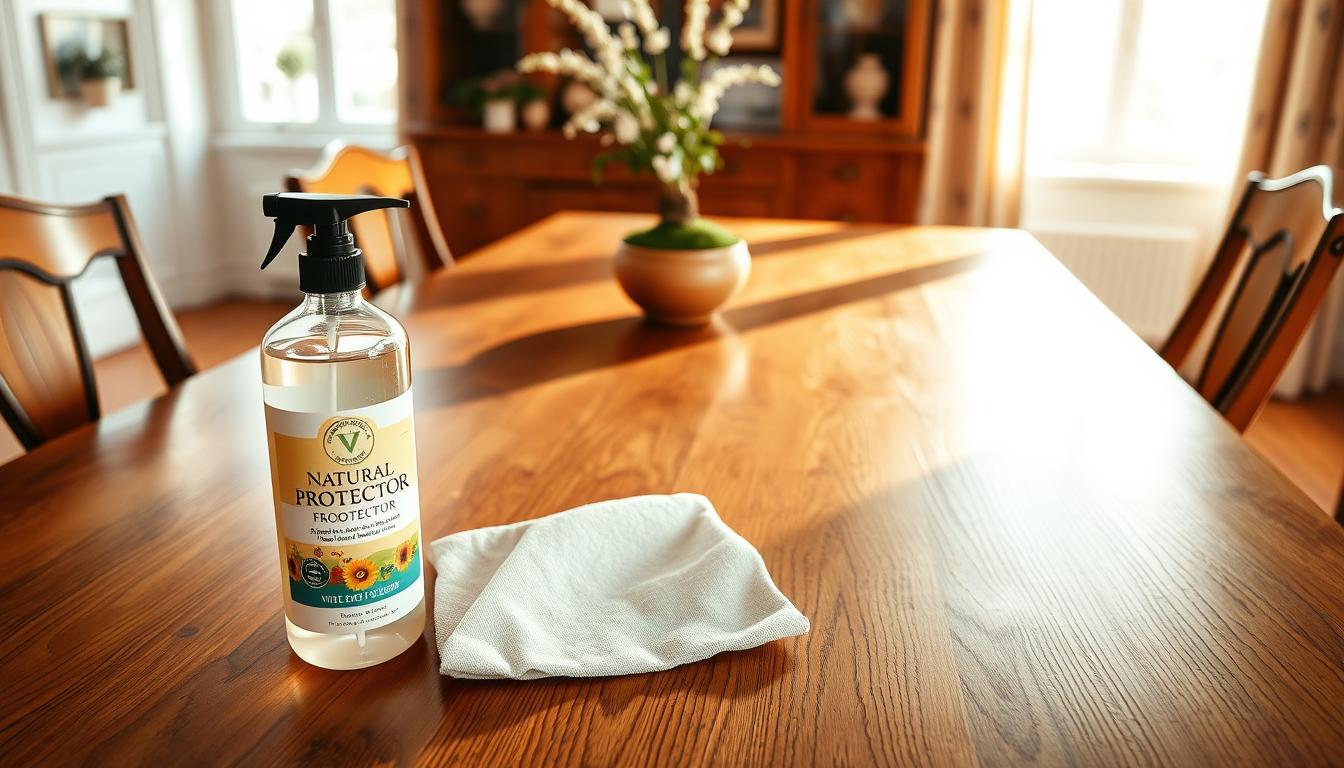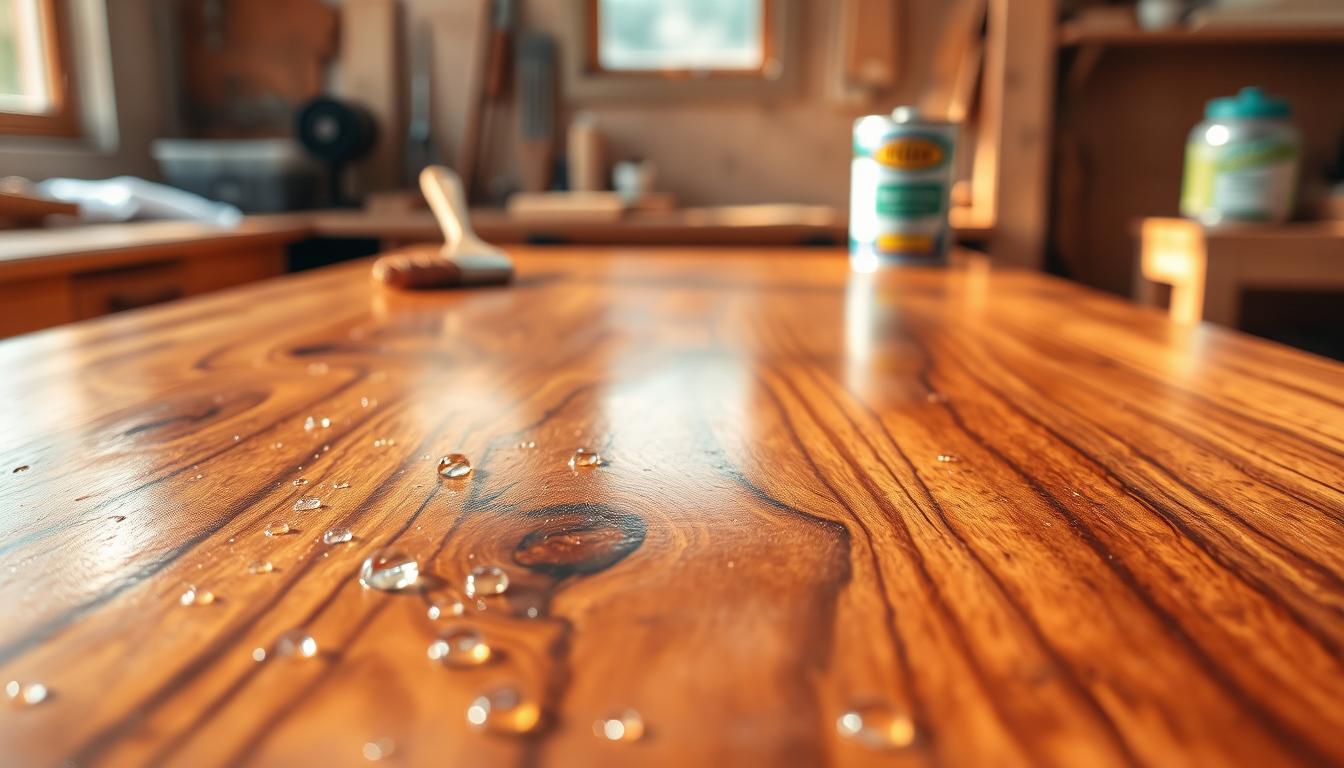

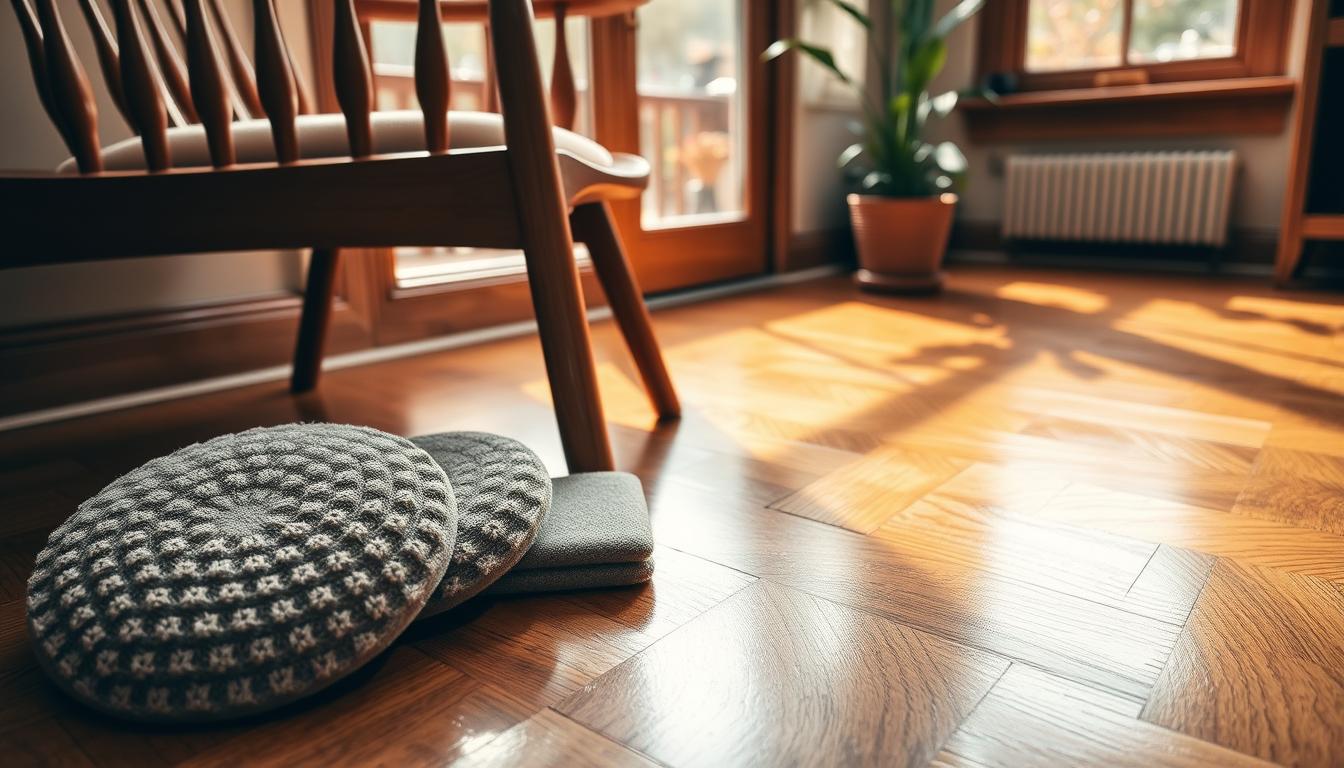
Keep scratches and scuffs off your hardwood by using the right floor protectors. In real homes, simple solutions reduce visible wear, cut down noise, and stop grit from being dragged across your wood. You’ll learn how small changes save time and money compared with repairs.
This short guide shows how to compare felt pads, leg caps, glides, and furniture socks so you choose the best option instead of buying random pads. It explains why chair legs and bottoms pick up grit and how that grit ruins hardwood floors over time.
Read on to learn how to pick pad material, match protectors to floor type, measure sizes, install correctly, and keep protection working through everyday use. The tips apply across rooms—dining chairs, bar stools, recliners—so your furniture looks newer longer and repairs stay rare.
Why felt pads matter for hardwood floors and wood furniture
Everyday chair movement wears down wood finishes faster than most people realize. Tiny bits of grit trapped under chair legs act like sandpaper. Over weeks and months, those micro-abrasions become visible scratches and scuffs on your floors.
Even when you lift slightly, legs still pivot and scrape. Heavy dining chairs and stools magnify that pressure. That motion is why you see marks near tables and islands.
The same friction that causes wear also creates annoying noise. Bare wood or worn pads dragging across the surface make loud scraping sounds, especially in open-plan rooms and apartments.
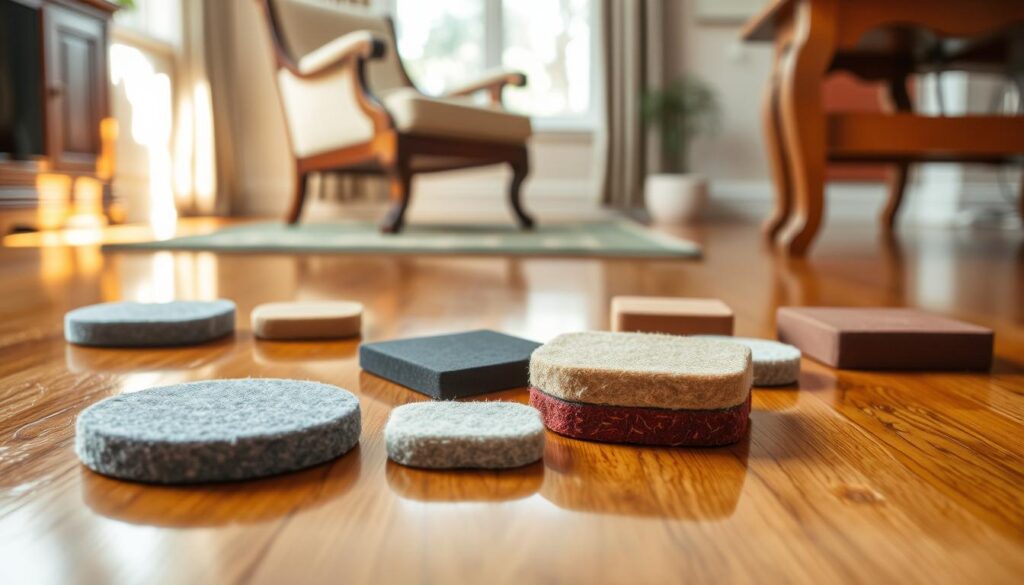
Felt serves as a simple barrier. It reduces friction at the contact point, keeps grit from cutting the finish, and lowers both wear and sound. The small cost of pads saves you significant time and money versus sanding and refinishing a damaged floor.
- Micro-abrasions from grit cause most damage.
- Pivoting legs create scuffs even when lifted a little.
- Worn contact points increase noise and wear.
Not all protectors work the same. Shape, adhesive quality, and how chairs move determine how long protection lasts. The next sections show how to match pads to your floor and leg type to save you time and avoid costly repairs.
Protecting furniture feet with the right floor protectors
A tiny layer of soft material can change how your chairs move and how your floors age. Felt and similar pads create a simple interface that reduces friction, lowers noise, and saves finish wear on wood surfaces.
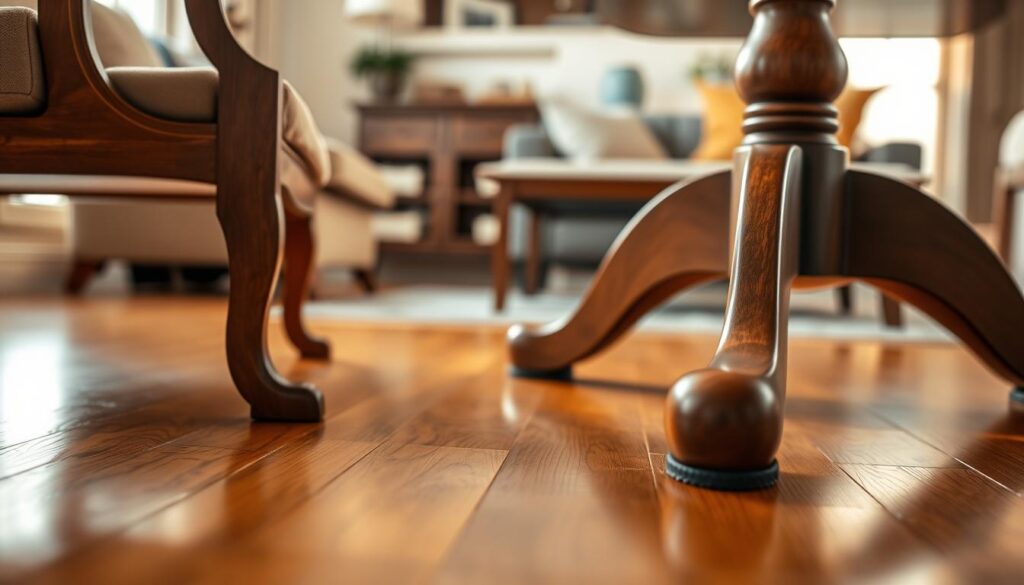
What felt pads do best on wood floors
Felt pads let a furniture leg glide smoothly and prevent light scratches from daily movement. They work well on straight, even bottoms and for moderate use on hardwood and engineered wood.
When you’ll need more than a basic pad
- Angled or tapered legs that the adhesive can’t grip well.
- Very heavy pieces or chairs moved often; stick-on pads wear fast.
- High humidity or heat that weakens the bond.
When pads aren’t enough, cap-style protectors, nail-on felt, and knitted leg covers give longer-term protection and fuller coverage. Think in outcomes: quiet glide vs firm grip, quick install vs long-term hold, and low-visibility vs full coverage for complete protection of your wood and the items that rest on it.
Types of furniture pads and leg protectors you can buy today
D
A quick tour of today’s pad options helps you match protection to each chair and floor type. Below are the main categories and when to pick each one.
- Stick-on felt pads: Inexpensive and fast to apply. Best when the leg bottom is flat and clean. Many homeowners keep spares for quick swaps.
- Nail-on / screw-in felt: For wood legs that shake loose or when adhesive fails. These give a long-term hold and resist peeling under heavy use.
- Felt glides and sliders: Designed for smoother movement and easier repositioning. Pick sliders if you pull chairs in and out often.
- Silicone caps with felt bottoms: A wrap-and-protect option. X-Protector blends thick silicone with soft felt to cut noise and keep grit away from the bottom.
- Knitted leg covers (“socks”): Full-coverage protectors like NancyProtectz stay put, reduce scratches and noise, and fit rectangular or odd-shaped legs.
These pads and protectors cover most needs. Match the style to your chair legs and how often you move them to extend floor life and keep rooms quiet.
Felt pads vs rubber vs plastic: which pad material protects floors best?
What you feel when you move a chair—smooth glide or a sticky pull—starts with the pad material under the leg. Below are clear, practical differences so you can match a solution to how you live and how often you move seating.
Felt for quiet glide and scratch protection
Felt lets legs slide smoothly and cuts scraping noise. It cushions the contact point and reduces tiny abrasion that becomes visible scratches over months.
Choose felt when you move chairs often and want a quiet, forgiving surface on wood.
Rubber and non-slip grips for stability in high-traffic rooms
Rubber and other non-slip options hold pieces steady. They are useful for kids’ chairs, busy kitchens, or when slips are a safety concern.
Be aware of tradeoffs: strong grip can cause a stuttering drag that still scuffs when pulled at an angle.
Plastic glides for certain moves and when to avoid them on hardwood
Hard plastic glides slide well on carpet edges and some transitional surfaces. They work when you need durable slides for heavy loads.
Avoid bare plastic on hardwood. It can trap grit and concentrate wear, raising the risk of new scratches.
- Felt: best for glide and quiet.
- Rubber / non-slip: best for grip and stability in busy rooms.
- Plastic: useful selectively; skip on raw hardwood.
In short, if you move chairs frequently, favor felt or felt-bottom solutions to better protect floors and cut both wear and noise.
Match the protector to your floor type
Different floors fail in different ways, so choose protectors that match the surface and how you use the room.
Hardwood and engineered wood
Hardwood floors show scratches when the finish wears. For smooth, quiet movement, stick with felt pads and felt-bottom cap protectors.
These reduce friction and cut noise while guarding the finish. X-Protector silicone/felt caps also work well on hardwood and engineered wood.
Laminate “hardwood” that shows scuffs
Laminate surfaces scuff and reveal worn patterns quickly. Use protectors that won’t leave adhesive residue or trap dirt at edges.
Choose non-staining caps or washable leg socks for high-use dining chairs and island stools.
Tile and vinyl that still scratch
Tile and vinyl are hard but they can dull or scratch from grit. Soft pads lower noise and stop grit from grinding the surface.
- Stick-on felt — light use and low cost.
- Caps or socks — heavy or frequent movement.
- Non-slip options — where sliding is unsafe.
Pick by room: dining, kitchen, or office needs different floor protection. Match type and durability so your furniture and floors stay looking their best.
How to choose the best felt pads for your furniture legs
A simple fit decision—thickness, shape, and adhesive—decides whether a pad lasts or fails. Start by matching pad thickness to how heavy and how often you move each chair.
Chair legs vs heavy dining chairs vs recliners
Light chairs do fine with standard felt pads. They provide quiet glide and basic surface protection.
For heavy dining chairs and recliners, pick thicker felt or reinforced protectors to avoid wearing through. Thicker layers spread weight and last longer under frequent use.
Round, square, and rectangular leg shapes
Round legs pair best with circular pads or caps for even contact. Square or rectangular legs benefit from full-coverage caps or leg socks that reduce peeling at corners.
Choosing adhesive strength
Strong adhesive prevents pads from sliding, curling, or coming off when chairs move. If a product page is blocked while you research, switch browsers or check retailer listings to confirm sizes and materials before you buy.
Color and visibility
Pick brown, black, or clear options so protectors blend with your chair legs and look cleaner in dining areas. Remember: fit first, looks second. A snug fit prevents failure and new scratches better than a pretty but ill-fitting pad.
- Tip: Measure the leg bottom and compare to listed sizes for the best fit.
- Tip: Prioritize material and adhesive over color for long-term performance.
Getting the right fit and sizes for chair legs and furniture bottoms
Start by measuring the actual contact area so your pads or caps sit snug and work as intended.
For round legs, measure the diameter across the bottom. For square or rectangular shapes, measure both width and length at the widest points.
Measure at least three legs. Small manufacturing or wear differences change the final fit and affect long-term hold.
How to read cap-style sizing
Look for protectors that list a bottom diameter range. For example, X-Protector caps fit chair leg bottoms from 0.99 to 1.14″. That range gives a snug, non-slip fit.
When to size up
Choose larger or stretch-style solutions for oversized legs, many barstools, or heavy seating. Reviews of NancyProtectz note socks that fit roughly 2″ legs and rectangular shapes.
- Measure diameter or width/length accurately.
- Measure multiple legs for variation.
- Size up for large or heavy legs to avoid tearing or popping off.
Correct fit reduces sliding, lowers noise, and prevents grit from getting trapped and scratching your floor. A proper fit is a simple, effective solution to long-term wear.
When silicone leg caps with felt bottoms are the better solution
A silicone shell plus felt bottom gives you a stable hold and a quiet glide across hard floors. Thick silicone grips the chair leg so caps stay put, while the felt surface reduces scraping and shields the floor from grit.
Why silicone plus felt outperforms basic pads
Silicone resists slipping and won’t peel off like adhesive pads. The felt layer still provides the low-friction surface your hardwood floors and tile need.
Thick silicone also dampens vibration, cutting audible noise when chairs move.
Best use cases
- High-use kitchen island chairs and daily dining sets where pads wear out fast.
- Rooms with mixed surfaces—hardwood, vinyl, or tile—where one solution across transitions helps.
- Homes where adhesive pads keep coming loose or collecting grit at the edges.
Look for caps that list a bottom diameter range (for example, 0.99–1.14″) so the protector fits snugly and won’t twist off. Premium options like X-Protector use eco-friendly durable silicone with a soft felt fabric to prevent scratches, scuffs, and excess noise across many floor types.
When furniture socks and leg covers outperform stick-on pads
When sticky pads fail, elastic leg covers offer a tidy, longer-lasting solution for daily chair use. Leg covers wrap the entire bottom area of the leg so they stay put better than single-piece pads. That wrap keeps contact consistent and reduces wear where it matters most.
Adhesive pads can soften in heat, slide, and leave a sticky mess on wood floors. That residue attracts grit and shortens the life of your finish. A sock-style cover removes the repeated cleanup and the need to reapply pads every few months.
Why socks work when legs tilt or slide: a cover stays in contact even if the chair moves at an angle. That continuous coverage lowers the chance of new scratches and keeps the glide quieter on the floor.
In apartments, users report no more dragging noise and fewer complaints from neighbors. If you need extra durability for heavy chairs, layer two socks or put thin felt pads under the sock for added cushioning and longer wear.
- Tip: Choose leg covers by chair leg shape (including rectangular) and measured range to avoid looseness.
- Tip: Match cover size to the bottom so you get a snug fit and reduce early wear.
How to install felt pads correctly so they stay put over time
A careful install is the single best step to make pads last and keep floors scratch-free.
Start with clean, dry surfaces and simple checks. Small prep steps improve adhesive strength and extend the life of each pad.
Clean and inspect the leg bottom
Remove old glue, dust, and oil so new pads bond well. Check the leg for splinters, staples, or rough spots that could pierce the pad or abrade your floor.
Center the pad to avoid edge peel
Place the pad so the contact point is even. If the pad is off-center the edges catch, peel, and wear unevenly, exposing hard leg edges to the floor.
Set the adhesive before use
Press firmly and hold for the time the maker recommends. Let the adhesive cure—don’t slide chairs across the surface right away.
- First-week check: Re-check pads after a few days to confirm alignment and that edges don’t lift.
- Quick tip: Replace torn pads and repair rough leg bottoms to keep long-term protection.
How to use felt pads in high-traffic rooms without constant replacement
High-use rooms demand a different strategy so pads last longer and your floors stay intact.
Why pads fail fast: constant chair movement compresses felt, picks up grit, and stresses adhesives. Over time the felt thins and the hard base can contact hardwood, causing new scratches.
Dining rooms and kitchen islands: managing daily chair movement
For dining areas, choose thicker felt pads or larger contact-surface options. Larger pads spread weight and wear more slowly.
When sticky residues or quick wear show up—like NancyProtectz reviews note—switch to caps or leg socks. Layering a thin pad under a sock also extends life.
Bar stools: protecting floors while maintaining smooth glide
Stools get pulled at angles. Pick solutions that grip the leg yet still glide on hardwood floors.
- Caps with felt bottoms (X-Protector style) stay on and keep movement quiet.
- Use durable sliders for pieces you reposition often, but avoid sliders on every daily-use chair if they add wobble.
- Protect the whole set so movement feels uniform and floor protection is even.
Noise reduction benefits: making chairs quieter for you and your neighbors
Loud scraping when you slide a chair is an easy problem to fix with the right soft pads or covers. The solution lowers unwanted sound and helps shared-wall living feel calmer.
How felt and fabric covers reduce scraping sound on wood floors
Scraping noise comes from friction plus vibration where the leg meets the floor. Soft layers absorb impact and stop hard edges from striking the finish.
Felt and fabric covers soften contact and cut both friction and vibration. That reduces the sharp scrape you hear on wood or other hard surfaces.
Felt pads work well for quiet, but full-wrap fabric socks or silicone caps with felt bottoms often do better. Brands like X-Protector highlight vibration damping, and NancyProtectz reviews note downstairs neighbors no longer hear chairs scraping.
Apartment-friendly tips for keeping movement quiet
- Keep protectors clean — grit increases noise and wears pads faster.
- Replace worn felt and felt pads before the hard base contacts the floor.
- Avoid dragging bare legs even short distances; it makes more noise and speeds finish wear.
If noise is your top complaint, choose thicker felt bottoms or full-coverage options over thin pads. That small change makes mornings, late dinners, and shared living quieter while protecting both floors and your furniture.
Common problems and fixes with furniture pads and floor protectors
Small failures in pads often start as sticky residue or a missized fit, and they can lead to fast wear or new scratches.
Sticky mess on hardwood: what causes it and how to prevent it
Sticky residue usually comes from poor-quality adhesive, heat exposure, or dirty leg bottoms. Clean the leg with rubbing alcohol, let it dry, and use higher-grade pads to avoid gummy build-up.
Pads sliding, peeling, or wearing through too fast
Wrong size, off-center placement, or weak glue causes pads to peel and wear quickly. Measure the contact area, center the pad, and press firmly for the recommended cure time. If a pad wears through, replace it before the hard base touches the floor to prevent scratches.
Protectors falling off angled or tapered chair legs
Angled or tapered legs make cups and sliders slip off. For those shapes, choose wrap-style caps or elastic leg socks that grip the leg instead of relying on a flat adhesive surface. Socks stay put better and cut the chance of sudden failures.
- Online shopping tip: If a product page is blocked extension, look for a blocked extension notice and try disabling extensions so you can confirm sizes and specs before buying.
- Switch criteria: If you replace pads frequently, change protector type rather than buying the same pads again.
Maintenance and replacement schedule for floor protection that lasts
A quick inspection routine catches grit, curl, and thin felt before damage spreads.
Quick monthly check: wear patterns, grit buildup, and loose edges
Once a month, tip chairs and check each pad and protector. Look for thin spots, compressed felt, grit embedded in the fabric, and edges that lift.
Clean trapped dirt with a soft brush or vacuum. Loose edges or grit can turn a protector into a scratch source in short order.
When to replace felt bottoms to avoid new scratches
Replace pads when the felt wears through, edges curl, or a protector no longer sits flat on the floor. High-use pieces—kitchen island and dining chairs—need attention more often than occasional-use seating.
Keep spare protectors on hand so you don’t wait until failure creates new scratches. Small monthly checks save you time and extend the value of your floor protection.
- Monthly inspection: tip, clean, check wear.
- Replace if felt is thin, curled, or uneven.
- High-use chairs require faster replacement cycles.
Buyer’s checklist: what to look for before you add to cart
Shop smart: confirm fit, material, and room use before adding pads to your cart. A quick checklist prevents returns and keeps your floors safe.
Floor type compatibility and intended furniture use
Match protectors to the surface. Hardwood and engineered wood favor felt-forward options, while tile or vinyl benefit from thicker pads or caps.
Decide by use: daily dining chairs need tougher furniture pads than occasional side tables.
Material quality cues
Look for thicker durable silicone on caps, soft felt fabric for quiet glide, and secure stitching on leg covers. These cues mean longer life and less work for you.
Value factors: packs, sizes, and long-term performance
- Choose multi-pack options to cover every leg and keep spares.
- Confirm sizes and fit ranges before checkout; NancyProtectz reviews praise secure fit and size variety.
- Pay more for proven long-term performance instead of the cheapest per-pad price.
- Consider rubber or non-slip options where stability matters, and felt pads where glide and noise reduction matter most.
Room-by-room planning
Count every chair and table leg in each room and standardize protector types for a consistent feel. This approach saves time and helps protect floors across your home.
Quick checklist: confirm floor type, pick the right material (silicone or felt), check fit and sizes, buy a multi-pack, and plan by room to protect floors effectively.
Conclusion
Protecting furniture feet starts with the right choices: match pad type and material to your floor, your piece weight, and how often you move chairs.
A small upgrade — like swapping thin stick-on pads for caps or leg socks — often ends recurring wear and cuts room noise fast. Use felt pads for quiet glide, caps for heavy daily use, and socks for odd shapes or angled legs.
Quick action checklist: measure leg bottoms, pick correct sizes, install firmly, and set a simple maintenance routine to check wear monthly.
With the right floor protectors you reduce scratches, lower noise, and keep your hardwood floors and furniture looking better without constant repairs.