
You can’t stop every speck, but you can slow how fast debris settles on your timber pieces. This guide explains realistic steps to cut dust accumulation and keep furniture looking fresh longer.
The plan uses a three-layer approach: treat the surface, improve your cleaning habits, and boost indoor air quality. Static electricity draws airborne particles back onto glossy finishes faster than on oil finishes, so matching methods to each finish matters.
Expect clear, practical tips you can use in U.S. homes today. You’ll learn which products to avoid, which finishes respond best to certain treatments, and how simple air improvements make a big difference.
Outcome: fewer dusty horizontal surfaces, less time re-cleaning, and better-looking furniture week to week. Brands like Molekule and Klekktic show that reducing static and airborne particles keeps results lasting.
Why dust builds up on wood furniture in the first place
Look at the forces—static charge, air flow, and finish type—that make particles accumulate on wood. Understanding these helps you focus your next steps on the things you can actually change.
How static electricity pulls in airborne particles
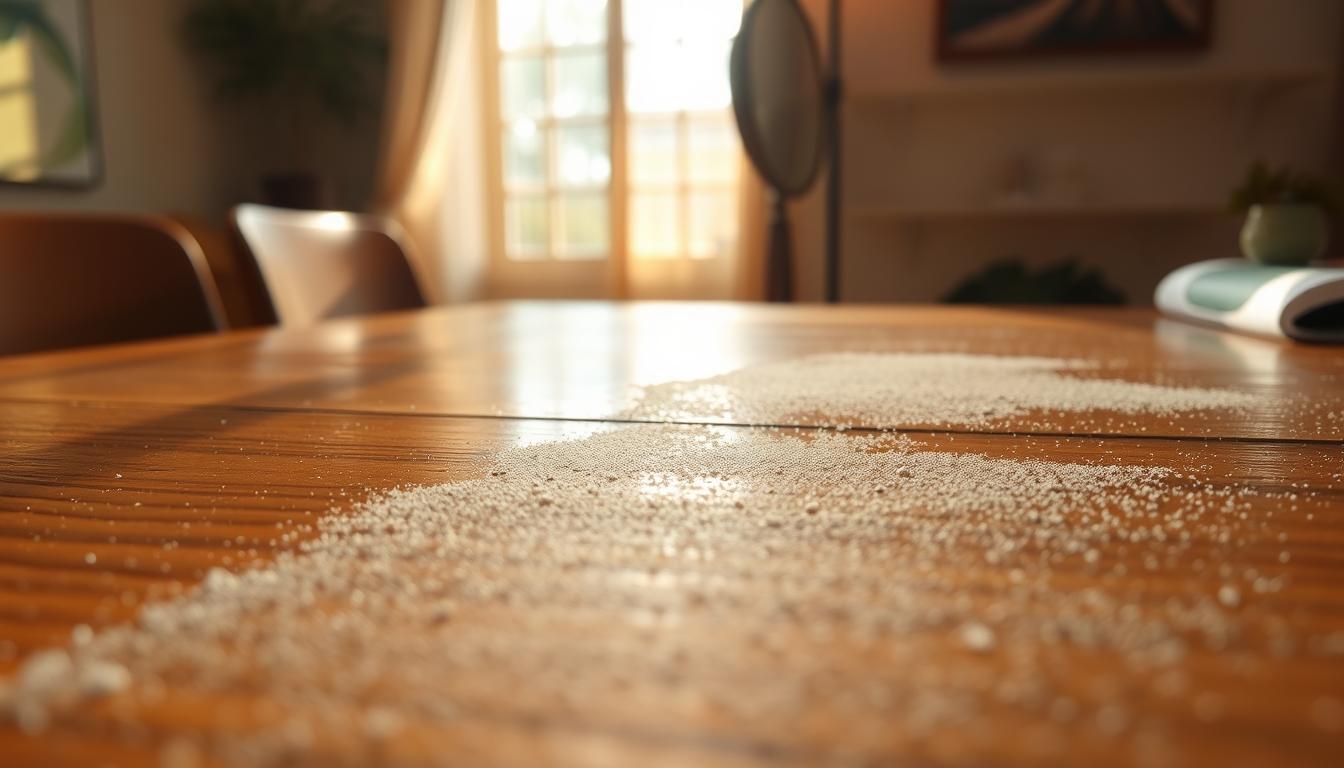
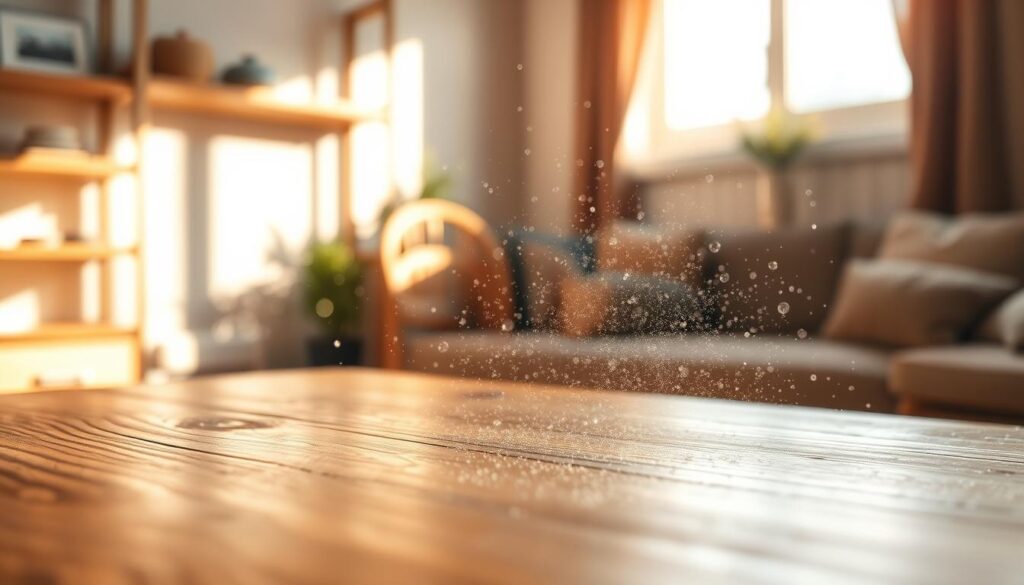
Static acts like a tiny magnet. When indoor air is dry, surfaces pick up charge and cling to airborne particles such as skin cells, pet dander, pollen, and fabric fibers.
Particle size and airflow: why particles settle faster in certain areas
Larger particles fall quickly. Smaller ones stay airborne longer and drift with room air currents until they land on flat surfaces.
Areas near vents, windows, and busy walkways get dirtier because moving air keeps particles circulating and boosting accumulation on your furniture.
How finishes and wood type affect accumulation
Glossy or lacquered finishes often hold more static and attract more visible material. Matte or oil-based finishes tend to reduce cling and make cleaning easier.
Denser hardwoods like teak, oak, and walnut resist embedding fine particles better than open-grain softwoods. That difference affects how often you need to wipe surfaces.
Takeaway: control static, protect and smooth the surface, and manage airflow and filtration to cut visible accumulation and improve air quality in your environment.
Dust prevention for wood: treat and protect the surface
A smart surface treatment can cut attraction and make routine wiping faster. Start by picking products that neutralize static and leave a thin, smooth layer on horizontal surfaces.
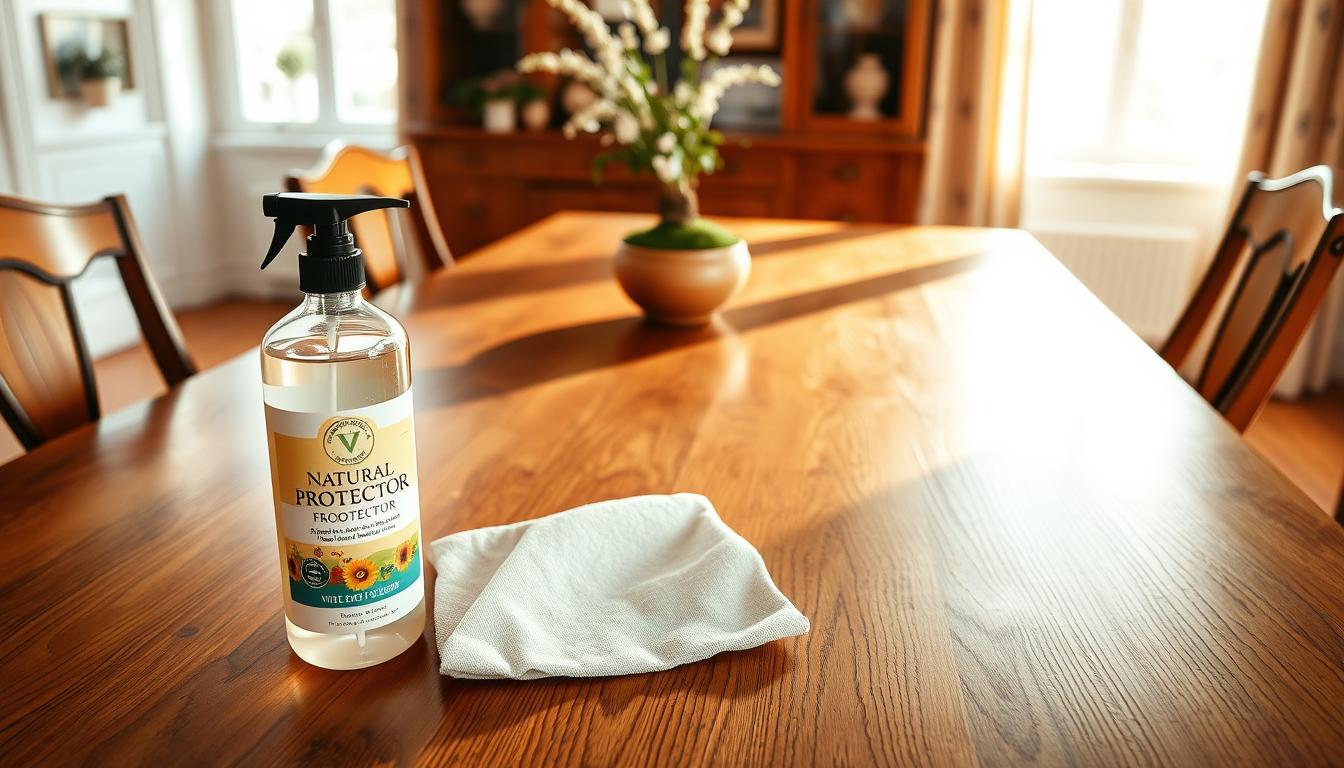
Anti-static furniture polish neutralizes charge. Apply polish to a microfiber cloth—never spray directly—so you control buildup and avoid streaks. Choose silicone-free formulas when possible to keep future refinishing simple.

Longer-lasting wax and oil options
Furniture wax (carnauba or beeswax) creates a durable barrier. Use thin coats, buff along the grain, and expect protection for about 3–6 months.
Oil-based treatments often feel warmer and cut static better than glossy lacquers. Gloss finishes look sleek but can attract more particles in dry air. Pick the finish that fits the piece and the room’s humidity.
Quick DIY and low-effort fixes
- DIY spray: 1/4 cup white vinegar + 2 tbsp olive oil + 2 cups water + 3 drops dish soap. Apply to a cloth first and spot-test; lasts ~2–4 weeks.
- Dryer sheets: wipe for a light anti-static coating every 2–3 weeks; use unscented if fragrance is an issue.
Moderation is key: thin layers and regular light reapplication beat heavy, tacky films that trap more particles. When the finish is protected and less staticky, your cleaning routine becomes faster and less frequent.
Dusting and cleaning techniques that keep dust from coming right back
Start each session with a method that removes particles cleanly, not just moves them around. Use a microfiber cloth to trap particles through electrostatic attraction. Microfiber holds what it lifts, so your furniture stays cleaner longer and you spend less time re-cleaning.
Microfiber cloth method: trap particles instead of spreading them
Do quick passes with a dry microfiber for light cleaning. For a weekly wipe, use a slightly damp microfiber and follow the grain to avoid tiny scratches.
Wipe top to bottom so falling debris doesn’t undo your work. Replace cloths when they stop grabbing particles.
Vacuum with soft brush attachments for grooves, edges, and details
Use a vacuum with a soft brush to clean carved areas and edges where cloths miss. This is gentler than scrubbing and removes buildup from tight areas.
Common cleaning mistakes that leave residue or damage wood
- Avoid feather dusters and cotton rags; they scatter particles and extend cleaning time.
- Don’t use ammonia-based cleaners or silicone-heavy polishes; they strip or leave sticky films that attract more particles.
- Wash microfiber without fabric softener so it keeps its particle-grabbing ability.
Maintenance cadence: light dusting as needed, deeper wipe-down weekly, and surface treatment on a schedule based on how fast dust returns in your areas. This way you save time and keep surfaces looking their best.
Control indoor air quality so less dust lands on your furniture
Improving the air in your rooms keeps more particles suspended or captured before they reach surfaces. That means you spend less time wiping and more time enjoying your space.
Air purifiers and filtration
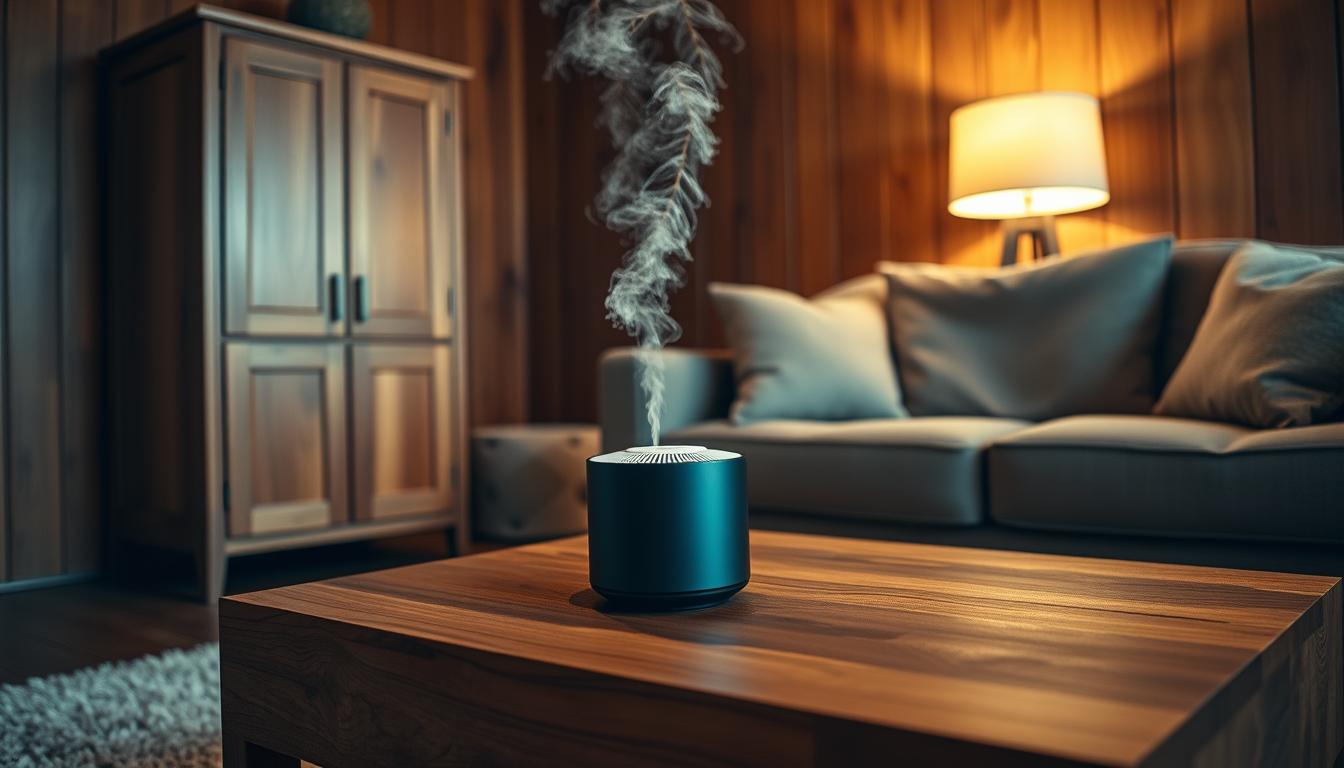
Choose units with strong filtration and place them in high-traffic rooms. HEPA-style filters trap most airborne dust and particles. Some technologies, like PECO cited by Molekule, break contaminants down rather than just trapping them. Run purifiers continuously when possible for steady air quality gains.
HVAC and filter maintenance
Your HVAC acts like a home-wide circulation system. Low-quality or clogged filters recirculate particles and speed re-accumulation on furniture.
- Use higher-MERV or true HEPA filters where compatible.
- Replace or clean filters on schedule to cut recirculation.
- Consider localized purifiers in rooms the family uses most.
Humidity control targets
Static jumps when relative humidity drops below about 30%, while staying above 60% risks moisture and mold. Aim near 40–50% with a digital hygrometer and adjust with a humidifier in winter or a dehumidifier/AC in humid months.
Takeaway: air systems don’t replace cleaning but multiply your efforts. Better filtration, timely filter changes, and balanced humidity slow how fast surfaces collect settled material and extend the time between dusting sessions.
Reduce dust sources around your home for longer-lasting results
Small changes at doors and around pet spaces can shrink how much settled debris lands on your furniture. Treat source control as the fastest way to slow accumulation and save you cleaning time.
Entryway strategy
Use quality doormats outside and inside, adopt a no-shoes habit, and seal gaps at doors and windows. These steps cut tracked grit and outdoor particles before they enter your home.
Pet dander and fabrics
Groom pets regularly, vacuum upholstery, and wash pet bedding to reduce the amount of fibers and dander that settle on surfaces.
Declutter and placement
Keep fewer items on tops to reduce dust-catching edges and cut cleaning time. Move prone furniture away from vents, drafty windows, and high-traffic areas where airflow boosts accumulation.
Downtime protection
Use breathable covers during storage or low-use seasons and washable slipcovers for sofas and chairs. These provide simple, washable protection that extends the life of your treatments.
- Tip: start with the entryway, an HVAC filter upgrade, and decluttering to get the biggest impact fast.
If you do woodworking: manage wood dust for safety and cleaner surfaces
If you build or finish projects at home, airborne wood dust needs different handling than household debris.
Health matters: fine particles under about 10 microns are easily inhaled and can irritate eyes, skin, and airways. Repeated exposure is linked to sinonasal cancers and is considered hazardous by major health agencies.
Dust collection basics you can use now
Capture material at the tool’s port and keep the hood close so chips and fine particles don’t escape into your shop air.
Match airflow to the tool: many saws, planers, and jointers need roughly 250–1000 CFM. If you see a visible plume, your collection is undersized.
Filtration and personal protection
Choose a collection system with high-quality filtration. HEPA-level filters (99.97% at 0.3 µm) stop the finest particles that travel beyond your bench.
- Respirators: pick a NIOSH-approved unit (N95/R99/P100) and confirm the TC approval number on the label.
- Shop setup: seal openings, run dedicated equipment exhaust, and store stock away from living areas to cut how much travels into the house.
Outcome: good collection, the right filter, and a certified respirator protect your health and keep less material settling on adjacent furniture and surfaces.
Conclusion
The best results come from pairing surface care, smart cleaning, and improved indoor air.
Start with a simple routine: microfiber dusting once a week, quick spot wipes, and a monthly thin wax or anti-static polish to add protection. Match products to each wood finish and avoid ammonia or sticky polishes that attract more particles.
Move furniture away from vents, upgrade filters, and monitor humidity to keep air quality steady. These steps cut how fast particles return and save you cleaning time.
Make maintenance predictable: a weekly quick pass, a monthly treatment, and seasonal filter checks. With this combined approach you’ll spend less time cleaning and enjoy cleaner, longer-lasting furniture.