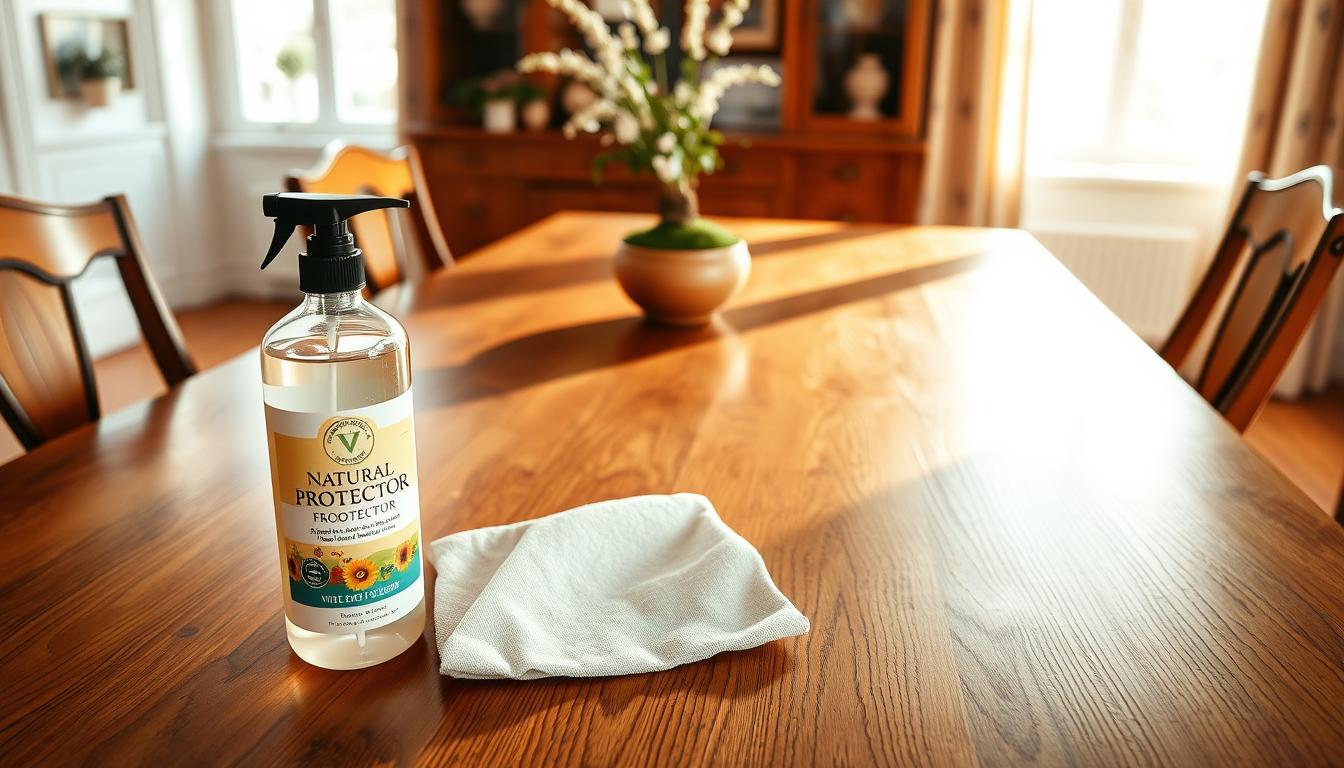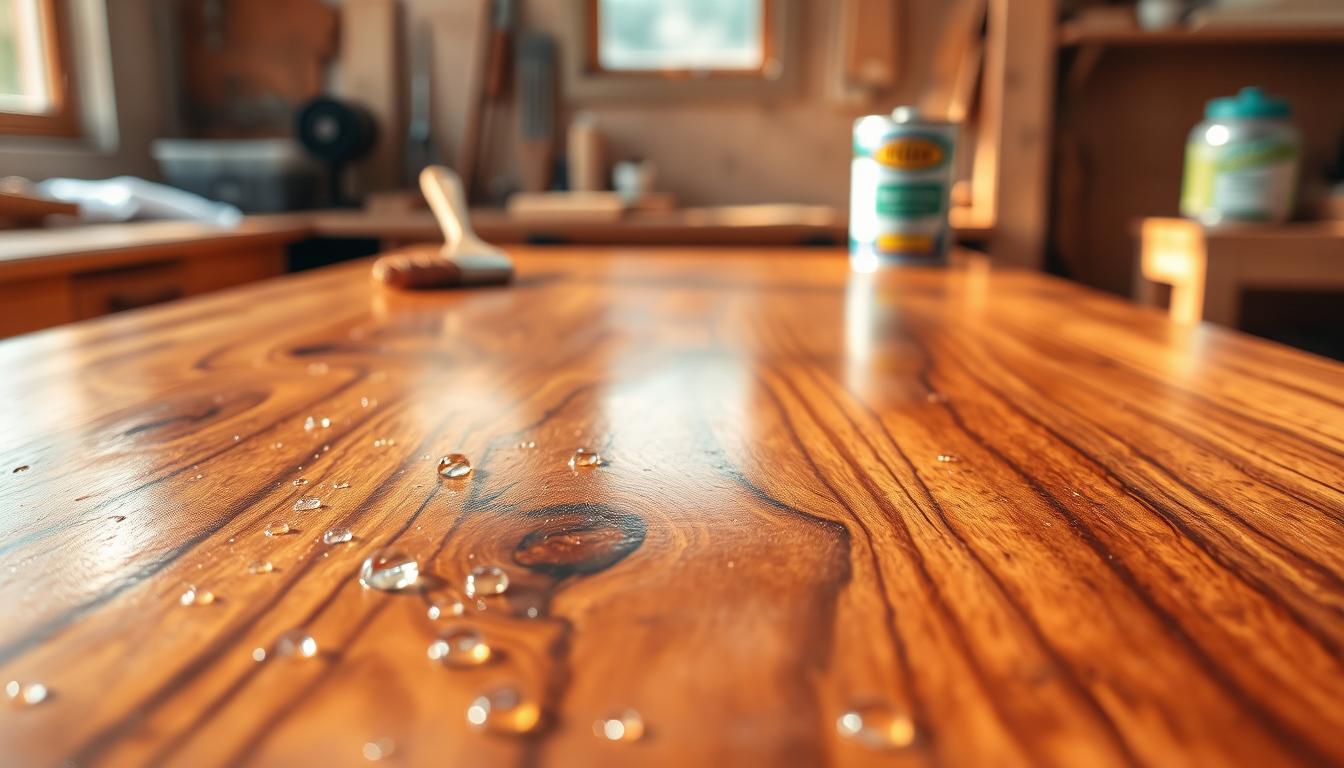

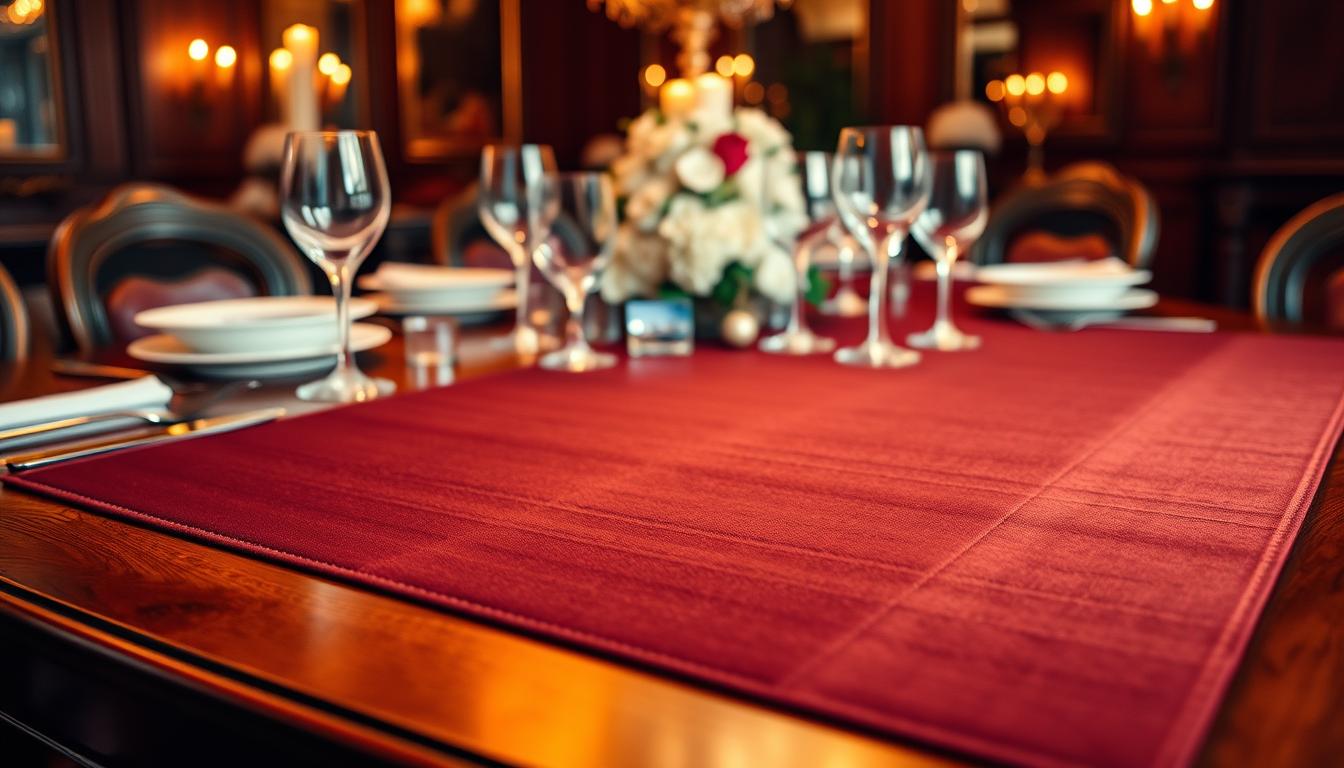
You’re buying more than a cover when you order a custom pad for a high-end dining surface. A purpose-built barrier with a rigid fiberboard core, wipe-clean vinyl top, and velvet underside helps stop spills, scratches, and chairs from wearing a finish.
Think in dollars and outcomes: the cost of one pad often runs far below the price and downtime of a refinish. Options in the U.S. include hidden magnetic locks like Magnaloc, interlocking connectors, and custom sizing or color matching to suit your décor.
Know what it does and doesn’t do: it protects the surface from everyday hazards but can’t make the pad top immune to extreme heat. You’ll learn correct use, care, and what buyers praise in reviews.
This section previews who benefits most—frequent hosts, families with kids, users of extension leaves, and owners of glossy or antique finishes—and outlines the practical points you’ll need to decide if a custom table protector is right for your dining routine.
Why you might need a table pad for a high-end dining table
When you invest in a high-quality dining surface, daily risks start to look like real costs. Your dining room top is visible and often the focal point of the room. A single accident can leave a lasting blemish that is costly to repair.
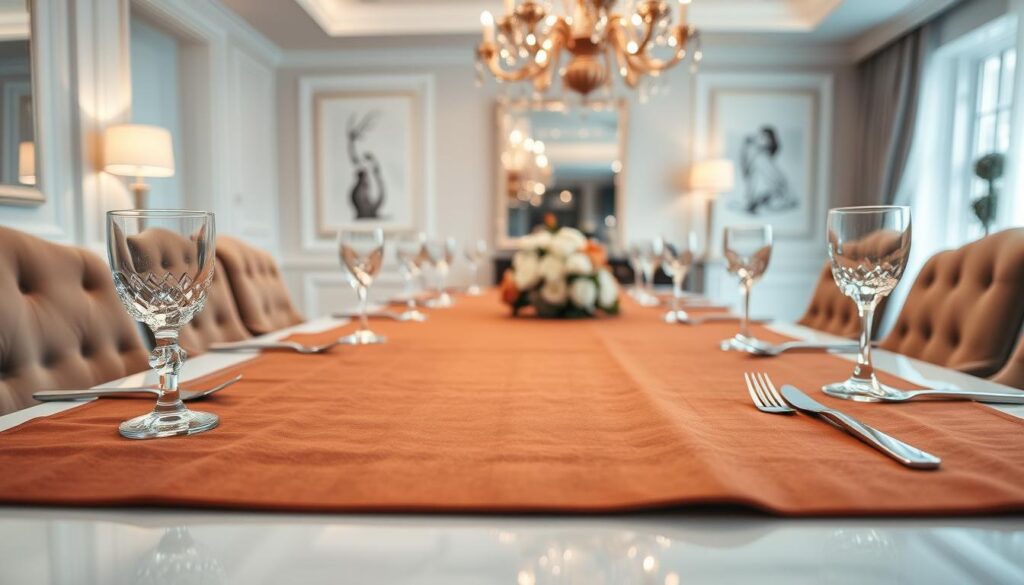
What “worth it” means comes down to risk management. If you host often, eat at the top daily, or use the surface for crafts and homework, the payoff for using a table pad rises fast.
Everyday risks you face
Common damage paths include hot serving dishes, sweaty glasses that leave watermarks, condiment drips, dragged plates, and chair impacts that cause dents.
- Heat from pans or warm platters
- Spills and runoff that stain finishes
- Scratches from sliding place settings and centerpieces
- Dents from decorations or chair knocks
Many micro-abrasions happen during normal dining, not just big events. High-gloss finishes show wear more easily, so invisible damage can lower long-term quality.
Next: learn what these protective layers can and cannot do, and which extra habits—coasters, cloth layers—still matter when you add a pad.
Protective table pads: what they protect against and what they don’t
You want real protection that matches real-life use, not marketing claims alone. Below is a clear look at what these products commonly handle and where you still need extra care.

Heat resistance in real life
Many U.S. makers advertise accidental heat resistance around 550°–600°F. That means your wood surface is more likely to escape a short hot contact, but the vinyl top can still discolor, warp, or mark if a pan sits too long.
Treat the pad as a base layer: always use coasters or trivets for very hot or icy-cold items to protect both the protector and the underlying surface.
Scratch and impact buffering
The rigid core and soft undersurface reduce point pressure. That helps prevent dents and scratches on wood tops and on extension leaves that get extra handling.
High-gloss finishes show wear easily, so a pad plus a cloth or tablecloth gives safer serving and setup during entertaining.
Spill control and wipe-down convenience
The vinyl top makes fast cleanup simple. You can wipe spills before liquid reaches seams or edges, limiting stains and watermarks.
Remember limits: sharp edges, long heat exposure, or abrasive cleaning can still damage the vinyl top and shorten life.
When to add extra layers
- Use coasters and trivets for extreme temperatures.
- Lay a cloth or tablecloth for formal events or heavy service.
- Add a soft cloth layer when you want extra friction and a gentler hand over the protector.
Materials, thickness, and build quality that affect performance
The build of your pad determines comfort, protection, and how the surface looks in daily use. Quality materials and clean assembly make a pad feel like a designed surface rather than a temporary cover.
Typical construction layers
Most U.S. makers use a lightweight, smooth fiberboard core, one or two felt-style insulation layers, a wipeable vinyl top, and a soft velvet or velour underside. These pieces work together to keep the protector flat and reduce point pressure from dishes and décor.
Thickness and feel
A common standard is a 1/2″ pad, while some brands show a 7/16″ core plus felt that yields a 5/8″ finished piece. The extra 1/8″ gives more perceived sturdiness and slightly better impact cushioning, but both constructions perform well when cores are rigid.
Color, cleaning, and manufacturing notes
Vinyl top color options typically run 22–25 choices, with 5–8 velvet underlining colors so you can match your décor. Many suppliers use phthalate-compliant U.S.-made vinyl and water-based adhesives from Indiana; animal glue is not used. A wipeable vinyl top keeps cleaning quick and helps the protector become a daily usable surface.
- What you’re paying for: core, insulation, vinyl top, and soft underside.
- Why the core matters: a smooth fiberboard core lies flat and spreads pressure.
- Practical finish: color choices make the pad look intentional with your dining palette.
Getting the perfect size and fit for your table surface
Accurate measurements are the single best way to guarantee a clean fit for a custom cover. Start by measuring the flat top surface in inches. Use a metal flexible tape and record both width and length to the nearest 1/16″. Small errors show as gaps or overhangs.
Measure precisely in inches
Capture the overall flat width and length. Note any seams, splits, or uneven edges.
Round table reality
Many round table tops are not true circles. Measure the diameter in two directions. If width and length differ by more than 1/8″, tell the maker. Over 1/2″ usually means a full pattern is required.
When to use a pattern or tracing kit
Use a pattern for rounded corners, bevels, or non‑rectangular shapes. For a tracing kit, secure paper, crease along the edge, trace the profile, and send the pattern without cutting on the line.
Leaves, gaps, and special tops
Measure each leaf separately; they often differ. For beveled joins that form a “V” gap, measure only flat surfaces and ask the maker to accommodate the split. Dropleaf, harvest, buffet, coffee, end, and conference tops often need multiple sections or custom shapes for a precise fit.
- Quick checklist: width, length, accuracy to 1/16″, individual leaf sizes, and edge profile.
Stability features that keep table pads from sliding
Sliding seams can ruin a service moment, so good alignment matters more than you might expect. If a pad shifts during serving or when guests lean on the side, the exposed finish can be damaged at the worst time.
Hidden magnetic locks like Magnaloc
Magnaloc is a patented hidden magnetic locking system that keeps sections aligned and prevents slipping. The magnets sit out of sight to avoid direct contact with the top and reduce the chance of scratching.
Quick-Lock™ interlocking connectors
Quick-Lock™ uses hidden plastic interlocks. These connectors have been used since the 1980s to keep adjacent sections from separating under friction or repeated setup. They stop section drift and visible gaps.
Multi-section construction and shipping limits
Large tops often ship as two or more sections for material width, machine limits, and carrier constraints. Some pads use folds or accordion-style joins so long spans fit standard shipping.
- What these systems prevent: section drift, creeping under plates, and visible seams.
- Setup: align sections, engage magnets or interlocks, then add your linen layer.
- Tip: more sections mean stronger alignment hardware is essential for stable use.
Price, ordering, and delivery options for custom table pads in the United States
Your order’s price hinges on a few simple facts: size, shape, and how many parts you need.
Major cost drivers are the surface size, complex edges, number of sections or leaves, and material or color choices. More sections raise labor and hardware needs, which affects final price.
Typical pricing and add-ons
- Custom table pad: around $204.
- Extension leaf pad: about $75; coffee/end pads near $215.
- Storage options: basic bag $45, wood leaf bag $49, custom bag $65; linens from $199.
How to order and timing
You can submit an online order form with precise dimensions, request vinyl or underlining samples, or call the company for measurement help.
Plan for standard production at 4–6 weeks. Rush windows run 15–21 business days, and ultra-rush options may ship in 5–10 business days. If you’re ordering for holidays or events, allow extra time for samples and shipping.
Care, storage, and what reviews say about long-term satisfaction
Simple cleaning steps and the right storage choice extend the life of your protector. Follow a few easy routines and you’ll avoid moisture damage and lost color match over time.
How to clean a vinyl surface without harming the underlining
For routine wipe-downs, use a lightly damp cotton or microfiber cloth and go over the vinyl top after meals.
For tougher dirt, use a disinfecting wipe on the vinyl, then immediately dry the area with a soft cloth so moisture doesn’t sit at seams or edges.
Do not wet the velour-like underlining. Brush it gently with a fine brush to remove dust and keep adhesives safe.
Storage best practices: flat vs vertical and climate tips
Store flat when you can. Lay the protector in its original carton or a table pad storage bag to protect corners and keep parts together.
If space forces vertical storage, stand the sections on the longest fold and brace them against a stable surface to avoid bending or warping.
Avoid moist basements, attics with heat swings, or very cold garages. Stable, dry storage preserves adhesives and color match.
What to watch for in reviews and real-user proof points
When you read reviews, look for repeated praise about fit, color match, and helpful customer support. Those items predict long-term satisfaction.
- Pattern-kit help cited by customers (example: Shelley helping Sheri Deller).
- Invisible magnetic locking named by Susi Gelman as a major plus.
- Early shipping praised by Sally D., and in-home measuring help noted by Arthur, Alan, and Susan.
Tip: Many owners still use a cloth or tablecloth over the protector for formal events. Reviews that mention linen use can show how a pad performs in real-life service.
Conclusion
Good fit and stable locking make a protector feel like part of the furniture, not an afterthought.
When a dining table finish is costly to refinish and your dining room sees regular use, a custom table pad is often worth the price. Measure in inches to 1/16″ accuracy, confirm if a pattern is required for rounded or beveled edges, and note each leaf so seams lie flat.
Remember round tops may need both width and length measurements. The pad handles everyday scratches, dents, and spills, but use coasters and trivets for very hot items to protect the pad top.
Compare price versus refinishing risk, request samples, and prefer makers with strong locking systems and reasonable lead times. Gather photos, pick a color, and order with time for production so your tablecloth and flannel layers are ready for entertaining.