
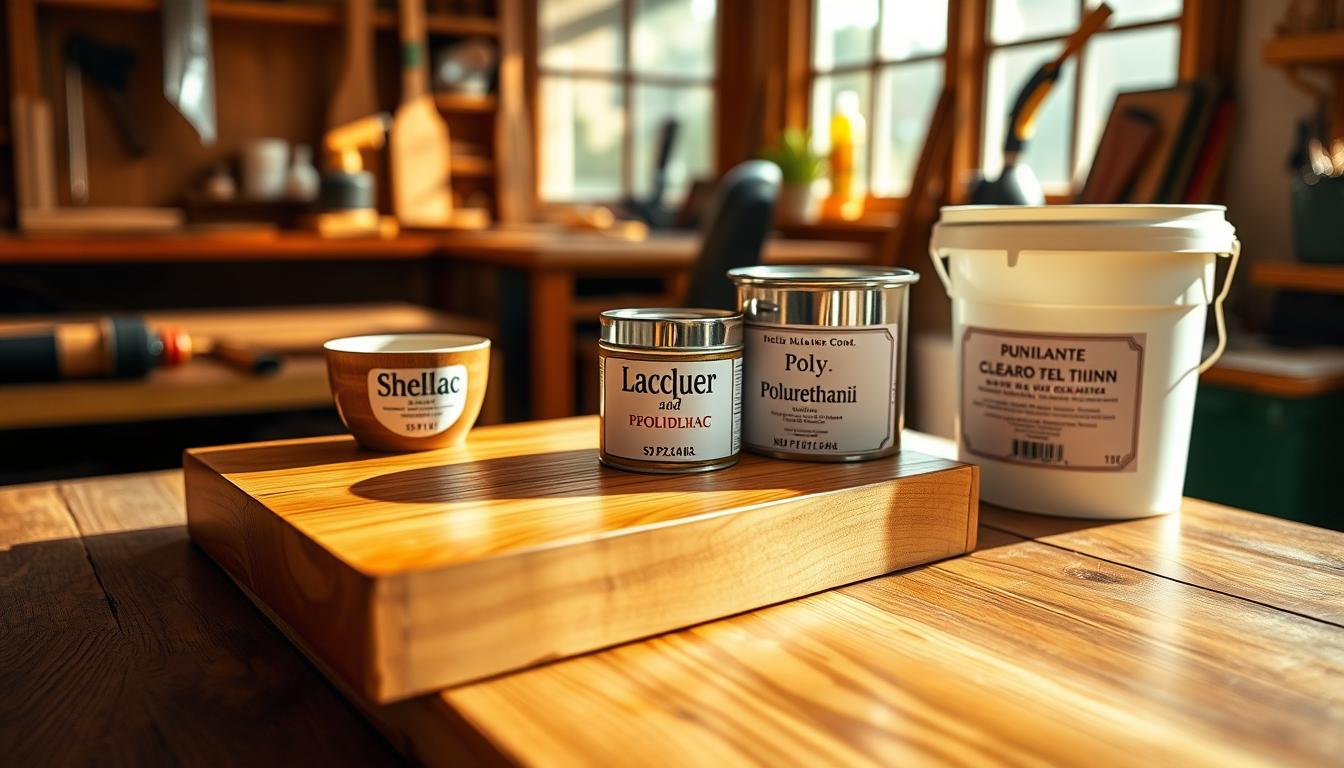
You want a durable topcoat that keeps your wood looking great and standing up to daily wear. This intro helps you choose a finish that matches your project, not just what’s popular online.
Set expectations: we’ll compare Shellac vs Polyurethane while also noting where lacquer and varnish fit when needs change. You’ll learn practical differences in how each finish handles water, heat, alcohol, and common spills.
The idea of “best” depends on three things: the level of protection you need, the look you want, and how much maintenance you’ll accept. Some finishes give a hard shell, others are easier to repair.
Real furniture shows these differences fast. You’ll also get a quick look at application realities — brush or spray, dry time, sanding, and dust risk — because those often decide the winner as much as durability.
What to expect: clear, usable guidance so you can pick the right option for your next furniture or wood project.
What you’re really choosing in a wood finish: protection, look, and maintenance
Your finish determines whether water rings, hot plates, and splatters become problems or minor annoyances. It also sets how the wood ages and how much care you’ll need over the years.
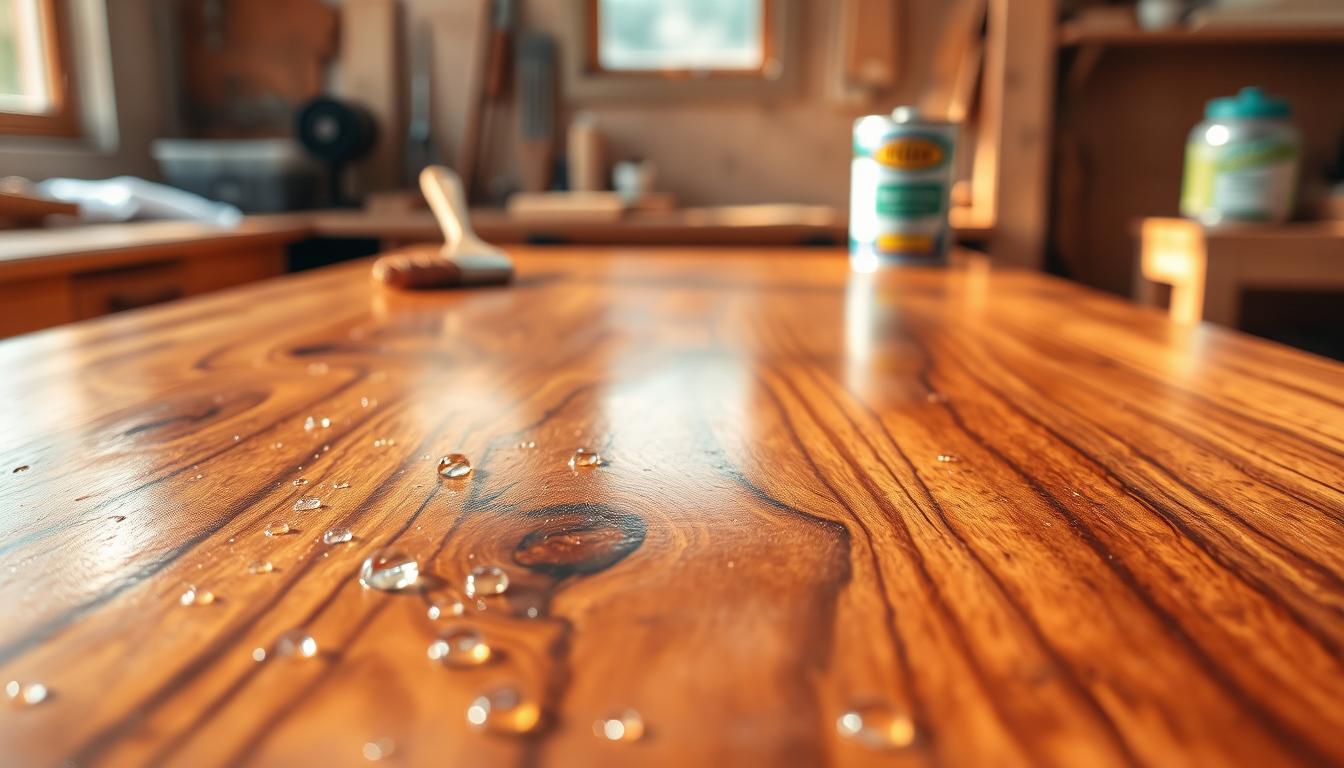
The first job of a topcoat is simple: block water, stand up to heat, and keep common spills from staining the grain. Some options act as sealers and mainly stop contamination. Others build a tough film that takes the hits so the wood surface stays safe.
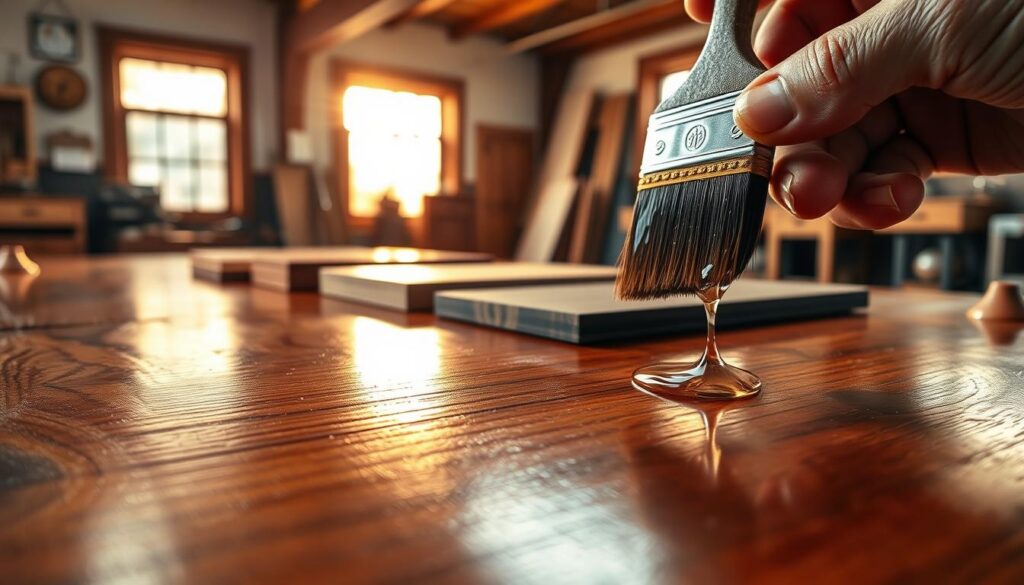
How film build changes real-world durability
Film thickness and cure behavior drive long-term performance. Thicker, crosslinked films offer higher durability on high-use surfaces like tables and cabinet doors. But those films can be harder to repair on the spot.
- Pick a finish based on how it handles water rings, hot mugs, and routine cleaning.
- Sealers mainly block stains; film-builders absorb abuse so the wood doesn’t.
- More film = less frequent refinishing, but tougher spot repairs.
- Appearance matters: clarity, sheen, and color shift affect whether a finish works for your piece.
Later sections will measure resistance to heat, water, and common spills, and outline how much time the application and cure will take.
Shellac basics: what it is, where it shines, and where it fails
A classic resin finish brings clarity and fast drying, but it also has limits you’ll want to know. You get a clear, natural top coat made from a resin that historically comes from the lac bug.
Practical strengths: this finish is an excellent sealer. It blocks water vapor, helps prevent silicone contamination issues, and locks in existing stains so later coats behave predictably.
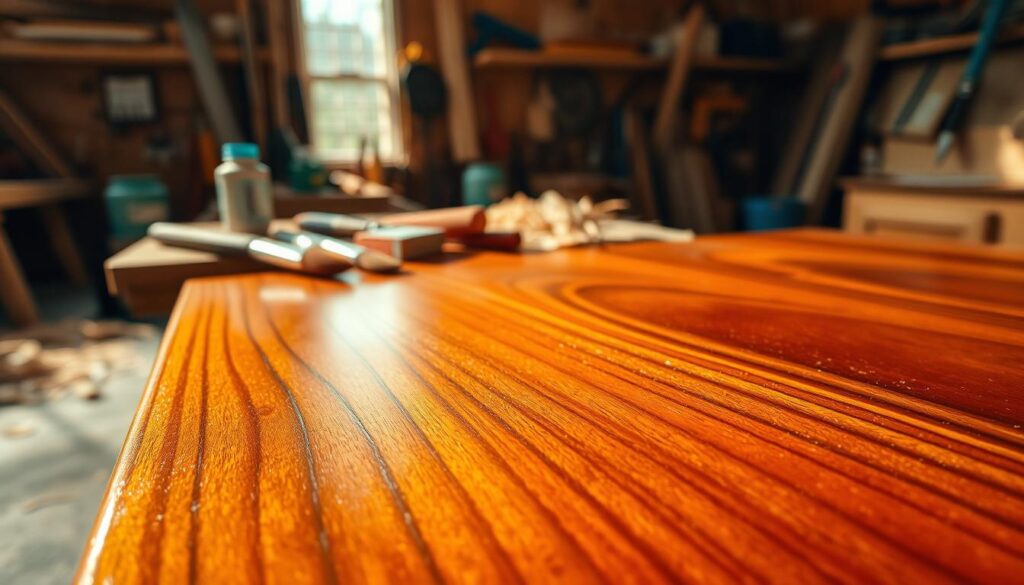
- Touch-ups: it melts into itself, so you can spot repair dings and scratches much easier than with many modern films.
- Limitations: vulnerable to heat, water, alcohol, and many household chemicals—avoid heavy-use tabletops and wet zones.
- Wear and storage: abrasion resistance is weak and shelf life is short; freshness and cool, dark storage affect results.
Use this option when sealing and repairability matter more than maximum durability. For high-traffic pieces, plan to layer more coats or choose a tougher film finish.
Polyurethane basics: why it’s considered a durable finish
When protection is the priority, a varnish-style topcoat often becomes the go-to choice for busy surfaces. Polyurethane and similar urethane products build a hard film that stands up to daily abuse.
Polyurethane as a type of varnish and what that means
This class of finish is essentially a varnish. That is why you pick it when you need a high level of protection rather than easy reversibility.
Resistance profile: scratching, heat, water, acids, and wear
Durable finish here means better resistance to scratches, heat, water exposure, and common household messes. Think dining tables, kids’ desks, and high-touch chair arms.
- Strong abrasion and chemical resistance for heavy use.
- Good heat and water tolerance compared with softer sealers.
- Multiple formulations (water-borne and oil-based) change how it behaves.
Tradeoffs: longer dry time and sanding between coats
Expect longer dry time between coats—often many hours up to a full day. That affects your schedule and when the piece returns to service.
Sanding between coats is common. It promotes mechanical adhesion when the film no longer bonds well to itself. For brush application, use steady technique to avoid runs and visible marks.
Shellac vs Polyurethane: side-by-side differences that matter on real projects
Practical differences in wear, water resistance, and repairability decide many projects. Below is a compact comparison to help you pick the right product for your furniture and rooms that see real use.
Durability and wear
Polyurethane builds a hard, protective film that wins on abrasion and heavy use. Choose it for tabletops and high-traffic furniture.
Shellac seals well but wears faster under constant use and needs more frequent maintenance.
Water, heat, and chemical resistance
For a kitchen or bathroom, water resistance matters. Polyurethane resists standing water and cleaners better. Shellac can soften from spills, alcohol, and heat.
Application, dry time, and planning
- Brush or spray: shellac is easier to touch up with a brush; polyurethane often needs careful sanding between coats for good adhesion.
- Dry time: fast-evaporating sealers reduce dust risk; slower cures demand cleaner space and more time.
- Coats and repairs: plan multiple coats and sanding windows for polyurethane; expect simple spot repairs with shellac.
Where lacquer fits in your decision (and when it beats both)
For fast shop turnaround, lacquer often wins because it dries by evaporation and lets you move work quickly.
Speed, spray, and production-friendly application
Fast dry times make lacquer ideal for spray-gun workflows and high-volume jobs. You get quick tack-free time, fewer dust problems, and faster recoating cycles.
How evaporation cure helps repair and blending
Because it cures by solvent evaporation, you can often recoat and blend edges cleanly. That makes spot repairs and layer builds easier than many slow-curing film finishes.
Tradeoffs to consider
Expect higher VOCs and lower scratch and heat resistance compared with heavy-film varnishes. Lacquer also has lower solids, so film build is thin and less protective in harsh conditions.
- Shop conditions: solvent choice and temperature change drying and flow.
- Nitro vs CAB: nitrocellulose tends to yellow; CAB keeps a clearer tint long term.
- Variety: different manufacturers offer sheen, tint, and formulation options that change the final appearance.
Bottom line: choose lacquer when speed and spray-friendly application matter. It can outpace other finishes for production and easy repair, but it’s not the top pick for heavy-use tabletops or wet zones.
When varnish and conversion varnish are the better option than standard poly
For the toughest jobs, a true varnish steps in to deliver long-term protection where lighter coatings fail. Use this choice for high-wear surfaces that must resist daily traffic and cleaning.
Why varnish wins: many varnish products use crosslinking resin chemistry. That means molecules bond into a tight network as the film cures. The result is superior resistance to water, heat, and common household chemicals compared with softer topcoats.
Conversion varnish for spray work
Conversion varnish adds a catalyst to speed cure and boost film build. This lets you spray a high-solids coat that often needs fewer coats to reach protection targets.
- Pros: fast time to handle, strong film, fewer coats.
- Cons: catalyzed mix has a short pot life; leftovers can’t be stored for later use.
- Risk: too-thick application or poor climate control can crack the film.
In short, conversion varnish rewards skill and a controlled shop. If you want an “apply it and forget it” product for demanding surfaces, a proper varnish system from a reputable manufacturer is often the best fit.
Choosing the right finish for your furniture, floors, cabinets, and high-use surfaces
Match the finish to the job: different rooms and surfaces demand different performance, not just a pretty sheen.
Tabletops and desks: balancing hardness with rub-out and repair needs
For tabletops and desks you often want a hard film that still rubs out to a smooth look. A durable varnish or high-build polyurethane gives abrasion resistance.
If you expect spot repairs, consider a finish that blends easily. Shellac can be spot fixed and rubbed out by hand; heavy-film systems resist wear but need more time and sanding to repair.
Floors: water-borne vs. oil-based urethane considerations
Water-borne urethane dries faster, has lower odor, and keeps wood color truer. Oil-based cures darker and often feels tougher to the touch.
Water-borne products can clog spray tips if you don’t clean thoroughly. Oil-based finishes need more ventilation during cure and longer time before light use.
Kitchen cabinets and bathroom vanities: water, chemicals, and cleaning frequency
Cabinets and bathroom vanities face repeated water and cleaners. Choose a higher-durability system to cut how often you need to refinish.
Durable films resist household chemicals and constant handling better, so your kitchen and bathroom stay serviceable longer.
Shop realities: ventilation, solvent choice, and spray-gun cleanup
Your workspace changes the pick. Good ventilation lets you use faster-drying solvent systems; small or enclosed shops favor water-borne or low-VOC options.
Spray-gun cleanup matters: if you skip meticulous cleaning, water-borne urethanes will clog tips and cost time. Factor cleanup into your application plan.
- Decks and exterior use: prioritize UV and moisture protection and plan regular maintenance.
- Match product to skill and schedule: pick what you can apply, clean, and wait on.
Conclusion
Deciding starts with how the piece will be used and how much maintenance you will accept. Identify the surface, expected abuse, and the project type to choose a clear path.
Shellac is a smart option when you need a fast sealer and easy touch-ups, but expect limits with alcohol, heat, and long-term durability. It also traces back to the lac bug history if you want a natural route.
Polyurethane is the go-to when protection and long life matter. It needs more time and prep between coats, but it rewards you with stronger wear resistance.
Use appearance and product variety to match color and sheen. Then test on scrap, follow the application schedule, and commit to the time required for reliable protection.