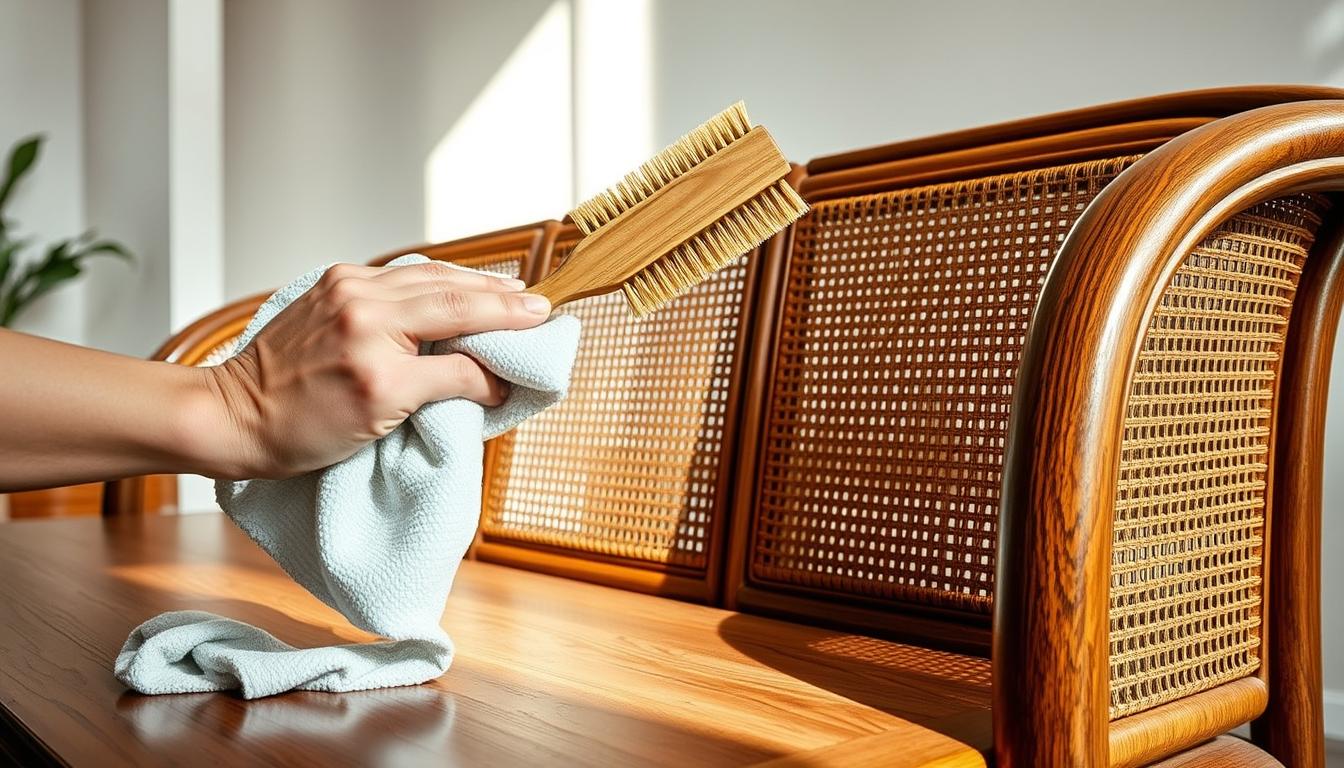

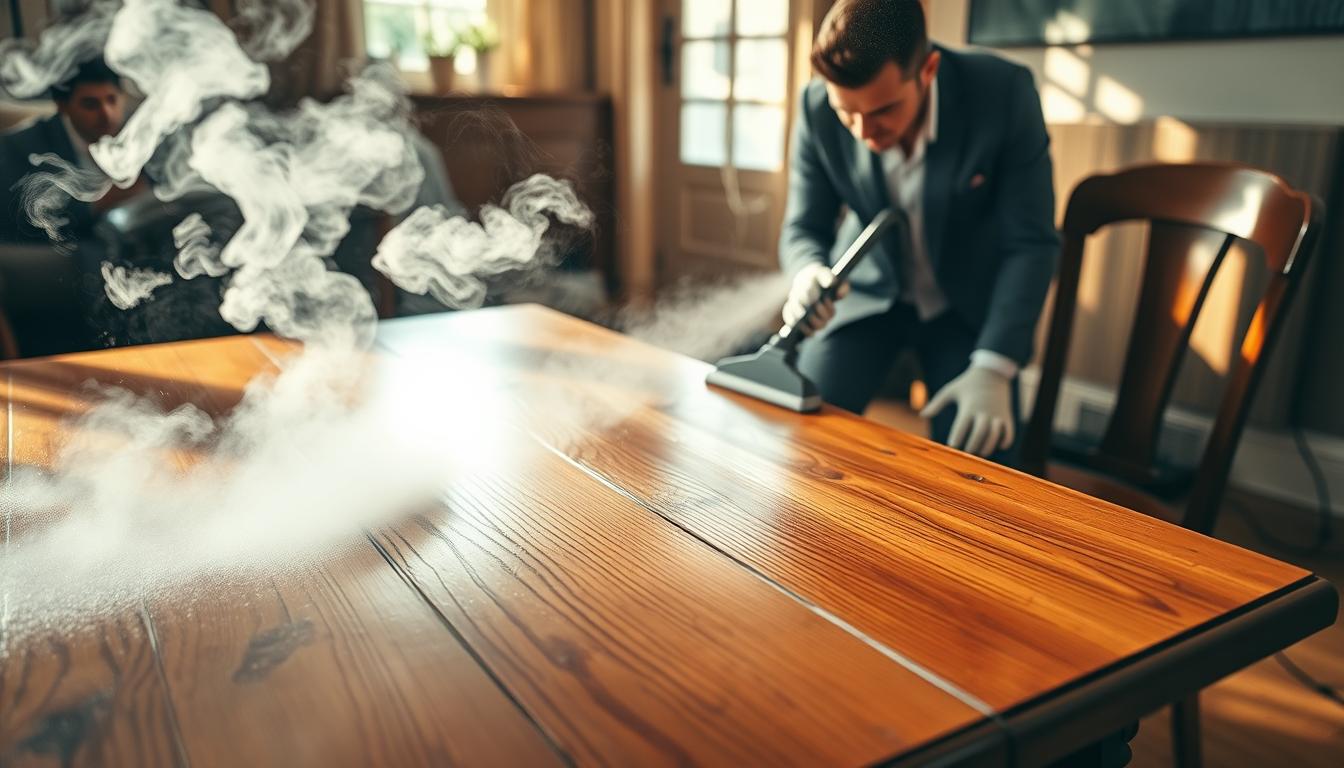
You’re asking whether using steam on your furniture is safe. The short answer depends on your finish, construction, and how you use the tool — heat, moisture, and pressure all matter. Good Housekeeping’s Carolyn Forté notes that even “sealed” pieces often have tiny scratches and worn spots where moisture can penetrate.
That matters because joints, edges, and repaired areas behave like vulnerable seams on floors. If steam finds those gaps, you can see immediate haze, dulling, or tacky finish. Over time you risk swelling, joint failure, or mold in crevices — and you may void a warranty.
This guide will explain what steam does to wood, when it’s risky versus possibly acceptable, how to test a finish fast, and safer alternatives. Bottom line: in most homes, steam is riskier than it looks, so you’ll also get gentler methods that still clean effectively.
If your piece has veneer, lifting edges, worn finish, or unknown maker guidance, avoid steam and try a damp-wipe approach instead.
What steam does to wood and why damage happens fast
Hot vapor can sneak into tiny gaps and start problems before you notice any change on the surface. The combination of heat and moisture softens some topcoats and forces water vapor into hairline fractures you cannot see.
Pathways matter: cracks in the topcoat, gaps at joints, seams where panels meet, end-grain at edges, and tiny checks near hardware all pull vapor inward. Think of furniture joinery like the lines between boards on a floor—those lines are entry points for moisture.
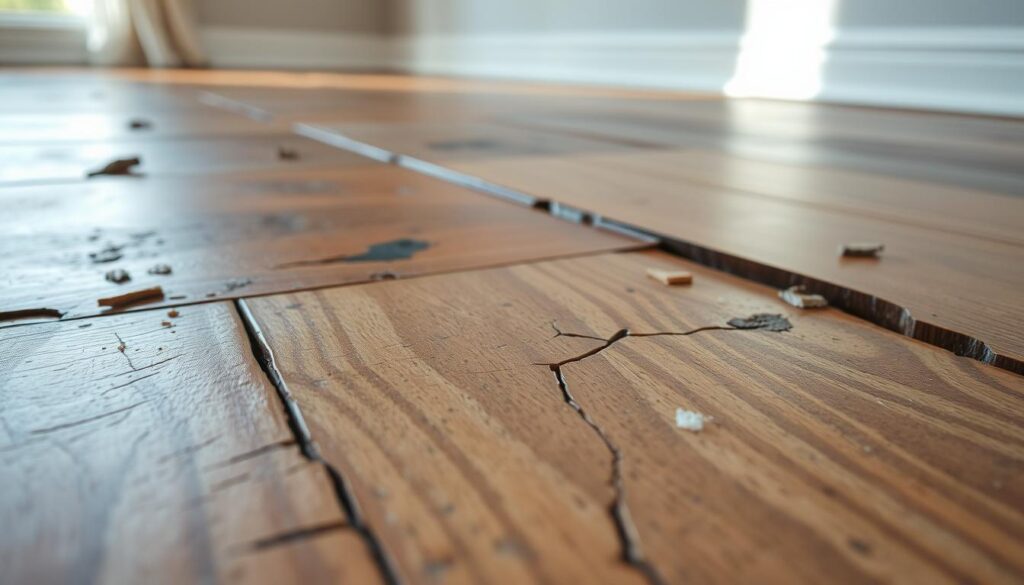
After contact the vapor cools and condenses into liquid, so a piece that looks dry can still hold water under the finish. That trapped moisture is what drives fast failure.
- Swelling / raised grain: wood fibers absorb water and expand.
- Warping / twisting: uneven moisture leads to shape change.
- Dulling, peeling, mold: heat can break sheen and trapped moisture can weaken adhesion or feed mold.
Even a “sealed” item can have worn spots, hairline scratches, or unfinished undersides that are effectively unsealed in daily use. Understanding these failure modes helps you decide whether using a steam tool is an avoidable gamble or a last-resort, controlled option.
When steam cleaning wood is risky (and when it might be acceptable)
How a piece is built — solid planks, thin veneers, or layered panels — decides how vulnerable it is. That construction determines what happens when heat and vapor meet finish and glue.
Solid, veneer, and engineered: a quick risk map
Solid hardwood can swell or warp where grain soaks up moisture. It often recovers if exposure is brief, but prolonged damp leads to cupping or gaps between boards.
Veneer is far more fragile. Thin layers and glue lines can lift, bubble, or delaminate after a short exposure.
Engineered wood and composite panels hide a thin top layer over adhesives. Heat or damp can weaken those bonds and ruin the panel.
Where weak points fail first
Edges, seams, joints, inlays, and nicked finish act like plank seams on hardwood floors — they pull moisture inward first. Those spots show haze, tackiness, or lifting before the rest of the surface.
Manufacturer guidance and warranty risk
Always check the care label, manual, or brand site. If your manufacturer forbids excess heat or moisture, that instruction is decisive.
Using an indicated method can void your warranty if the terms list excessive water or specific banned tools.
Lessons from hardwood floors and the hidden threat
Major flooring associations warn that even well-sealed surfaces can retain residual moisture after a steam mop or similar tool. Consumer testing shows many mops leave dampness behind.
That lingering moisture is the stealth problem — enough to trigger swelling, mold, or finish failure over time.
Decision checkpoint: if your piece is veneer, engineered, has lifting finish, or you lack clear manufacturer guidance, skip steam and use gentler options outlined later.
How to check your wood furniture finish before you use steam
Check the finish first — that simple step often tells you whether moisture will bead or bleed through. Do this before any heated or wet tool touches the piece. The quick test takes minutes and prevents surprises later.
Quick water-drop test to gauge seal integrity
Place a single small drop of water on an inconspicuous spot (underside edge or back). Watch for a few minutes.
If the drop beads, the surface seal is more intact. If it spreads or sinks in, the finish is compromised and water can penetrate.
What the test does — and what it does not prove
The water-drop test flags worn areas and obvious failures. It does not guarantee safety with hot vapor or pressure.
Heat and prolonged contact can still drive moisture into joints, so treat a passing test as only part of your decision.
Inspect multiple areas and common failure points
- Check near handles, front edges, and corners for scratches or worn finish.
- Look for cloudy patches, lifting or peeling topcoat, and exposed end-grain.
- Test underside lips, near joints, and around decorative trim — not just the best-looking top.
Timing note: Do the tests when you have time to let spots dry and watch for delayed darkening or texture change before proceeding. If you find compromised areas, choose a damp—not wet—method and skip heated tools on those zones.
How to steam clean wood furniture without damaging it
Take a safety-first approach: treat this as the least risky way to use heat and vapor, not a guarantee. Your aim is to minimize heat, moisture, and contact time while watching for any finish change.
Choose tool settings and technique
Use the lowest output on your steam cleaner and keep the head moving. Never hold the nozzle in one spot; dwell time forces vapor into seams.
Diffusion and barriers
Wrap the attachment in a clean microfiber cloth so steam diffuses through fabric and the cloth soaks minor condensation. This reduces direct impact on the finish.
Work small and dry fast
Clean small areas, then wipe immediately with a dry microfiber towel. Pay extra attention to edges, joints, and hardware so water does not linger.
Reservoir rules and stop signs
- Use only plain water unless the maker explicitly allows additives; do not add DIY chemicals or scented products.
- Stop at the first sign of haze, tackiness, raised grain, or dulling. Dry the area and switch to a non-steam method.
- Handheld attachments often give better control than a full mop head on furniture.
Safer alternatives to steam for cleaning wood (recommended approach)
You get the best results when abrasion is limited and moisture is strictly controlled. Start with simple routines that keep grit off surfaces so you never need aggressive treatments.
Daily and weekly maintenance
Remove dust and loose dirt first. Use a broom, dust mop, or a vacuum with a soft-brush attachment.
Microfiber cloths trap grit so debris does not act like sandpaper on your finish. Do this often to protect boards and tabletops.
Deep clean method
When deeper care is needed, use a damp—not wet—wipe with a wood-appropriate cleaner. Apply lightly in small areas, then buff dry with a clean microfiber.
This mirrors advice for hardwood floors: avoid over-wetting, work in sections, and dry promptly so water does not creep into seams.
Products and DIY solutions to avoid
- Vinegar: acidic dulling over time.
- Abrasives: scratch and remove finish.
- Waxes, oils, sprays, ammonia: leave residue or damage surface chemistry.
Practical standard: choose the least-moisture way that achieves the clean you need. Wipe spills immediately and dry-buff to keep hardwood and floors looking consistent long-term.
Conclusion
What looks like a fast, chemical-free fix can quietly weaken finish and joints over weeks. Steam mops and similar tools promise speed, but on real pieces that show wear they raise the risk of haze, lifting, or long-term damage.
Before you use any steamer, confirm the material type (solid, veneer, engineered), check manufacturers and warranty rules, and run a small finish test. If you see dulling, stop and dry immediately.
As a rule, routine dusting plus a damp—not wet—wipe protects boards and wood floors more reliably than a steam mop. If you still plan to use a steam mop, test an unseen spot first, limit dwell time, and be ready to switch to a gentler method at the first sign of trouble.