
Your hardwood is tough but not invincible. Using the wrong products or too much liquid can leave finishes dull, streaked, or warped. In a busy home, it’s easy to reach for a spray meant for tile or countertops and harm sealed surfaces instead.
This short guide will show which cleaners and habits to stop now, why they cause damage, and simple swaps that protect your finish. You’ll learn the signs of harm—sticky residue, haze, fine scratches, and areas that wear faster over time.
We focus on hardwood floors, wood floors, and wood furniture because porous surfaces react differently to moisture and chemicals. Expect coverage of ammonia, bleach and harsh chemicals, vinegar, oil soap, wax/extra-shine products, and common silicone polishes.
The goal isn’t more product or more scrubbing. It’s the right cleaner in the right amount, a damp microfiber mop, and careful water use to prevent warping and mold. Never mix cleaning products—doing so risks harmful reactions and further damage to your surfaces.
Why your wood finish gets ruined in the first place
Your finish is the thin shield that keeps moisture, grime, and scratches from doing real harm to floors and furniture. The finish protects surfaces from stains and wear. Once it fails, your hardwood and other wood flooring become vulnerable to lasting damage.
Three main paths cause trouble: moisture, abrasion, and buildup.
- Moisture: Water that pools, seeps into seams, or sits along baseboards can swell and warp flooring. Even sealed wood can absorb liquid over time and show streaks or cupping.
- Abrasion: Dust and dirt act like sandpaper. Tiny particles grind at the finish and create micro-grooves where moisture and grime collect.
- Buildup: Some products leave a sticky residue that attracts more dust and dirt. That film forces you to use more cleaning and more scrubbing, which worsens scratches and dulls the finish.
Not all floors or furniture react the same—sealed finishes differ from raw or oil-treated pieces. Treat new products and any cleaning solution cautiously. In the next sections you’ll see which products strip or discolor, which acids erode finishes, and which shine-boosters cause gummy residue.
Avoiding wood cleaners that strip and discolor your finish
Harsh household solutions can silently strip a finish, leaving floors dull and exposed. You need to know which common products accelerate wear so you can protect hardwood floors and furniture.
Ammonia-based cleaners that dull hardwood floors and leave them vulnerable to scratches
Ammonia cuts grease fast, but it also breaks down the protective coat on hardwood. Over time that haze makes the floor look faded and easier to scratch.
Bleach and other harsh chemicals that can erode the finish and damage deeper layers
Bleach and strong actives can discolor or erode finishes. That can expose wood beneath and create uneven, permanently faded patches on your wood floors.
Mixing cleaning products that can trigger harmful reactions and worsen floor damage
Combining products can create toxic fumes and unpredictable residues that harm finish and floor materials. Always read labels and never “cocktail” solutions to chase a quicker shine.
- Rule to follow: If a label promises heavy degreasing or lacks a wood-safe claim, do not use it on wood flooring.
- Best practice: Use one wood-appropriate cleaner at a time, follow dilution directions, and give the floor proper time to dry.
Acidic “natural” solutions that quietly wear down wood over time
Many people turn to pantry staples for cleaning, but not all “natural” choices are safe for finished floors. Vinegar is non-toxic and easy to grab, yet its acidity clashes with many sealed surfaces.
Vinegar on wood floors and furniture finishes
The misconception: Vinegar feels natural, but acid and finishes don’t mix well over long periods. Using it regularly can slowly strip sheen from hardwood floors and other wood surfaces.
What gradual damage looks like: Your floor may lose clarity and develop a flat, hazy look. Over time the finish dulls, shows water spotting more easily, and becomes prone to faster wear and damage.
- Same effect on furniture: repeated wiping can cloud or soften a finish.
- The slow burn: you won’t always see harm after one use, but repeated vinegar cleanings add up over time.
- Safer path: switch to a pH-neutral cleaner or a formula made for wood flooring and finished wood.
Practical caution: If you’ve used vinegar, stop now and watch for dull areas. Don’t try to mask problems with waxy shine products that leave residue and attract dust.
Residue-building products that attract dirt and turn your finish gummy
Some popular product formulas trade real cleaning for a thin film that traps dirt and dulls a finish. That leftover film can make a floor look shiny at first, but it grabs soil and shortens the life of your hardwood floors.
Oil soaps are often sold for wood care, yet they can leave a slippery residue that holds onto dirt. Over time this buildup dulls sheen and makes the surface feel grimy (Scott Schrader).
Wax and “extra shine” products
Products that promise boost or wax can deposit layers that yellow and form uneven patches. Removing that wax usually needs a chemical stripper, which risks harming the protective layer on your floor (Derek Christian).
Silicone-based polishes
Silicone creates a slick barrier that attracts dust and makes the wood finish gummy. That barrier forces more frequent cleaning and tougher scrubbing next time (Taylor Matthews).
- Quick checks: If your floors feel slick, look streaky, or pull in dust fast, you likely have buildup.
- Smart choice: Pick a wood-safe, low-residue cleaner and target soil removal, not surface coating.
Cleaning tools and water habits that cause scratches, warping, and streaks
Small habits with mops and vacuums can cause big problems for finished floors. The core rule is: damp-clean, not wet-clean. Too much water and pooling moisture can swell boards, warp edges, and leave streaks on your hardwood floors.
Too much water, pooling moisture, and over-mopping
Repeated passes with a soaking mop increase the time water sits in seams. That lets moisture seep under the finish and promotes cupping or discoloration.
If the floor still looks damp after a few minutes, go over it with a dry microfiber pad to remove leftover water.
String mops and steam mops
Traditional string mops hold excess water and release it slowly. Switch to a flat microfiber mop you can wring tightly and control.
Steam mops add heat and moisture; they risk leaving too much water behind. A microfiber system with minimal liquid is safer.
Abrasive scrubbers, vacuum beater bars, and spraying habits
Steel wool and harsh scrubbers scratch finishes and can leave metal fragments that later cause rust stains when wet.
Vacuum or sweep first to remove dirt and dust. Avoid beater bars and use a soft brush attachment to prevent scuffs.
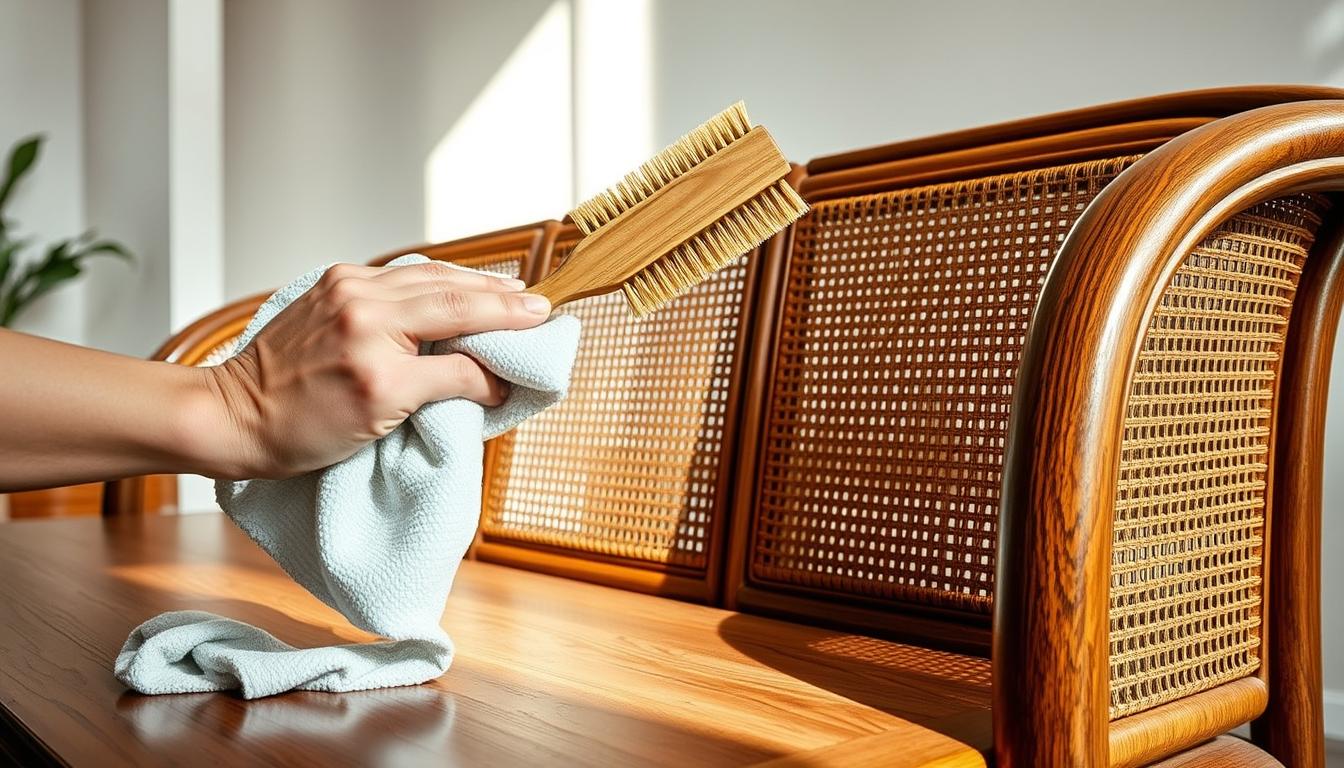
Never spray cleaner directly onto furniture. Instead, spray onto a microfiber cloth and wipe gently to avoid permanent spray marks.
- Practical tip: Wring mops well and limit liquid; aim for a damp, not wet, surface.
- Tool swap: Flat microfiber mops and soft vacuum attachments reduce scratches and excess moisture.
- Final check: If dampness remains, dry with a clean microfiber pad to reduce damage risk.
Conclusion
Protecting your finish means using mild cleaners, limiting moisture, and choosing soft tools. Keep in mind the five main offenders: ammonia and bleach, vinegar, oil-soap and wax formulas, silicone polishes, plus heavy water use and harsh tools.
Your finish fails from moisture, abrasion, and residue buildup. Once it weakens, your wood shows damage faster and needs costly repair.
For a simple routine: remove dust and dirt first, use a small amount of a wood-safe solution, and apply with a damp microfiber mop. Dry quickly so the surface never stays wet for long.
If a product does not state it is safe for hardwood floors or it promises “extra shine,” treat it as a risk for residue or finish change. Test any new solution in a hidden spot before you clean the entire area.
Follow this way and you’ll keep your hardwood and floors looking better over time and avoid premature refinishing or repair in your home.